WeChat Clamps Down on AI-Generated Content in Push for Authenticity

WeChat Takes Stand Against AI Ghostwriting

In a move to preserve human creativity, WeChat's official account platform has begun enforcing strict new rules against automated content creation. Multiple creators report having batches of articles removed for being flagged as AI-generated - a clear sign the platform is putting its policies into practice.
Image

The New Content Boundaries

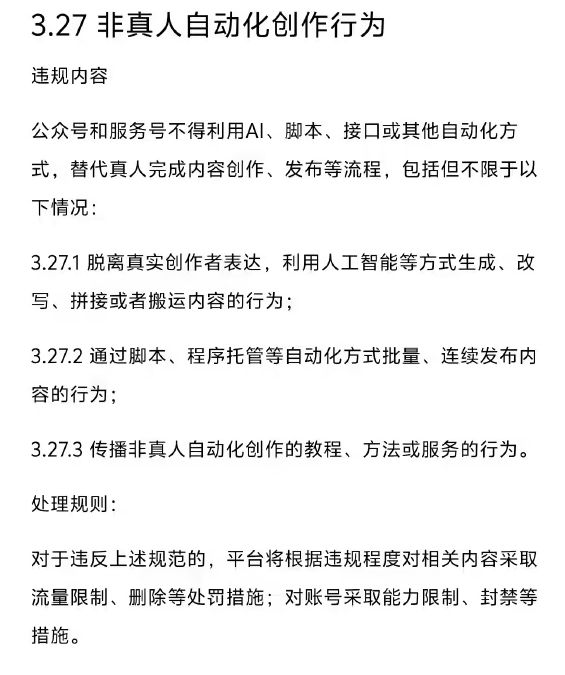
The regulations draw clear lines around what constitutes unacceptable automation. Using AI, scripts, or APIs to completely replace human creators is now explicitly prohibited. The platform targets three specific violations:

  • Content entirely generated or rewritten by AI with no human expression
  • Mass publishing through automated programs
  • Sharing tutorials or services for creating such content

Even accounts claiming to merely use formatting tools or publish AI tutorials aren't exempt. If the content fits the 'non-human' criteria, it triggers automatic penalties. "We want to see real thoughts and genuine expression," a platform representative emphasized.

Stiff Penalties for Violators

WeChat isn't playing games with enforcement. The platform has implemented a tiered penalty system:

  • Minor violations: Reduced visibility or article removal
  • Serious offenses: Account restrictions or permanent bans

This crackdown sends a clear message - WeChat values authentic human content over machine-generated volume. As AI tools become ubiquitous, the platform aims to maintain space for original voices and meaningful engagement.

"This brings official accounts back to their roots," observes digital media analyst Li Wen. "While tools can assist, the human element remains irreplaceable for creating truly valuable content."

Key Points

  • WeChat now actively removes content identified as AI-generated
  • New rules prohibit fully automated creation and mass publishing
  • Penalties range from traffic restrictions to account bans
  • Platform emphasizes need for human thought and expression
  • Move seen as effort to maintain content quality amid AI proliferation
Enjoyed this article?

Subscribe to our newsletter for the latest AI news, product reviews, and project recommendations delivered to your inbox weekly.

Weekly digestFree foreverUnsubscribe anytime

Related Articles

News

China Sounds Alarm as Token Usage Soars to 140 Trillion Daily

China's Ministry of State Security warns of growing security risks as AI token usage skyrockets to 140 trillion transactions daily. These digital units, now officially recognized by the National Data Administration, face threats from identity theft to financial scams. Officials urge users to adopt stronger protections as criminals exploit vulnerabilities in this booming sector.

April 7, 2026
digital securityAI regulationcybercrime
News

OpenAI's Stealth Funding of Child Safety Group Raises Eyebrows

A new child safety alliance pushing for AI regulations has come under scrutiny after revelations that OpenAI secretly bankrolled the effort. Several organizations joined what they thought was an independent coalition, only to discover the tech giant's involvement later. Critics argue this lack of transparency could undermine trust in the policy process as states consider new AI laws affecting children.

April 3, 2026
OpenAIAI regulationchild safety
China's Broadcast Industry Cracks Down on AI-Generated Celebrity Impersonations
News

China's Broadcast Industry Cracks Down on AI-Generated Celebrity Impersonations

China's entertainment industry is taking a stand against unauthorized AI impersonations of actors. The China Radio and Television Association has issued strict new rules banning face-swapping and voice cloning without explicit permission. Platforms must now verify content authenticity, while the association pledges to monitor and remove infringing material. This move highlights growing concerns about digital identity protection in the age of advanced AI technologies.

April 3, 2026
AI regulationdigital rightsentertainment industry
China's Entertainment Industry Cracks Down on Unauthorized AI Manipulation of Performers
News

China's Entertainment Industry Cracks Down on Unauthorized AI Manipulation of Performers

China's entertainment industry is taking a stand against the growing misuse of AI technology. The Actors Committee has issued a firm statement banning unauthorized face-swapping, voice cloning, and other digital manipulations of performers' likenesses. This comes as voice actors and celebrities increasingly find their digital identities being hijacked by cheap AI tools. The new guidelines clarify legal responsibilities and require platforms to implement better content verification systems.

April 2, 2026
AI regulationentertainment industrydigital rights
Experts Sound Alarm as AI Videos Flood Kids' YouTube
News

Experts Sound Alarm as AI Videos Flood Kids' YouTube

More than 200 child development experts have united to challenge YouTube over its recommendation of AI-generated content to young viewers. Their open letter compares the platform's current approach to an 'uncontrolled experiment' that could harm children's cognitive development. While YouTube defends its labeling policies, critics argue these measures fail to protect pre-literate toddlers from what they call 'digital landfills' of low-quality content.

April 2, 2026
child developmentAI regulationdigital parenting
China Sets New Standards for AI-Generated Official Documents
News

China Sets New Standards for AI-Generated Official Documents

As AI writing tools flood government offices, China's tech authority steps in to ensure quality. The China Academy of Information and Communications Technology has launched the first national evaluation system for AI document writing. This initiative brings together tech leaders like iFLYTEK to create standards covering everything from meeting minutes to final approvals. The first ratings will help organizations cut through marketing hype when choosing these increasingly essential tools.

March 31, 2026
AI regulationgovernment technologydocument automation