Alibaba's New AI Voice Model Brings Hollywood-Quality Dubbing Within Reach

Alibaba Breaks New Ground in AI Voice Technology
Image

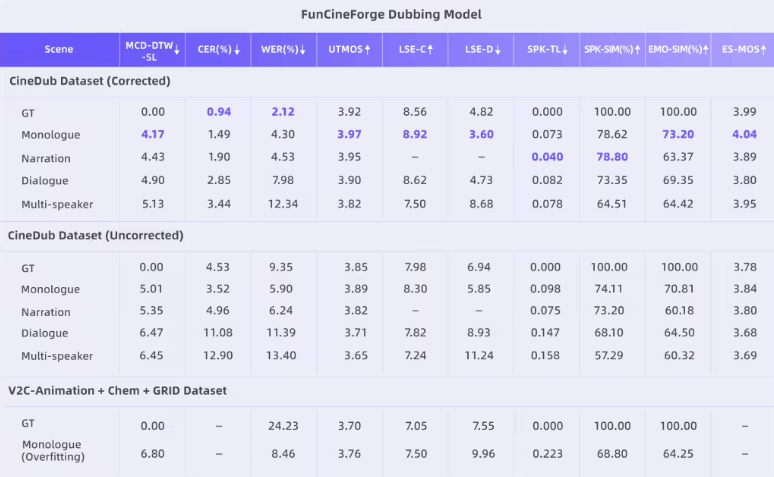
Imagine watching a foreign film where the dubbed voices perfectly match the actors' lips and emotions - no more awkward mismatches that pull you out of the story. That future just got closer with Alibaba Tongyi Lab's release of Fun-CineForge, an open-source voice synthesis model that achieves what many thought impossible: true film-quality dubbing through artificial intelligence.

Solving Hollywood's Toughest Problems

The breakthrough comes from tackling three persistent pain points simultaneously:

  • Lip-sync precision that holds up under challenging filming conditions
  • Emotional authenticity missing from most synthetic voices
  • Character consistency when handling multiple speakers

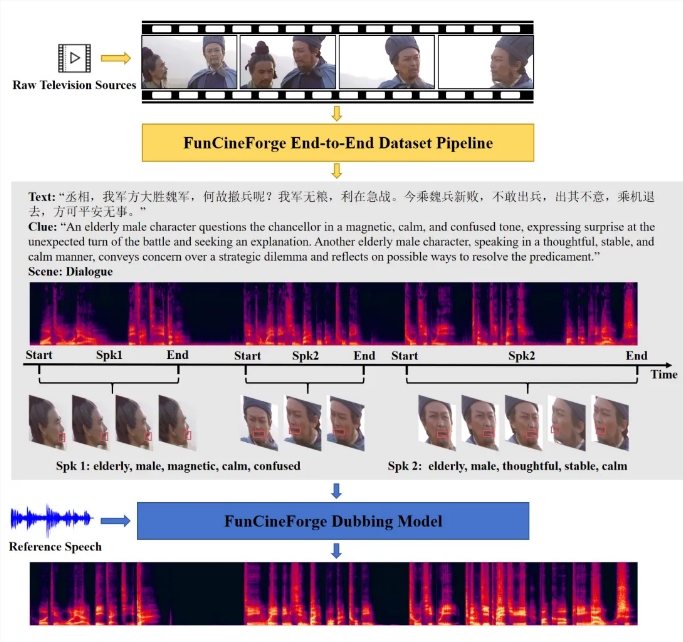
"Traditional models focus on either text or visuals," explains Dr. Li Wen, lead researcher on the project. "We introduced 'time modality' - essentially teaching the AI to understand exactly when each syllable should occur relative to visual cues."

This temporal awareness allows Fun-CineForge to maintain synchronization even when actors turn away from camera or scenes cut rapidly between shots. Early tests show it handles blocked faces and motion blur with surprising accuracy.

Behind the Scenes: The CineDub Advantage
Image

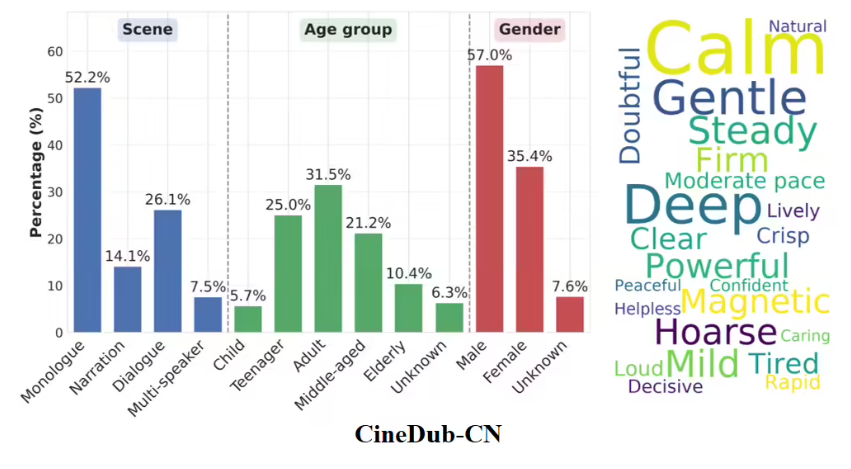
The team didn't stop at the model itself. They revolutionized training data preparation with their CineDub dataset construction method. Using large language models to automate transcription and annotation, they've reduced:

  • Word error rates to ~1% (industry standard hovers around 5-7%)
  • Speaker separation errors to just 1.20%

"What used to take weeks of manual work now happens automatically," notes Chen Ying, project manager. "We're essentially giving filmmakers professional-grade tools at open-source prices."

Where You Can Try It Today

The model debuted March 16 across three major platforms:

Current capabilities include processing 30-second video clips with support for monologues, duets, and multi-character dialogues - a first for open-source models of this caliber.

What This Means for Creators

The implications stretch far beyond technical achievement:

  1. Independent filmmakers can now achieve dubbing quality rivaling major studios
  2. Animation studios may slash post-production timelines by weeks
  3. Language localization becomes dramatically more accessible globally
  4. Educational content creators gain professional narration tools
  5. Game developers can implement dynamic voice acting more affordably

The technology still has limitations - longer sequences require chaining multiple clips together - but represents a quantum leap toward making cinematic-quality audio production available to all.
Enjoyed this article?

Subscribe to our newsletter for the latest AI news, product reviews, and project recommendations delivered to your inbox weekly.

Weekly digestFree foreverUnsubscribe anytime

Related Articles

News

Tongyi's Breakthrough: AI Voice Acting Gets Emotional

Alibaba's Tongyi Lab has cracked the code on emotional AI voice acting with Fun-CineForge, their new open-source model. This isn't your grandfather's robotic voice synthesis - it captures subtle emotions and ambient sounds that bring film dialogue to life. The technology could revolutionize post-production, making professional dubbing accessible to indie creators.

March 16, 2026
AI voice synthesisTongyi Labfilm technology
Tongyi Lab's Breakthrough Brings Hollywood-Quality AI Dubbing Within Reach
News

Tongyi Lab's Breakthrough Brings Hollywood-Quality AI Dubbing Within Reach

Tongyi Lab has cracked the code on realistic AI voice dubbing with its new open-source model Fun-CineForge. Unlike previous solutions that struggled with emotional depth and lip sync, this innovation handles multi-character dialogues seamlessly while maintaining perfect timing - even when actors aren't visible on screen. The secret lies in combining four different data types, including groundbreaking 'time modality' tracking.

March 16, 2026
AI dubbingvoice synthesisfilm technology
News

Fish Audio S2 Brings Emotional Depth to AI Voices

Fish Audio has unveiled its groundbreaking S2 text-to-speech model, offering unprecedented emotional control in synthetic voices. This fully open-source technology allows word-level adjustments—from whispers to laughter—with ultra-low latency. Trained on 10 million hours of audio across 50 languages, S2 promises to revolutionize how we interact with AI voices in real-time applications.

March 11, 2026
AI voice synthesistext-to-speechemotional AI
Microsoft's New AI Model Thinks Like Humans - Decides When to Go Deep
News

Microsoft's New AI Model Thinks Like Humans - Decides When to Go Deep

Microsoft just unveiled Phi-4-reasoning-vision-15B, an open-source AI model that mimics human decision-making by choosing when to think deeply. Unlike typical models that require manual mode switching, this 15-billion-parameter wonder automatically adjusts its reasoning depth based on task complexity. Excelling in image analysis and math problems while using surprisingly little training data, it could revolutionize how we deploy lightweight AI systems.

March 5, 2026
AI innovationMicrosoft Researchlightweight models
Ant Group's Latest AI Model Breaks New Ground in Multimodal Tech
News

Ant Group's Latest AI Model Breaks New Ground in Multimodal Tech

Ant Group has unveiled Ming-Flash-Omni 2.0, a cutting-edge multimodal AI model now available as open-source. This powerhouse outperforms competitors like Gemini 2.5 Pro in visual understanding and audio generation, while introducing groundbreaking features like unified audio track creation. Developers can now tap into these advanced capabilities for more integrated AI applications.

February 11, 2026
AI innovationmultimodal technologyopen-source AI
Yuchu's New AI Model Gives Robots Common Sense
News

Yuchu's New AI Model Gives Robots Common Sense

Chinese tech firm Yuchu has open-sourced UnifoLM-VLA-0, a breakthrough AI model that helps humanoid robots understand physical interactions like humans do. Unlike typical AI that just processes text and images, this model grasps spatial relationships and real-world dynamics - enabling robots to handle complex tasks from picking up objects to resisting disturbances. Built on existing technology but trained with just 340 hours of robot data, it's already outperforming competitors in spatial reasoning tests.

January 30, 2026
AI roboticsopen-source AIhumanoid robots