Yuchu's New AI Model Gives Robots Common Sense

Robots Get Smarter with New Open-Source AI Brain
Image

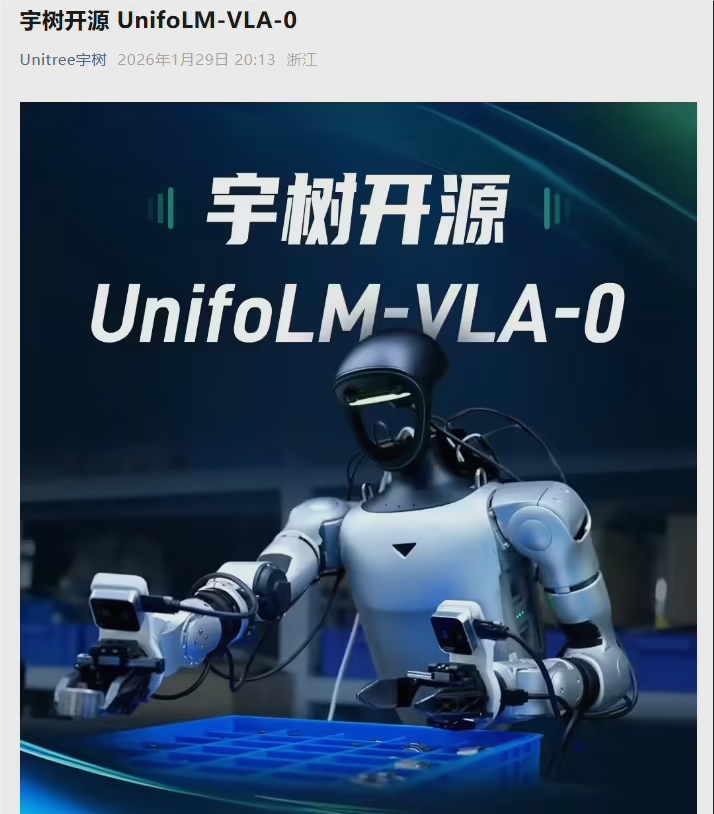
Imagine a robot that doesn't just follow commands blindly, but understands how objects move in space - where to grip a cup so it doesn't slip, how much force to use when opening a door. That's exactly what Yuchu's new UnifoLM-VLA-0 model brings to humanoid robots.

From Screen Smarts to Street Smarts

The big leap here? This isn't another chatbot pretending to understand the world through text alone. UnifoLM-VLA-0 actually grasps physical reality:

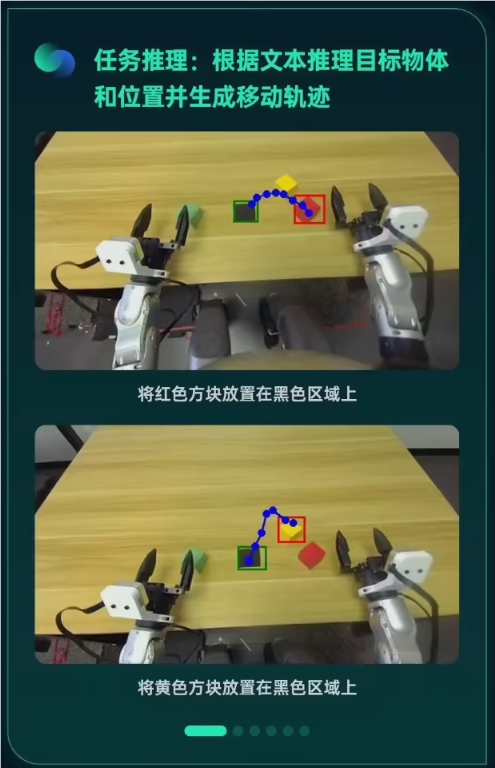
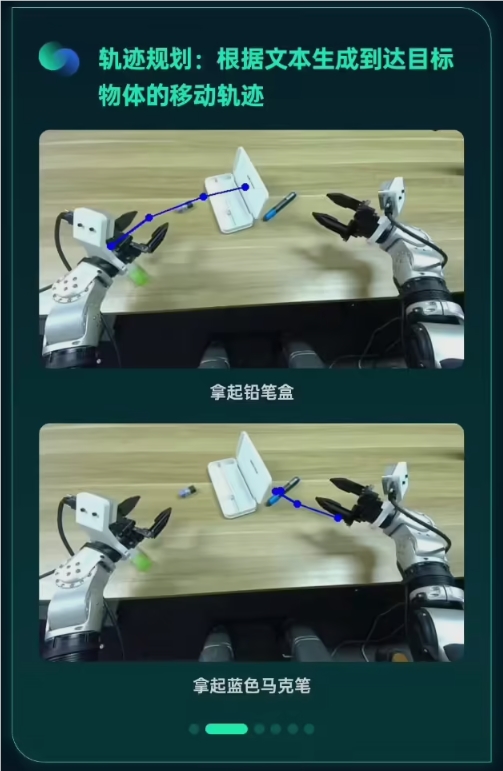
  • Spatial intuition: It aligns text instructions with 3D environments like humans do instinctively
  • Action planning: Predicts sequences of movements while accounting for real-world physics
  • Adaptability: Maintains stability even when bumped or interrupted mid-task
Image

Built Smart, Not Hard

Yuchu didn't start from scratch. They took the solid foundation of Alibaba's Qwen2.5-VL model and supercharged it:

  1. Trained with just 340 hours of real robot data - surprisingly efficient for such capabilities
  2. Outperforms its parent model significantly in spatial reasoning tests
  3. Nips at the heels of Google's Gemini-Robotics in certain scenarios

The secret sauce? A meticulously cleaned dataset focusing on physical interactions rather than abstract knowledge.

Real-World Robot Proof

The rubber meets the road on Yuchu's G1 humanoid platform, where UnifoLM-VLA-0 handles:

  • Precise object manipulation (no more fumbling coffee cups!)
  • Complex multi-step tasks without reprogramming
  • Unexpected disturbances without catastrophic failures
Image

Key Points:

  • Open access: Full model now available on GitHub for developers worldwide
  • Physical intelligence: Represents a shift from pure cognition to embodied understanding
  • Commercial potential: Could accelerate practical applications for service robots
  • Community benefit: Open-source approach invites global collaboration on robot brains
Enjoyed this article?

Subscribe to our newsletter for the latest AI news, product reviews, and project recommendations delivered to your inbox weekly.

Weekly digestFree foreverUnsubscribe anytime

Related Articles

News

Robots Get a Sense of Touch with Groundbreaking New Dataset

A major leap forward in robotics arrived this week with the release of Baihu-VTouch, the world's first cross-body visual-tactile dataset. Developed collaboratively by China's National-Local Co-built Humanoid Robot Innovation Center and multiple research teams, this treasure trove contains over 60,000 minutes of real robot interaction data. What makes it special? The dataset captures not just what robots see, but how objects feel - enabling machines to develop human-like tactile sensitivity across different hardware platforms.

January 27, 2026
roboticsAI researchtactile sensing
Robots Get Smarter: Antlingbot's New AI Helps Machines Think Like Humans
News

Robots Get Smarter: Antlingbot's New AI Helps Machines Think Like Humans

Antlingbot Technology has unveiled LingBot-VA, an open-source AI model that gives robots human-like decision-making abilities. This breakthrough combines video generation with robotic control, allowing machines to simulate actions before executing them. In tests, robots using LingBot-VA showed remarkable adaptability, outperforming existing systems in complex tasks like folding clothes and precise object manipulation. The technology could accelerate development of more capable service robots.

January 30, 2026
roboticsartificial intelligencemachine learning
Ant Group's LingBot-VLA Brings Human-Like Precision to Robot Arms
News

Ant Group's LingBot-VLA Brings Human-Like Precision to Robot Arms

Ant Group has unveiled LingBot-VLA, a breakthrough AI model that gives robots remarkably human-like dexterity. Trained on 20,000 hours of real-world data, this system can control different robot arms with unprecedented coordination - whether stacking blocks or threading needles. What makes it special? The model combines visual understanding with spatial reasoning, outperforming competitors in complex tasks. And in a move that could accelerate robotics research, Ant Group is open-sourcing the complete toolkit.

January 30, 2026
roboticsAIAntGroup
Ant Lingbo's New AI Model Brings Virtual Worlds to Life
News

Ant Lingbo's New AI Model Brings Virtual Worlds to Life

Ant Lingbo Technology has unveiled LingBot-World, an open-source AI model that creates stunningly realistic virtual environments. Matching Google's Genie3 in quality, this breakthrough enables seamless interactions lasting up to 10 minutes without distortion. From gaming to autonomous vehicle training, developers now have a powerful tool for building dynamic digital worlds that respond instantly to user commands.

January 29, 2026
AI innovationvirtual worldsmachine learning
Ant Group's Robotics Leap: Open-Source AI Model Boosts Robot Intelligence
News

Ant Group's Robotics Leap: Open-Source AI Model Boosts Robot Intelligence

Ant Group's Lingbo Technology has made its embodied intelligence model LingBot-VLA fully open-source, marking a significant advancement in robotics. The model demonstrates remarkable cross-platform adaptability and training efficiency, outperforming existing frameworks. Alongside this release, their new LingBot-Depth spatial perception model enhances 3D environmental understanding for robots and autonomous vehicles. These developments could accelerate smart robotics adoption across industries.

January 28, 2026
roboticsAI innovationAnt Group
Allen AI's SERA: Open-source coding assistant starts at $400
News

Allen AI's SERA: Open-source coding assistant starts at $400

Allen AI has unveiled SERA, a groundbreaking open-source programming agent family that makes AI-assisted coding accessible to businesses of all sizes. With training costs starting at just $400, SERA delivers performance rivaling commercial models while offering unprecedented affordability. The system's innovative 'Soft-verified Generation' technology allows adaptation to private codebases with incomplete data, potentially revolutionizing how companies integrate AI into their development workflows.

January 28, 2026
AI programmingopen-source toolssoftware development