Ant Group's Latest AI Model Breaks New Ground in Multimodal Tech

Ant Group Takes Multimodal AI to New Heights with Open-Source Release

In a move that could reshape the AI development landscape, Ant Group has made its advanced Ming-Flash-Omni 2.0 model freely available to developers worldwide. This isn't just another incremental update - it represents significant leaps in how machines understand and create across multiple media formats.
Image

Seeing, Hearing, and Creating Like Never Before

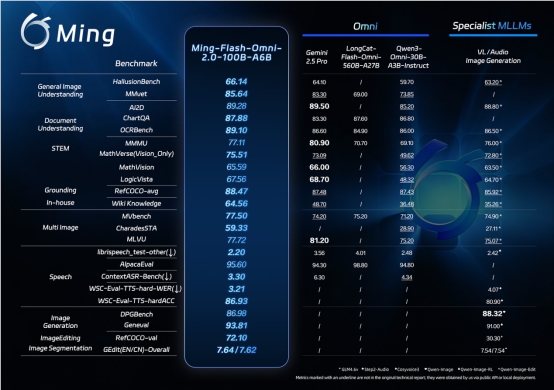
The numbers tell an impressive story: benchmark tests show Ming-Flash-Omni 2.0 surpassing even Google's Gemini 2.5 Pro in key areas of visual language processing and audio generation. But what really sets this model apart is its ability to handle three audio elements - speech, sound effects, and music - simultaneously on a single track.

Imagine describing "a rainy Paris street with soft jazz playing as a woman speaks French" and getting perfectly synchronized output. That's the level of control developers now have access to, complete with adjustments for everything from emotional tone to regional accents.

From Specialized Tools to Unified Powerhouse

Zhou Jun, who leads Ant Group's Bai Ling model team, explains their philosophy: "We're moving beyond the old trade-off between specialization and generalization. With Ming-Flash-Omni 2.0, you get both - deep capability in specific areas combined with flexible multimodal integration."

The secret lies in the Ling-2.0 architecture underpinning this release. Through massive datasets (we're talking billions of fine-grained examples) and optimized training approaches, the team has achieved:

  • Visual precision that can distinguish between nearly identical animal species or capture intricate craft details
  • Audio versatility supporting real-time generation of minute-long clips at just 3.1Hz frame rates
  • Image editing stability that maintains realism even when altering lighting or swapping backgrounds

What This Means for Developers

The open-source release transforms these capabilities into building blocks anyone can use. Instead of stitching together separate models for vision, speech, and generation tasks, developers now have a unified starting point that significantly reduces integration headaches.

"We see this as lowering barriers," Zhou notes. "Teams that might have struggled with complex multimodal projects before can now focus on creating innovative applications rather than foundational work."

The model weights and inference code are already live on Hugging Face and other platforms, with additional access through Ant's Ling Studio.

Looking Ahead

While celebrating these achievements, Ant's researchers aren't resting. Next priorities include enhancing video understanding capabilities and pushing boundaries in real-time long-form audio generation - areas that could unlock even more transformative applications.

The message is clear: multimodal AI is evolving rapidly from specialized tools toward integrated systems that better mirror human perception and creativity.

Key Points:

  • Open-source availability: Ming-Flash-Omni 2.0 now accessible to all developers
  • Performance benchmarks: Outperforms leading models in visual/audio tasks
  • Unified architecture: Single framework handles multiple media types seamlessly
  • Practical benefits: Reduces development complexity for multimodal projects
  • Future focus: Video understanding and extended audio generation coming next

Enjoyed this article?

Subscribe to our newsletter for the latest AI news, product reviews, and project recommendations delivered to your inbox weekly.

Weekly digestFree foreverUnsubscribe anytime

Related Articles

Xiaomi's Robot Brain Breakthrough Goes Open Source
News

Xiaomi's Robot Brain Breakthrough Goes Open Source

Xiaomi has taken a bold step forward in robotics by open-sourcing its groundbreaking VLA model. This 4.7 billion-parameter 'brain' solves the frustrating lag between robot vision and movement, enabling real-time responses on everyday hardware. The innovative architecture combines language understanding with precise motion control, setting new benchmarks in simulated and real-world tests.

February 12, 2026
roboticsAI innovationopen source technology
News

iFLYTEK's Xinghuo X2 Breaks New Ground with Homegrown AI Power

Chinese tech firm iFLYTEK has unveiled its latest AI breakthrough - the Xinghuo X2 large language model. What sets this apart? It's entirely trained on domestic computing infrastructure, marking a significant step in China's push for technological self-reliance. The model specializes in four key professional areas including education and healthcare, aiming to deliver practical solutions rather than just impressive demos.

February 11, 2026
AI innovationtech sovereigntyChinese technology
China Eastern Airlines launches AI-powered voice booking with Alibaba
News

China Eastern Airlines launches AI-powered voice booking with Alibaba

China Eastern Airlines has teamed up with Alibaba's Qianwen AI and Fliggy travel platform to revolutionize flight bookings. Passengers can now simply speak their travel plans to complete reservations through voice commands, eliminating tedious search processes. The partnership also offers exclusive discounts for users of this conversational booking system, marking a significant shift toward AI-driven travel services.

February 11, 2026
travel technologyAI innovationvoice commerce
News

China Unveils Groundbreaking AI Models for Pear and Soybean Farming

China's agricultural sector takes a leap forward with the launch of two specialized AI models - 'Lixiang' for pear cultivation and 'Fengshu' for soybean farming. Developed by Anhui Agricultural University, these tools promise to revolutionize traditional farming methods by applying cutting-edge technology to age-old challenges. From speeding up breeding cycles to predicting crop traits with 90% accuracy, these innovations could reshape how we grow staple crops.

February 11, 2026
agricultural technologyAI innovationfood security
Zhuanqili AI: Turning Patent Writing from Days to Minutes
News

Zhuanqili AI: Turning Patent Writing from Days to Minutes

The KAIWU team has unveiled Zhuanqili, an AI-powered platform that revolutionizes patent documentation. Gone are the days of wrestling with legal jargon and weeks of drafting - this tool generates patent names in 30 seconds and complete application documents in just 10 minutes. Designed specifically for patents, it understands both technical concepts and legal requirements, making professional-quality applications accessible to researchers and startups alike. Early adopters report it avoids the common pitfalls of generic AI tools when handling specialized content.

February 9, 2026
AI innovationPatent automationLegal tech
China Unveils Pioneering AI Model to Predict South China Sea Weather Patterns
News

China Unveils Pioneering AI Model to Predict South China Sea Weather Patterns

Chinese scientists have developed Feiyu-1.0, the world's first bidirectional coupled intelligent model for the South China Sea region. This groundbreaking technology can analyze complex ocean-atmosphere interactions in real-time, significantly improving typhoon forecasting accuracy. Beyond weather prediction, the model generates dynamic ocean knowledge graphs, transforming scientific data into accessible visual information for maritime safety and environmental protection.

February 9, 2026
marine meteorologyAI innovationclimate technology