China Unveils Pioneering AI Model to Predict South China Sea Weather Patterns
China's New Weather AI Makes Waves in Marine Forecasting
The intricate dance between ocean and atmosphere has long challenged meteorologists, but Chinese researchers may have just changed the game. A collaborative team from the South China Sea Institute of Oceanology and China University of Petroleum has unveiled Feiyu-1.0, a revolutionary artificial intelligence model that could transform how we understand marine weather systems.
Seeing Beneath the Surface
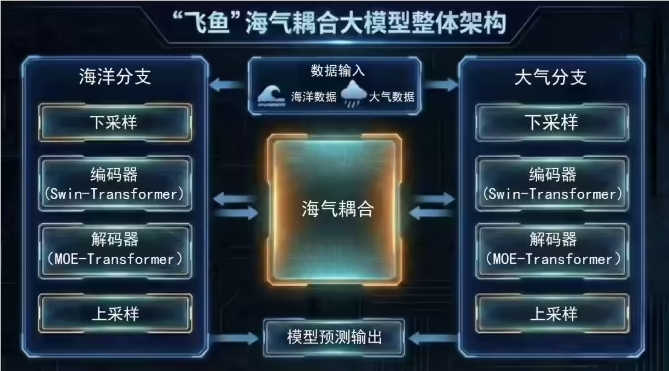
What sets Feiyu-1.0 apart is its uncanny ability to detect patterns invisible to conventional models. By processing decades of historical data, this system doesn't just predict weather - it interprets the complex conversation between sea and sky. "Traditional models often treat oceans and atmospheres as separate systems," explains Dr. Wei Lin, lead researcher on the project. "Feiyu-1.0 captures their dynamic interplay in ways we've never achieved before."
The practical implications are staggering for a region frequently battered by tropical storms. Early tests show the model can pinpoint typhoon formation and paths with unprecedented precision, giving coastal communities and shipping operators potentially life-saving lead time.
More Than Just Storm Warnings
Beyond its forecasting prowess, Feiyu-1.0 serves as a digital oceanographer. The system generates living maps of marine conditions that update in real-time, translating complex scientific data into visual formats even non-experts can understand. Fishermen can track optimal fishing conditions while environmentalists monitor coral reef health - all from the same dynamic platform.
Maritime industries aren't the only beneficiaries. Climate scientists believe this technology could unlock new understanding of how ocean systems influence global weather patterns. "We're not just building a better forecast tool," says Dr. Lin. "We're creating a window into fundamental planetary processes."
Key Points:
- World-first technology: Feiyu-1.0 represents the inaugural bidirectional coupled model specifically designed for South China Sea conditions
- Typhoon tracking breakthrough: Demonstrates significantly improved accuracy in predicting storm formation and trajectories
- Multi-purpose marine tool: Generates real-time oceanic data visualizations with applications ranging from fisheries to climate research
- Scientific collaboration: Joint development by leading Chinese oceanographic institutions marks significant progress in marine AI