Tencent Unveils AI Detection Tool for Images and Text
On January 17, 2025, Tencent launched an innovative tool aimed at detecting whether images and articles are generated by artificial intelligence (AI). This new system, developed by Tencent's Phoenix Lab within the Mixed Yuan Security Team, allows users to upload images for verification, providing results in a matter of seconds.
How the Detection Tool Works
The AI-generated image detection system distinguishes between real and AI-generated images by analyzing various characteristics. AI-generated images often exhibit unrealistic features, such as a flying puppy with wings or a cat smoking a cigar, which can be attributed to a lack of common sense logic. Additionally, these images may require "watermarking," which involves including explicit or implicit markers that can be either visible or invisible to the naked eye. The detection tool is designed to identify these markers and other hidden features, such as bright spots with densely distributed local textures when adjusting the HSV color space.
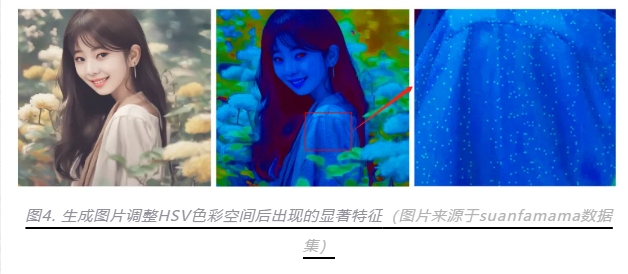
Identifying AI-generated images is not a straightforward task; it requires a multifaceted approach. The detection system employs AI models to capture a range of feature differences, including image texture, semantics, and hidden characteristics. The Phoenix Lab utilized a dataset of 1.4 million positive and negative samples for model training, covering a wide array of generated content scenarios. This extensive training has resulted in a detection accuracy rate exceeding 95%, with ongoing efforts to optimize and enhance the system.
Text Detection Capabilities
In addition to image detection, the Phoenix Lab has developed a text detection system that leverages vast amounts of data to identify AI-generated text. This system collects numerous positive and negative samples for training and employs comparative methods to infer the likelihood of AI generation in various types of articles. Currently, the text detection system encompasses a diverse range of styles, including news reports, official documents, novels, and essays. Future plans include expanding detection capabilities to poetry and other literary genres.
The initial motivation behind creating these AI detection tools was to optimize the training corpus for the Mixed Yuan large model. However, as the demand for tools that can identify AI-generated content has surged in both academic and industrial sectors, the lab has focused on developing two primary tools: one for detecting AI-generated images and another for AI-generated text, thereby providing valuable services to users.
Future Developments
Looking ahead, Tencent plans to introduce a detection tool for AI-generated videos, further enhancing its capabilities in identifying AI-generated content across various media formats.
Experience Address:
https://matrix.tencent.com/ai-detect/ai_gen
https://matrix.tencent.com/ai-detect
Key Points
- Tencent's new tool detects AI-generated images and text.
- The system achieves over 95% accuracy using extensive training data.
- Future plans include developing a detection tool for AI-generated videos.