iFLYTEK's Xinghuo X2 Breaks New Ground with Homegrown AI Power

China's AI Leap Forward: iFLYTEK Debuts Domestically-Powered Xinghuo X2

In a move that could reshape China's artificial intelligence landscape, iFLYTEK officially launched its Xinghuo X2 large language model on February 11, 2026. This isn't just another incremental upgrade - it represents something far more significant in today's tech climate.

Breaking the Computing Power Barrier

The real headline? Xinghuo X2 was trained entirely on homegrown computing infrastructure. "We've achieved complete autonomy from the silicon to the software," an iFLYTEK spokesperson told reporters. In an era where computing power has become geopolitical currency, this domestic capability could prove invaluable.

Specialization Over Generalization

Unlike models chasing broad conversational abilities, Xinghuo X2 zeroes in on four professional domains:

  • Education: Tailoring lessons to individual learning styles with unprecedented precision
  • Healthcare: Providing clinicians with nuanced diagnostic support
  • Automotive: Revolutionizing how drivers interact with smart vehicle systems
  • Digital Assistants: Understanding and executing complex multi-step instructions

"We're building tools, not toys," explained Dr. Li Wei, lead researcher on the project. "These applications need to work flawlessly in real-world professional settings."

The Bigger Picture: Tech Sovereignty

The launch comes as nations increasingly view AI development through national security lenses. With Xinghuo X2, iFLYTEK demonstrates that China can cultivate cutting-edge AI without relying on foreign computing resources.

Industry analysts see this as pivotal moment. "It's not just about matching capabilities anymore," noted tech analyst Zhang Ming. "This proves China can sustain advanced AI development entirely within its own ecosystem."

The implications extend beyond technical benchmarks. For sectors like healthcare and education where data sovereignty matters, domestic solutions may soon become the preferred choice.

Key Points:

  • First major Chinese LLM trained exclusively on domestic computing infrastructure
  • Focuses on practical applications in education, medicine, automotive and digital assistants
  • Represents significant progress in China's push for technological self-reliance
  • Could accelerate adoption of domestic AI solutions in sensitive industries
Enjoyed this article?

Subscribe to our newsletter for the latest AI news, product reviews, and project recommendations delivered to your inbox weekly.

Weekly digestFree foreverUnsubscribe anytime

Related Articles

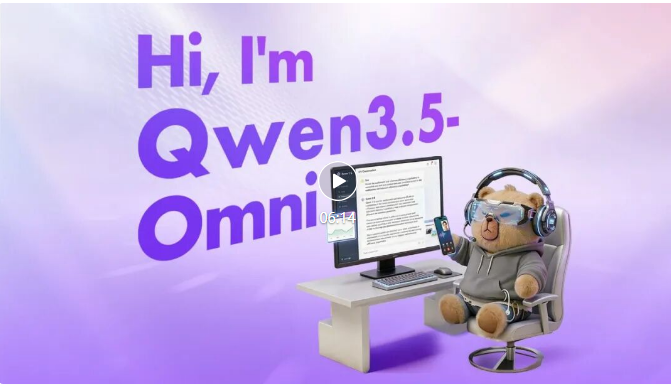
Qwen3.5-Omni Ushers in a New Era of AI with Multimodal Mastery
News

Qwen3.5-Omni Ushers in a New Era of AI with Multimodal Mastery

Tongyi Lab's latest AI model, Qwen3.5-Omni, has set a new benchmark with 215 state-of-the-art achievements. This multimodal powerhouse seamlessly processes text, images, audio, and video, outperforming competitors like Gemini-3.1Pro in audio understanding while maintaining top-tier visual and text capabilities. Its innovative Hybrid-Attention MoE architecture enables processing of lengthy audio and video content with remarkable precision. From real-time voice control to personalized voice cloning, Qwen3.5-Omni is redefining how we interact with technology.

March 31, 2026
AI innovationmultimodal AIvoice technology
Lenovo's Tianxi AI Claw Opens Beta Testing – Get Hands-On with Cloud-Powered Tech
News

Lenovo's Tianxi AI Claw Opens Beta Testing – Get Hands-On with Cloud-Powered Tech

Lenovo has launched beta testing for its innovative Tianxi AI Claw, offering users free access to cloud-based large model technology. The hybrid edge-cloud system keeps tasks running even when devices are off, promising seamless productivity. Interested participants can apply through a simple process to experience this cutting-edge tool that blends local computing with cloud resources.

March 31, 2026
AI innovationcloud computingproductivity tools
News

AI Takes a Leap: MiniMax's New Model Can Now Improve Itself

MiniMax has unveiled M2.7, a groundbreaking AI model that actively participates in its own development. Unlike traditional models that rely solely on human programmers, M2.7 can build testing frameworks, collaborate with other AI agents, and optimize its performance autonomously. This self-improving capability could significantly enhance how AI handles complex tasks. Meanwhile, the AI industry continues to evolve rapidly, with major players securing funding and adjusting prices in response to growing demand.

March 18, 2026
AI innovationself-learning systemsMiniMax
NVIDIA's Nemotron 3 Series: AI Gets a Fivefold Speed Boost
News

NVIDIA's Nemotron 3 Series: AI Gets a Fivefold Speed Boost

At the 2026 GTC conference, NVIDIA unveiled its Nemotron 3 series of open-source AI models, with the flagship Ultra version delivering five times faster processing. The release also includes innovative multimodal tools for audio-visual integration and real-time conversation, plus breakthroughs in robotics and medical research. Major industry players are already adopting these cutting-edge technologies.

March 17, 2026
AI innovationNVIDIAmachine learning
News

NVIDIA Takes AI to Space with New Orbital Computing Platform

NVIDIA has launched its groundbreaking Space Computing Service at the 2026 GTC conference, bringing advanced AI capabilities directly to low Earth orbit. The initiative features specialized hardware including the powerful Space-1 Vera Rubin Module and edge computing platforms IGX Thor and Jetson Orin. This technological leap transforms satellites from simple relays into intelligent orbital data centers capable of real-time decision making - potentially revolutionizing space operations and geospatial analysis.

March 17, 2026
space technologyAI innovationedge computing
News

China's AI Models Overtake US in Weekly Usage as Newcomer Hunter Alpha Makes Waves

Chinese AI models have surged ahead of their US counterparts in global weekly usage, according to OpenRouter data. MiniMax M2.5 maintains its top position for the fifth consecutive week, while newcomer Hunter Alpha has made an impressive debut, ranking seventh globally just days after launch. The figures reveal a significant shift in the AI landscape, with Chinese models now accounting for nearly 60% of total usage.

March 16, 2026
AI trendsChinese technologylarge language models