US Bets Big on AI to Tackle Nuclear Fusion and Quantum Tech Challenges

US Unveils Ambitious AI-Driven Research Agenda

The Biden administration has rolled out its most ambitious science and technology initiative yet - the 'Genesis' AI research program. At its core? Solving 26 of America's toughest technological challenges through artificial intelligence.

Nuclear Ambitions Take Center Stage

Nearly half the projects target nuclear technology, reflecting Washington's urgent push for energy independence and national security. The Department of Energy plans to:

  • Accelerate fusion energy implementation after recent breakthroughs
  • Modernize existing nuclear infrastructure
  • Enhance nuclear threat assessment capabilities

"We're leveraging decades of nuclear research data through AI," explained Energy Secretary Jennifer Granholm. "This isn't just about maintaining leadership - it's about quantum leaps."

Beyond Atoms: Quantum Frontiers

The program casts a wide net:

Quantum Computing Push

AI will help discover new quantum algorithms and develop systems that could revolutionize everything from drug discovery to cryptography.

Industrial Revival

The plan aims to resuscitate America's microelectronics sector while securing critical mineral supplies - a direct response to recent chip shortages.

Materials Science Revolution

Researchers will use AI to design novel materials with predictable properties, potentially transforming industries from aerospace to renewable energy.

The Implementation Challenge

The roadmap comes with significant uncertainties:

  • No specific funding commitments announced yet
  • Technical pathways remain undefined
  • Private sector participation still taking shape

"These are moon-shot goals," cautioned MIT professor Alicia Chen. "The vision is bold, but execution will require sustained investment over decades."

The Genesis program pools resources from 17 national labs, top universities, and private companies - marking Washington's most coordinated research push since the Apollo era.

Key Points:

  • Nuclear focus: Nearly half the projects target fusion energy and nuclear infrastructure
  • Quantum leap: AI will accelerate development of quantum computing systems
  • Industrial policy: Plan includes reviving domestic microelectronics production
  • Long game: Officials acknowledge breakthroughs may take decades
  • Collaborative model: Brings together national labs, academia and private sector
Enjoyed this article?

Subscribe to our newsletter for the latest AI news, product reviews, and project recommendations delivered to your inbox weekly.

Weekly digestFree foreverUnsubscribe anytime

Related Articles

News

Robots Get a Sense of Touch with Groundbreaking New Dataset

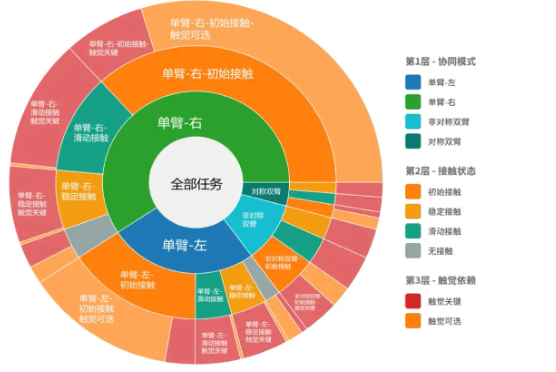
A major leap forward in robotics arrived this week with the release of Baihu-VTouch, the world's first cross-body visual-tactile dataset. Developed collaboratively by China's National-Local Co-built Humanoid Robot Innovation Center and multiple research teams, this treasure trove contains over 60,000 minutes of real robot interaction data. What makes it special? The dataset captures not just what robots see, but how objects feel - enabling machines to develop human-like tactile sensitivity across different hardware platforms.

January 27, 2026
roboticsAI researchtactile sensing
Robots Get a Sense of Touch: Groundbreaking Dataset Bridges Vision and Feeling
News

Robots Get a Sense of Touch: Groundbreaking Dataset Bridges Vision and Feeling

Scientists have unveiled Baihu-VTouch, the world's most comprehensive dataset combining robotic vision and touch. This collection spans over 60,000 minutes of interactions across various robot types, capturing delicate contact details with remarkable precision. The breakthrough could revolutionize how robots handle delicate tasks - imagine machines that can actually 'feel' what they're doing.

January 26, 2026
roboticsAI researchtactile sensors
News

AI cracks famous math puzzle with a fresh approach

OpenAI's latest model has made waves in mathematics by solving a long-standing number theory problem. The solution to the Erdős problem caught the attention of Fields Medalist Terence Tao, who praised its originality. But behind this success lies a sobering reality - AI's overall success rate in solving such problems remains low, reminding us that these tools are assistants rather than replacements for human mathematicians.

January 19, 2026
AI researchmathematicsmachine learning
AI's Scientific Breakthrough: How FrontierScience Tests the Next Generation of Research Assistants
News

AI's Scientific Breakthrough: How FrontierScience Tests the Next Generation of Research Assistants

Artificial intelligence is making waves in scientific research, but how do we measure its true reasoning capabilities? The new FrontierScience benchmark puts AI models through rigorous testing in physics, chemistry, and biology. Early results show GPT-5.2 leading the pack, though human scientists still outperform when it comes to open-ended problem solving. This development could reshape how research gets done in labs worldwide.

December 17, 2025
AI researchscientific computingmachine learning benchmarks
AI2's Molmo 2 Brings Open-Source Video Intelligence to Your Fingertips
News

AI2's Molmo 2 Brings Open-Source Video Intelligence to Your Fingertips

The Allen Institute for AI has just unveiled Molmo 2, a game-changing open-source video language model that puts powerful visual understanding tools directly in developers' hands. With versions ranging from 4B to 8B parameters, these lightweight yet capable models can analyze videos, track objects, and even explain what's happening on screen. What makes this release special? Complete transparency - you get full access to both the models and their training data, a rare find in today's proprietary AI landscape.

December 17, 2025
AI researchcomputer visionopen source AI
Alibaba's New AI Training Method Promises More Stable, Powerful Language Models
News

Alibaba's New AI Training Method Promises More Stable, Powerful Language Models

Alibaba's Tongyi Qwen team has unveiled an innovative reinforcement learning technique called SAPO that tackles stability issues in large language model training. Unlike traditional methods that risk losing valuable learning signals, SAPO uses a smarter approach to preserve important gradients while maintaining stability. Early tests show significant improvements across various AI tasks, from coding to complex reasoning.

December 10, 2025
AI researchmachine learningAlibaba