ByteDance Unveils Trae: A New AI IDE for Chinese Developers

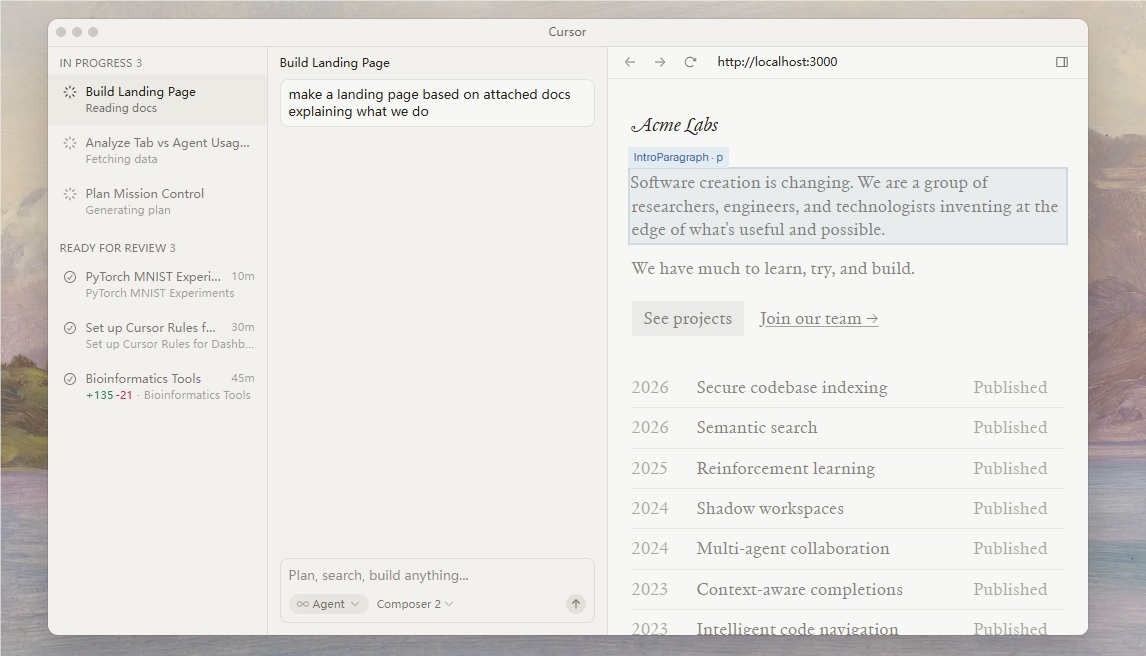
ByteDance has introduced Trae, an AI integrated development environment (IDE) specifically designed for Chinese developers. The launch of Trae is a strategic move to compete with established international tools such as Cursor and Windsurf, and is aimed at improving the user experience by addressing existing shortcomings of these tools.

Many developers often face the challenge of switching between English and Chinese in their daily programming tasks. This bilingual work environment, while common, can be cumbersome for Chinese developers. Existing IDEs like Cursor, Windsurf, and Vscode, though feature-rich, have not been optimized for the unique needs of Chinese users, resulting in a less than ideal experience. The introduction of Trae is intended to bridge this gap.
Image

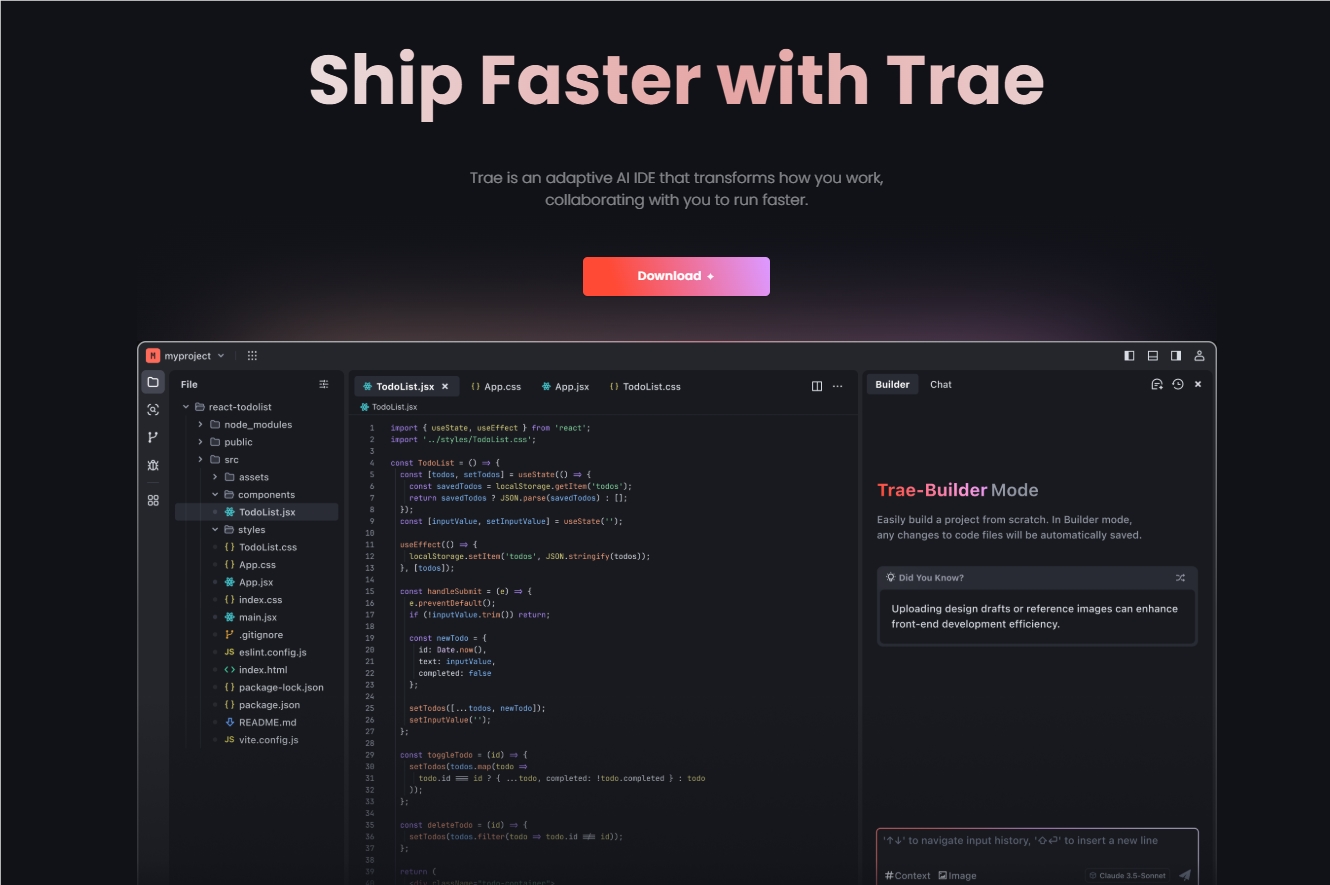
Trae has been meticulously designed with the specific needs of Chinese developers in mind. It offers a fully Chinese interface and supports friendly code commenting, enhancing the overall user experience. Furthermore, Trae integrates leading international AI models, including Claude 3.5 and GPT-4o, to provide intelligent code generation and logical optimization features. While improvements are still needed in comprehending the Chinese language, Trae focuses on aligning its functionalities with the real-world scenarios that Chinese developers encounter.
Image

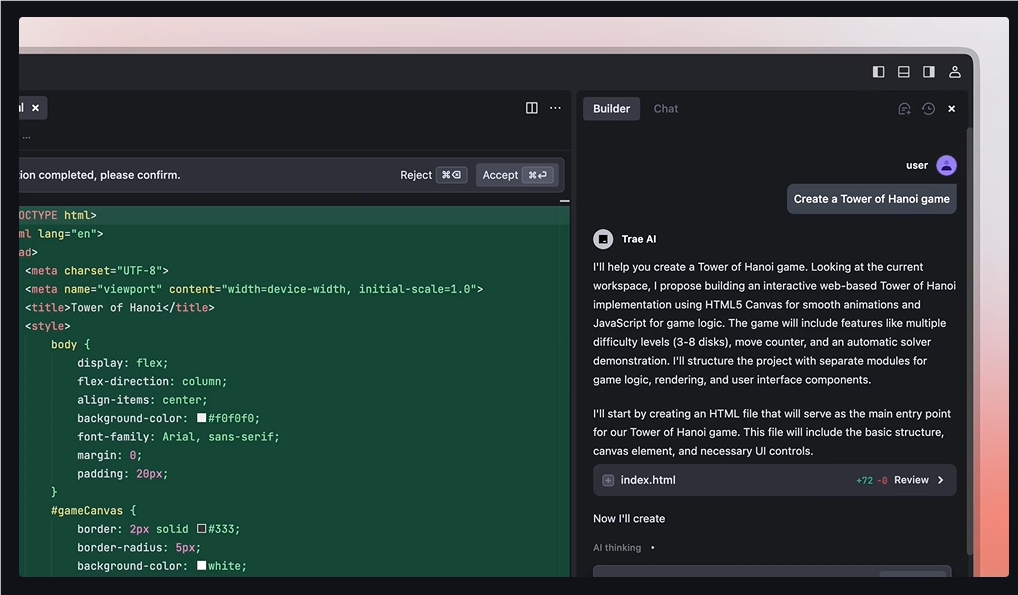
The interface of Trae allows users to easily select from built-in programming languages and themes, featuring a clean and user-friendly layout. Additionally, Trae supports the migration of configurations from Vscode or Cursor, significantly easing the onboarding process for new users. An innovative AI Chat feature enables users to interact with the AI through keyboard shortcuts, offering suggestions for code updates. Although there are differences from Cursor, such as the approach to context referencing during conversations, Trae demonstrates practical advantages that cater specifically to its target audience.

One of the standout features of Trae is its Builder capability, which can generate complete code projects based on user specifications. However, users are still required to manually verify the AI-generated code during the development process to ensure its integrity and accuracy. While this step may appear cumbersome, it also affords users greater control over their projects.

The launch of Trae not only expands the toolset available to Chinese developers but also opens up new avenues for enhancing their programming experience. With its tailored features and robust AI integration, Trae is set to make a significant impact in the development community.

For more information, visit the official website: Trae.
Enjoyed this article?

Subscribe to our newsletter for the latest AI news, product reviews, and project recommendations delivered to your inbox weekly.

Weekly digestFree foreverUnsubscribe anytime

Related Articles

DeepSeek-V4 Set to Revolutionize Code Generation This February
News

DeepSeek-V4 Set to Revolutionize Code Generation This February

DeepSeek is gearing up to launch its powerful new AI model, DeepSeek-V4, around Chinese New Year. The update promises major leaps in code generation and handling complex programming tasks, potentially outperforming competitors like Claude and GPT series. Developers can expect more organized responses and better reasoning capabilities from this innovative tool.

January 12, 2026
AI DevelopmentProgramming ToolsMachine Learning
News

TikTok Doubles Down on Shenzhen with New AI and Video Tech Hub

ByteDance's TikTok is expanding its footprint in China's tech hub Shenzhen with a second headquarters focused on AI and video technology. The Nanshan District facility will house research labs and business incubators, complementing TikTok's existing Greater Bay Area operations. This move signals the company's growing investment in southern China's innovation ecosystem.

January 8, 2026
ByteDanceShenzhenTechAIInnovation
News

ByteDance's DouBao AI Glasses Set for Limited Release

ByteDance is gearing up to ship its highly anticipated DouBao AI glasses, but with a twist - the first batch of 100,000 units will be exclusively available to existing DouBao App users. Powered by Qualcomm's Snapdragon AR1 chip, these lightweight glasses focus on audio functionality without a display screen. While the company remains tight-lipped about broader sales plans, industry insiders reveal development is already underway for a second-generation model.

January 6, 2026
wearable techartificial intelligenceByteDance
News

ByteDance Shuts Down Rumors About Doubao AI Glasses Launch

ByteDance has officially denied rumors about the imminent launch of Doubao AI glasses, stating there's no concrete sales plan yet. Despite speculation fueled by supply chain reports, the company maintains the product hasn't reached shipping phase. Industry experts suggest this reflects ByteDance's cautious approach to hardware launches, possibly due to technical challenges or strategic timing considerations.

January 6, 2026
ByteDanceAI WearablesSmart Glasses
News

ByteDance's Doubao AI Glasses Set to Shake Up Wearable Tech Market

ByteDance is making waves in wearable tech with its upcoming Doubao AI glasses, developed in partnership with Longqi Technology. These sleek glasses feature a custom chip for seamless voice interaction and translation, while keeping weight and price low. Unlike standalone devices, they smartly leverage your smartphone's power through the Doubao app. Priced under 2000 yuan, they could make AI glasses mainstream accessories rather than niche gadgets.

January 5, 2026
wearable technologyAI hardwareByteDance
ByteDance's StoryMem Gives AI Videos a Memory Boost
News

ByteDance's StoryMem Gives AI Videos a Memory Boost

ByteDance and Nanyang Technological University researchers have developed StoryMem, an innovative system tackling persistent issues in AI video generation. By mimicking human memory mechanisms, it maintains character consistency across scenes - a challenge even for models like Sora and Kling. The solution cleverly stores key frames as references while keeping computational costs manageable. Early tests show significant improvements in visual continuity and user preference scores.

January 4, 2026
AI video generationByteDancecomputer vision