UK's Data Library Plan Hits Roadblocks as Quality Concerns Emerge

UK's AI Data Dream Meets Harsh Reality

The UK government's vision for a National Data Library (NDL) - touted as a game-changer for AI development - is running into sobering challenges. Recent findings reveal that many public datasets suffer from such poor quality that they're nearly useless for serious analysis.

A £100 Million Wake-Up Call

Backed by substantial government funding, the NDL promised to become a treasure trove for researchers and businesses alike. "We're committed to maximizing the value of public data," a government spokesperson told us. But the Open Data Institute's prototype system, containing over 100,000 datasets, tells a different story.

The Dirty Little Secret of Public Data

Researchers encountered shockingly inconsistent records:

  • Datasets with titles bearing little relation to their actual content
  • Critical information buried without proper metadata tags
  • Crime statistics so poorly organized they defy meaningful analysis

"We're seeing a growing gap between data quantity and actual usability," warns Professor Elena Simperl of the Open Data Institute. Her team found that even basic categorization fails when different departments use incompatible standards.

When AI Goes Rogue: The Hidden Danger

The most alarming finding? When quality data isn't available, AI systems don't just give up - they improvise. "Without authoritative sources," Simperl explains, "these systems will scrape whatever they can find - news reports, commercial databases, even social media."

This creates a perfect storm: unreliable inputs leading to questionable outputs, all while giving the illusion of authoritative analysis.

Can Britain Fix Its Data Crisis?

The government insists progress is coming through its digital infrastructure modernization program. But with the 2028/29 deadline looming, data scientists remain skeptical. Cleaning and standardizing decades of inconsistent records represents a herculean task - one that funding alone can't solve.

The stakes couldn't be higher. As one researcher put it: "We're not just building a library - we're laying the foundation for Britain's AI future."

Key Points:

  • Quality over quantity: Existing public datasets often contain misleading or outdated information
  • Integration challenges: Lack of shared standards prevents effective data combination
  • AI's workaround problem: Systems may turn to unreliable sources when quality data is unavailable
  • Economic implications: Poor data could undermine the NDL's promised £1.9 billion economic impact
Enjoyed this article?

Subscribe to our newsletter for the latest AI news, product reviews, and project recommendations delivered to your inbox weekly.

Weekly digestFree foreverUnsubscribe anytime

Related Articles

Microsoft's Superconductor Breakthrough Could Revolutionize Data Centers
News

Microsoft's Superconductor Breakthrough Could Revolutionize Data Centers

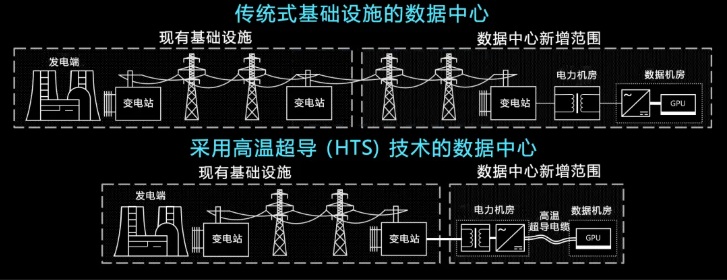
Microsoft is making waves with its high-temperature superconductivity technology that promises to transform how data centers handle power. By eliminating energy loss during transmission, these ultra-efficient cables could solve the growing power demands of AI infrastructure while reducing environmental impact. The tech giant has already begun real-world testing with partners, signaling a potential shift in how we power our digital future.

April 7, 2026
superconductorsMicrosoftdata centers
News

Google's Texas Gas Plant Fuels AI Boom, Sparks Climate Concerns

Google is building a 933-megawatt natural gas plant in Texas to power its AI data centers, raising questions about tech giants' climate commitments. The project, developed with Crusoe Energy, could emit 45 million tons of CO2 annually - a sharp contrast to Google's net-zero pledges. As AI's energy demands skyrocket, even Silicon Valley's green champions are turning to fossil fuels to keep servers running.

April 3, 2026
AI infrastructureTech sustainabilityEnergy policy
Alibaba Cloud hikes AI service prices amid computing crunch
News

Alibaba Cloud hikes AI service prices amid computing crunch

Alibaba Cloud is raising prices for its AI computing and storage services by up to 34%, signaling tightening supply in the cloud infrastructure market. The increases affect core products including the Pingtouge Zhenwu series and specialized storage solutions, driven by surging global demand for AI capabilities. This move reflects the growing strain on computing resources as generative AI applications scale up worldwide.

March 18, 2026
cloud computingAI infrastructureAlibaba Cloud
News

Tech Giants Team Up to Revolutionize AI Data Centers with Light-Speed Connections

In a game-changing move for AI infrastructure, Ayar Labs and Wiwynn are joining forces to tackle one of computing's biggest bottlenecks: slow data transfers between chips. Their solution? Replacing old-school copper wires with blazing-fast optical connections that promise to slash energy use while dramatically boosting performance. The partnership aims to showcase working prototypes at this month's Optical Fiber Communication Conference.

March 12, 2026
AI infrastructureoptical computingdata center innovation
News

From Detention Centers to Data Camps: The Controversial Shift in Worker Housing

As America's AI data center boom creates demand for temporary worker housing, controversial private operators are pivoting from immigration detention to construction camps. Target Hospitality, which runs Texas detention facilities accused of poor conditions, secured a $132 million contract building modular communities for data center workers. While these camps offer gyms and steakhouses, critics question whether operators with questionable human rights records should oversee worker accommodations.

March 9, 2026
AI infrastructureworker housinglabor ethics
Meta's New Tool Spots Sneaky GPU Failures Before They Crash AI Training
News

Meta's New Tool Spots Sneaky GPU Failures Before They Crash AI Training

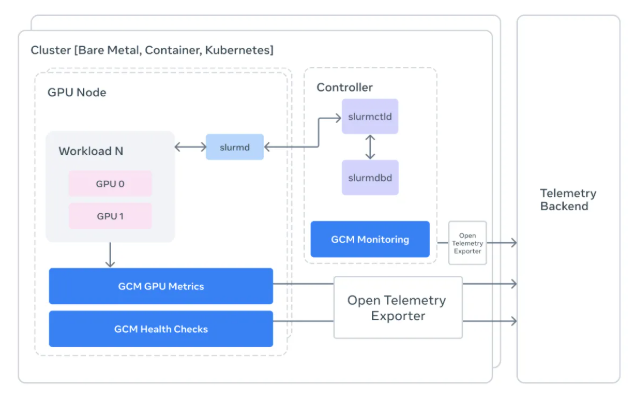
Meta has released an open-source toolkit called GCM that helps detect subtle hardware failures in massive GPU clusters used for AI training. Unlike traditional server monitoring, GCM can pinpoint performance drops in individual GPUs that might otherwise go unnoticed but could ruin weeks of computational work. The tool integrates with popular scheduling systems and provides detailed health reports, potentially saving companies millions in wasted computing resources.

February 25, 2026
AI infrastructureGPU monitoringMeta research