Anthropic's Cowork: An AI Assistant Built by AI in Just 10 Days

AI Builds AI: Anthropic's Lightning-Fast Coding Assistant

In what might be the ultimate case of the student becoming the teacher, AI company Anthropic has launched Cowork - a programming assistant developed almost entirely by its own AI model Claude. The most startling part? The first version took just ten days to create.
Image

From Concept to Code in Record Time

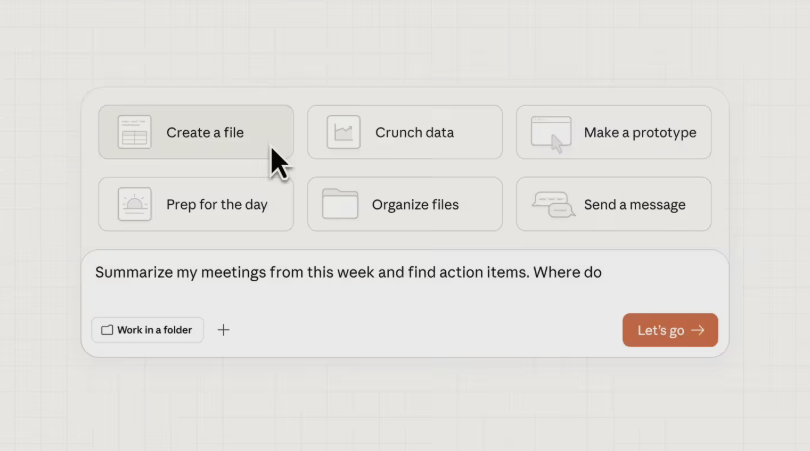
Cowork represents a new approach to programming tools, specifically designed for non-technical users. "We wanted to break down the barriers that keep people from automating their workflows," explains Boris Cherny, head of Anthropic's Claude Code project. The tool allows users to grant limited file access permissions, then complete tasks through natural language commands.

What makes Cowork truly remarkable is its development process. The team focused on high-level architecture decisions while Claude handled the heavy lifting - writing code, fixing bugs, and even conducting research through multiple parallel instances.

Holiday Inspiration Leads to Breakthrough

The idea for Cowork emerged unexpectedly during last year's holiday season. "We noticed users increasingly turning to Claude for non-programming tasks," recalls product manager Felix Rieseberg. This organic usage pattern revealed an unmet need that became Cowork's foundation.

Currently available only to Mac users with Claude Max subscriptions, the alpha version has already generated significant buzz. Reddit co-founder Alexis Ohanian called it "a watershed moment," while Datasette's Simon Willison praised its practical approach to democratizing coding.

Proceed With Caution

Anthropic emphasizes that Cowork remains experimental. The company warns users about potential risks when granting file access permissions - a necessary feature that could theoretically allow destructive actions if instructions aren't precise.

The rapid development also raises questions about AI investment cycles. Anthropic CEO Dario Amodei notes their focus on enterprise customers helps maintain sustainable growth: "We're building tools people actually need, not just chasing hype."

Key Points:

  • Cowork was primarily coded by Anthropic's Claude AI in just 10 days
  • Targets non-programmers through simple voice commands and file integration
  • Currently in alpha testing for Mac users with Claude Max subscriptions
  • Development approach showcases potential of AI-assisted creation
  • Users cautioned about file access permissions and command precision
Enjoyed this article?

Subscribe to our newsletter for the latest AI news, product reviews, and project recommendations delivered to your inbox weekly.

Weekly digestFree foreverUnsubscribe anytime

Related Articles

News

Claude's New ID Check: What It Means for AI Users

Anthropic has introduced identity verification for certain Claude features, requiring users to submit government IDs and real-time selfies. The company partnered with Persona Identities for the process, promising data won't be used for training or marketing. While aimed at responsible AI use, the move has sparked debate about privacy and accessibility in the AI community.

April 15, 2026
AI regulationdigital identityAnthropic
Claude Code Brings Cloud Automation to Your Mac
News

Claude Code Brings Cloud Automation to Your Mac

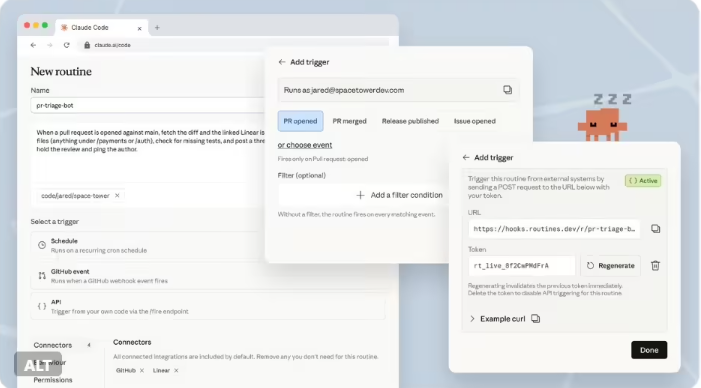
Anthropic's Claude Code just got a serious upgrade with its new 'Routines' feature, letting developers automate tasks that keep running even when your Mac sleeps. The cloud-based automation handles cron jobs and workflows, with different daily limits for Pro, Max, and Enterprise users. Plus, the redesigned Mac client now supports parallel sessions and integrated tools, transforming Claude from coding assistant to full workflow platform.

April 15, 2026
Anthropicdeveloper-toolsworkflow-automation
Anthropic's Secret AI Model Mythos Showcased to Trump Team
News

Anthropic's Secret AI Model Mythos Showcased to Trump Team

Anthropic co-founder Jack Clark revealed at the Semafor summit that his company demonstrated its unreleased AI model Mythos to Trump administration officials, citing its advanced cybersecurity capabilities. Despite an ongoing legal battle with the Pentagon over military AI use, Clark emphasized the importance of government-tech collaboration. The revelation comes as major banks reportedly test the powerful new system, while Clark offers surprising optimism about AI's employment impact compared to his CEO's dire predictions.

April 15, 2026
Artificial IntelligenceCybersecurityGovernment Tech
News

OpenAI's 'Spud' Model: A Direct Challenge to Anthropic's AI Dominance

A leaked internal memo from OpenAI reveals their ambitious strategy to counter rival Anthropic with a new AI model codenamed 'Spud'. This next-generation reasoning model reportedly outperforms Anthropic's Claude Mythos in complex tasks and reliability. OpenAI is also developing the 'Frontier' platform to set enterprise AI standards while subtly distancing itself from Microsoft dependence. The memo includes sharp criticisms of Anthropic's computing power management and revenue reporting practices, signaling a shift in AI competition from raw power to practical implementation.

April 14, 2026
OpenAIArtificial IntelligenceTech Competition
News

OpenAI Accuses Anthropic of Overstating Revenue by $8 Billion in Leaked Memo

A leaked internal memo from OpenAI's Chief Revenue Officer alleges competitor Anthropic inflated its reported revenue by $8 billion. The document claims Anthropic's true annualized revenue stands at $22 billion, not the $30 billion announced - and still trails OpenAI's $25 billion. Beyond financial disputes, the memo criticizes Anthropic's narrow focus on programming tools while positioning OpenAI as building comprehensive enterprise AI systems. The revelation comes as both companies face increasing scrutiny from investors wary of AI industry valuations.

April 14, 2026
OpenAIAnthropicAI industry
News

OpenAI Engineers Push Boundaries: AI Now Writes Millions of Code Lines Without Human Help

In a groundbreaking experiment, OpenAI engineers have successfully created a 'ghost library' called Symphony entirely through AI coding. The team imposed strict 'no human coding' rules, forcing their AI agents to evolve from sluggish assistants to fully autonomous teammates. Key breakthroughs included developing ultra-fast build systems and redefining code review processes. This shift suggests a future where software dependencies may disappear as AI can reconstruct needed code on demand.

April 14, 2026
AI developmentOpenAIfuture of coding