Tencent's Tiny AI Model Packs a Punch with 2Bit Innovation
Tencent's Game-Changing Mini AI Model
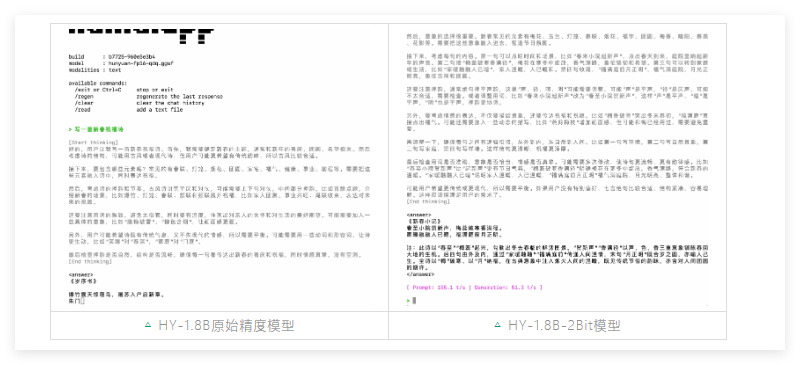
In what could revolutionize edge computing, Tencent Hunyuan has unveiled its HY-1.8B-2Bit model - an AI that thinks big but lives small. This technological marvel proves good things really do come in small packages, achieving full-scale performance while occupying less space than your average mobile game.
The 2Bit Magic Trick
Quantization typically comes with painful trade-offs - the more you compress, the more performance suffers. But Tencent's engineers have rewritten the rules. By ditching conventional approaches and developing quantization-aware training (QAT), they've created something many thought impossible.
"It's like teaching an athlete to perform at Olympic levels while wearing weighted clothing," explains Dr. Zhang Wei, lead researcher on the project. "When you remove the weights, their performance soars."
The numbers speak for themselves: in head-to-head tests against 4Bit models, this lightweight champion holds its own in mathematics, coding, and scientific reasoning tasks.
Speed Demon Performance
Where this model truly shines is in real-world use:
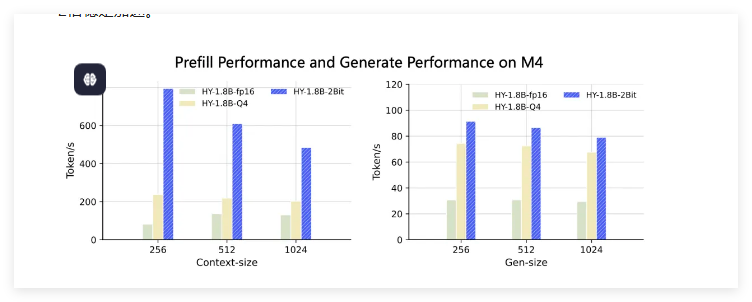
- MacBook M4 users see responses 3-8 times faster from first keystroke
- Tianji 9500 processors enjoy 50% quicker generation speeds compared to standard formats
- Full reasoning capabilities remain intact - no "dumbed down" experience here
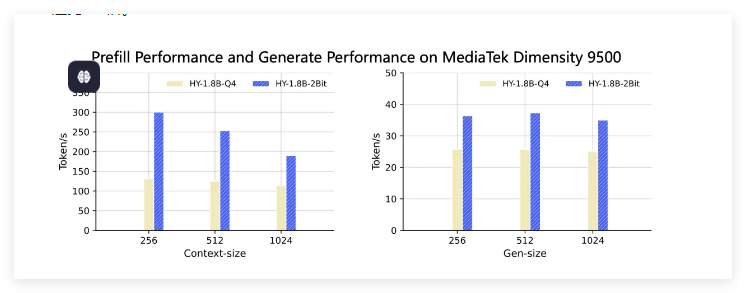
The secret sauce? An innovative compression approach that reduces equivalent parameters to just 0.3 billion while maintaining robust "all-around" intelligence.
Coming Soon to a Device Near You
The team has already adapted the model for Arm SME2 platforms, opening doors for smartphone integration and smart home applications where privacy matters most. Future plans include bridging remaining gaps with full-precision models through reinforcement learning techniques.
Key Points:
- Size breakthrough: Just 600MB memory footprint
- Performance maintained: Matches larger models' capabilities
- Speed gains: Up to 3x faster response times
- Universal compatibility: Works across consumer hardware
- Privacy focused: Ideal for offline deployment scenarios