India's Alpie AI Model Makes Waves - But Is It Truly Homegrown?
India's AI Dark Horse Surprises the Tech World
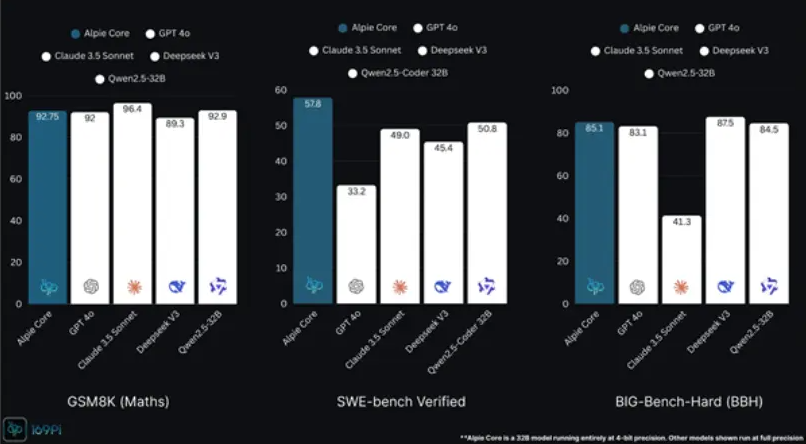
In a surprising twist in the global AI competition, India's 169PI has launched Alpie - a compact but mighty 32B parameter model that's punching above its weight class. On the GSM8K math benchmark, it goes toe-to-toe with OpenAI's GPT-4o, while its software engineering scores actually surpass Anthropic's Claude3.5. These results have some calling it "India's answer to DeepSeek."
The Open-Source Secret Behind the Success
Here's where things get interesting. Technical analysis reveals Alpie isn't built from scratch, but rather fine-tuned from China's open-source DeepSeek-R1 model. Think of it like taking a powerful engine and giving it a sleek new body - impressive engineering, but not entirely original design.
"It's essentially a distilled version of Chinese technology," explains Mumbai-based AI researcher Priya Patel. "But what they've done with quantization is genuinely innovative."
Democratizing AI Through Smart Engineering
The real game-changer? Alpie's 4-bit quantization slashes hardware requirements dramatically:
- 75% less VRAM needed
- Runs smoothly on consumer-grade GPUs (16-24GB)
- Inference costs just 10% of GPT-4o
This makes advanced AI suddenly accessible to India's thriving startup ecosystem and beyond. Bengaluru tech incubator head Rohan Mehta notes: "For small developers who couldn't afford cloud API fees, this changes everything."
The Innovation Debate Continues
While some criticize Alpie as merely a "shell" of existing tech, others argue its optimizations represent meaningful progress. The model demonstrates how the global open-source movement is reshaping AI development - with fascinating implications for international tech competition.
Key Points:
- 🎯 Performance punch: Matches GPT-4o in math, beats Claude3.5 in coding tasks
- ⚙️ Engineering feat: Radical cost reductions via 4-bit quantization
- 🌍 Global collaboration: Built on Chinese open-source foundation with Indian optimizations
- 💡 Accessibility win: Puts powerful AI within reach of smaller developers