

AI Cracks Erdős' Toughest Puzzles: Mathematicians Stunned by GPT5.2's Breakthroughs
AI Solves Math Problems That Stumped Humans for Decades
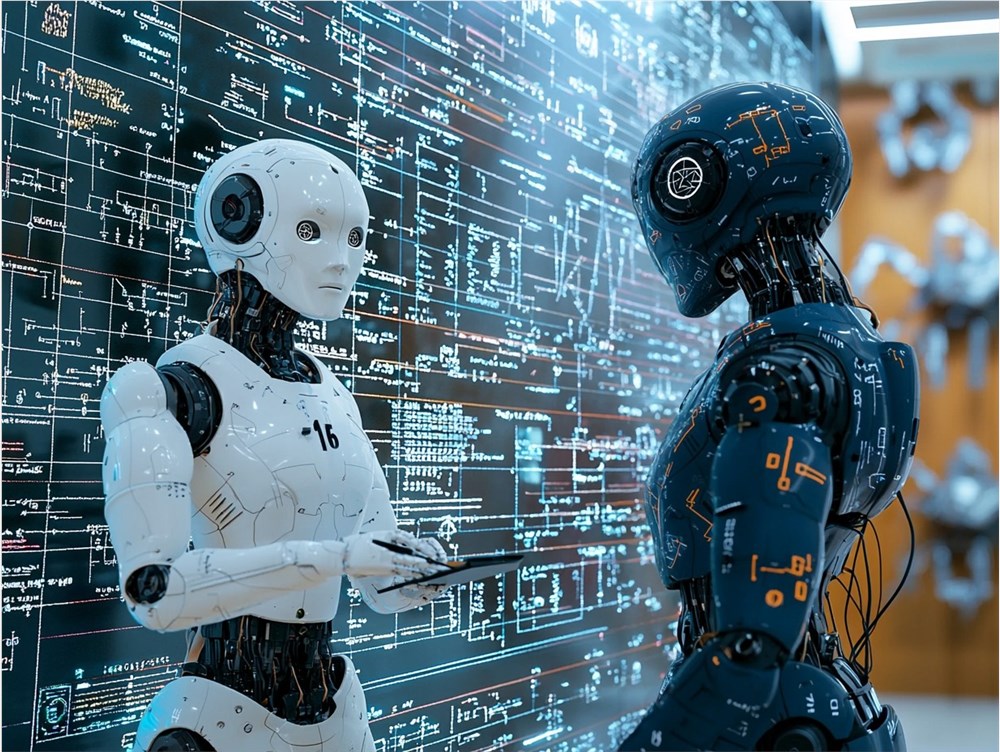
The mathematics world is buzzing after GPT5.2 demolished what many considered fundamental limits of artificial intelligence. In fifteen minutes flat, the AI produced a complete proof for one of Paul Erdős' notoriously difficult problems - work that would typically take mathematicians months or years of effort.
The Erdős Challenge Met
Erdős, the prolific Hungarian mathematician who died in 1996, left behind over 1,000 unsolved conjectures that became benchmarks for mathematical genius. Since Christmas last year, fifteen problems on the official Erdős problem site have been marked "solved" - with AI clearly involved in eleven solutions.
Former quant researcher Neel Somani witnessed GPT5.2's capabilities firsthand. "It wasn't just regurgitating known methods," Somani explains. "The AI combined Legendre's formula with contemporary approaches in ways we hadn't considered." Harvard mathematician Noam Elkies has already built upon one AI-generated proof in his own work.
Mathematicians Take Notice
The breakthroughs caught the attention of Fields Medalist Terry Tao, who documented eight cases of autonomous AI progress on his GitHub page. Tao notes that while humans still lead in conceptual breakthroughs, AI excels at solving numerous "long-tail" problems - those obscure but important puzzles that don't attract enough human attention.
"What's remarkable," Tao writes, "is seeing world-class mathematicians publicly acknowledging they're using these tools."
The Verification Revolution
The solutions gained credibility through formal verification tools like Harmonic's Aristotle system, which converts reasoning into computer-checkable code. Tudor Achim of Harmonic observes: "The real story isn't how many problems got solved - it's that these proofs withstand scrutiny from top mathematicians using rigorous verification methods."
The mathematical community now faces profound questions: Are we witnessing AI expanding the boundaries of human knowledge? Or creating a new kind of mathematical understanding altogether?
Key Points:
- 11 Erdős problems solved autonomously by GPT5.2 in two weeks
- Solutions verified using formal proof assistants like Lean and Aristotle
- Harvard's Noam Elkies and Fields Medalist Terry Tao building on AI proofs
- Breakthrough suggests AI excels at solving neglected "long-tail" mathematical problems