
Google's Gemini Embedding 2 Bridges the Gap Between Machines and Human Understanding

Google Takes Machine Understanding to New Heights with Gemini Embedding 2

In a move that could redefine how artificial intelligence systems process information, Google has introduced Gemini Embedding 2, its first native multimodal embedding model. This technological leap allows machines to comprehend multiple forms of media simultaneously—a capability that brings us closer to human-like understanding.

Image

Beyond Single-Media Limitations

Traditional AI models typically specialize in one type of data—text or images or audio—creating silos that don't reflect how humans naturally process information. Gemini Embedding 2 shatters these barriers by mapping diverse content types into a shared mathematical space.

"Imagine showing a child a picture book," explains Dr. Elena Rodriguez, an AI researcher at Stanford University. "They don't just see images or read words separately—they understand how the visuals and text relate. That's what this model achieves computationally."

How It Works Differently from Generative AI

While models like ChatGPT generate new content, embedding models specialize in comprehension:

  • Convert complex data into machine-readable vectors
  • Identify subtle semantic relationships across media types
  • Improve search accuracy beyond simple keyword matching
  • Maintain contextual relevance across languages and formats

The implications are profound for fields requiring nuanced understanding—from legal research to medical diagnosis.

Technical Breakthroughs Worth Noting:

The model introduces several industry-first capabilities:

  • True Multimodal Processing: Handles PNG/JPEG images, MP4/MOV videos (up to 120 seconds), raw audio files, and PDF documents (up to 6 pages) natively
  • Global Language Support: Accurately interprets semantic intent across more than 100 languages
  • Cross-Media Analysis: Accepts combined inputs like "image + text" requests to uncover relationships between different content forms
  • Enhanced Applications: Boosts performance in retrieval-augmented generation (RAG), semantic search systems, sentiment analysis tools, and large-scale data clustering

The legal field offers compelling examples of its potential. During testing scenarios involving millions of cross-media records—video depositions alongside written transcripts and photographic evidence—Gemini Embedding 2 demonstrated remarkable accuracy in connecting relevant materials.

The model is currently available for public preview through Google's Gemini API and Vertex AI platform.
Enjoyed this article?

Subscribe to our newsletter for the latest AI news, product reviews, and project recommendations delivered to your inbox weekly.

Weekly digestFree foreverUnsubscribe anytime

Related Articles

Baidu's New AI Service Makes Smart Assistants Effortless
News

Baidu's New AI Service Makes Smart Assistants Effortless

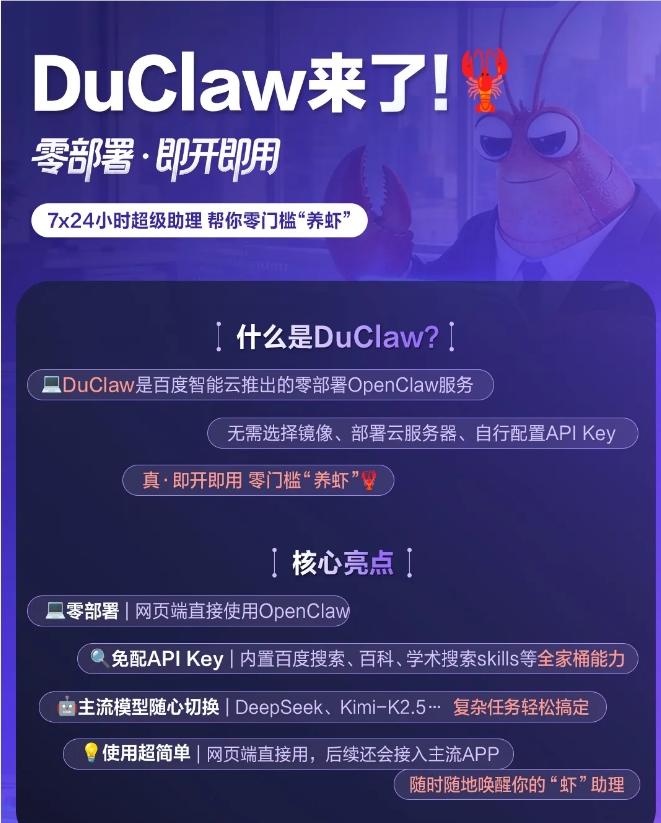
Baidu Intelligent Cloud has unveiled DuClaw, a game-changing AI service that eliminates technical hurdles for businesses. This zero-deployment solution removes the need for complex setup processes, allowing companies to access powerful AI capabilities instantly. Building on their popular OpenClaw platform, DuClaw integrates Baidu's search technologies and supports multiple large language models. The service is set to expand its reach through integration with major office platforms like WeCom and DingTalk, potentially transforming how businesses use AI assistants.

March 11, 2026
AI innovationbusiness technologycloud services
News

NVIDIA Shakes Up AI Landscape with Open-Source NemoClaw Platform

NVIDIA is making waves with its new open-source AI agent platform, NemoClaw, which breaks free from hardware dependencies. Meanwhile, China celebrates a milestone in industrial communication standards, Apple gears up for its foldable iPhone launch, and Chinese AI models dominate global rankings. These developments signal an exciting phase in tech innovation.

March 11, 2026
AI innovationtech trendsopen source
News

Shenzhen Hosts Lobster Feast with AI Twist to Boost Tech Adoption

Longgang District teams up with AI firm Kimi for an unforgettable culinary-tech fusion event. On March 14th, attendees will witness robots cooking lobster while enjoying free samples, all while learning about OpenClaw deployment. The festival offers practical benefits too - from free installation services to API discounts for businesses embracing AI transformation.

March 10, 2026
AI innovationculinary techShenzhen events
News

Alibaba's Tiny AI Model Takes On GPT-4o – And Wins

In a surprising turn of events, Alibaba's compact Qwen 3.5 model with just 4 billion parameters has outperformed OpenAI's massive GPT-4o in independent testing. This breakthrough challenges the industry's obsession with ever-larger models, proving that smarter architecture can trump sheer size. The achievement opens new possibilities for running powerful AI locally on everyday devices.

March 9, 2026
AI innovationMachine learningChinese tech
Microsoft's New AI Model Thinks Like Humans - Decides When to Go Deep
News

Microsoft's New AI Model Thinks Like Humans - Decides When to Go Deep

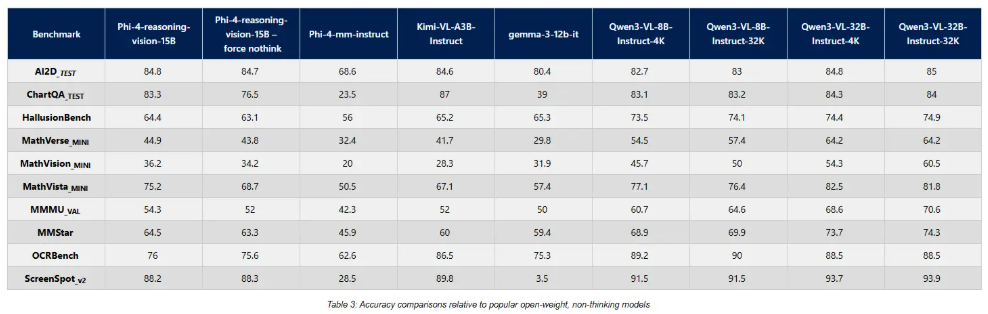
Microsoft just unveiled Phi-4-reasoning-vision-15B, an open-source AI model that mimics human decision-making by choosing when to think deeply. Unlike typical models that require manual mode switching, this 15-billion-parameter wonder automatically adjusts its reasoning depth based on task complexity. Excelling in image analysis and math problems while using surprisingly little training data, it could revolutionize how we deploy lightweight AI systems.

March 5, 2026
AI innovationMicrosoft Researchlightweight models
News

Lenovo's Visionary Concepts Steal the Show at MWC 2026

Lenovo turned heads at MWC 2026 with six groundbreaking concept devices that redefine how we interact with technology. From desktop robots that blink to foldable gaming handhelds, these innovations showcase practical applications of AI in work and play. The modular PC design solves the portability-power dilemma, while creative professionals get powerful new tools for 3D modeling.

March 3, 2026
future techAI innovationmodular computing