
Baidu's New AI Service Makes Smart Assistants Effortless

Baidu Simplifies AI Adoption with New Zero-Deployment Service

In a move that could democratize AI adoption, Baidu Intelligent Cloud launched DuClaw on March 11 - a service that promises to deliver smart assistants without the usual technical headaches. Gone are the days of wrestling with server configurations or API keys; DuClaw offers businesses instant access to sophisticated AI capabilities.

From Open Source to Cloud Convenience

DuClaw represents the cloud evolution of Baidu's open-source OpenClaw platform, but with significant upgrades. The service combines Baidu's powerful search technologies - including its encyclopedia and academic search functions - while supporting multiple leading large language models. Image
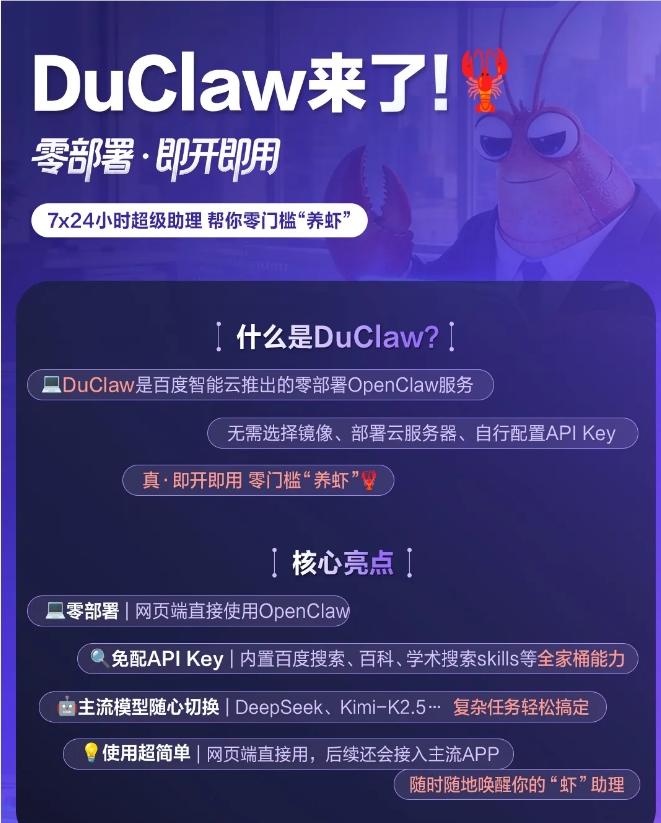
"What makes DuClaw special is its simplicity," explains a Baidu spokesperson. "We've removed all the barriers that typically slow down AI adoption in business settings."

Seamless Integration Across Platforms

The web-based service is just the beginning. Baidu plans future integrations with China's most popular office collaboration tools including WeCom (Enterprise WeChat), DingTalk, and Feishu. This cross-platform approach could create an ecosystem where employees access AI assistance regardless of their device or preferred work platform.

This launch continues Baidu's push to make "digital employees" commonplace. The company made waves in February when it became China's first major app to offer one-click OpenClaw access through the Baidu App.

Why This Matters for Businesses

For companies hesitant about AI adoption due to technical complexity or resource constraints, DuClaw offers an attractive solution:

  • No infrastructure setup required
  • Immediate access to multiple AI models
  • Native integration with existing business tools
  • Reduced need for specialized IT staff

The service builds on OpenClaw's reputation as a productivity booster while removing its technical requirements. From visual quick deployment options to this new zero-deployment model, Baidu is systematically lowering the barriers to enterprise AI adoption.

Key Points:

  • Instant Access: DuClaw eliminates traditional deployment steps for immediate AI functionality
  • Expanded Capabilities: Combines Baidu Search, Baike, and academic search with multiple LLM options
  • Future-Ready: Planned integrations with major office platforms promise widespread accessibility
  • Productivity Focus: Continues Baidu's mission to make "digital employees" mainstream business tools

Enjoyed this article?

Subscribe to our newsletter for the latest AI news, product reviews, and project recommendations delivered to your inbox weekly.

Weekly digestFree foreverUnsubscribe anytime

Related Articles

Google's Gemini Embedding 2 Bridges the Gap Between Machines and Human Understanding
News

Google's Gemini Embedding 2 Bridges the Gap Between Machines and Human Understanding

Google has unveiled Gemini Embedding 2, its first native multimodal embedding model that can process text, images, videos, audio, and documents simultaneously. Unlike generative models focused on content creation, this breakthrough technology helps machines truly 'understand' complex data by mapping diverse media types into unified mathematical spaces. With support for over 100 languages and combined media inputs, it promises significant improvements in search accuracy, legal research, and AI-powered analysis across industries.

March 11, 2026
AI innovationmultimodal learningmachine understanding
News

NVIDIA Shakes Up AI Landscape with Open-Source NemoClaw Platform

NVIDIA is making waves with its new open-source AI agent platform, NemoClaw, which breaks free from hardware dependencies. Meanwhile, China celebrates a milestone in industrial communication standards, Apple gears up for its foldable iPhone launch, and Chinese AI models dominate global rankings. These developments signal an exciting phase in tech innovation.

March 11, 2026
AI innovationtech trendsopen source
News

Shenzhen Hosts Lobster Feast with AI Twist to Boost Tech Adoption

Longgang District teams up with AI firm Kimi for an unforgettable culinary-tech fusion event. On March 14th, attendees will witness robots cooking lobster while enjoying free samples, all while learning about OpenClaw deployment. The festival offers practical benefits too - from free installation services to API discounts for businesses embracing AI transformation.

March 10, 2026
AI innovationculinary techShenzhen events
News

Alibaba's Tiny AI Model Takes On GPT-4o – And Wins

In a surprising turn of events, Alibaba's compact Qwen 3.5 model with just 4 billion parameters has outperformed OpenAI's massive GPT-4o in independent testing. This breakthrough challenges the industry's obsession with ever-larger models, proving that smarter architecture can trump sheer size. The achievement opens new possibilities for running powerful AI locally on everyday devices.

March 9, 2026
AI innovationMachine learningChinese tech
Microsoft's New AI Model Thinks Like Humans - Decides When to Go Deep
News

Microsoft's New AI Model Thinks Like Humans - Decides When to Go Deep

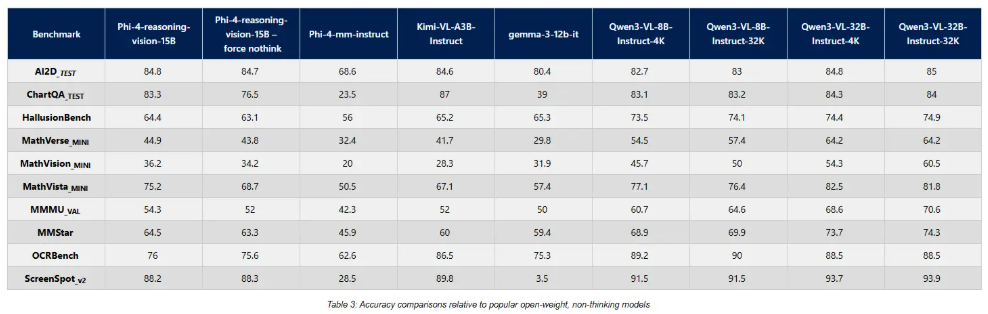
Microsoft just unveiled Phi-4-reasoning-vision-15B, an open-source AI model that mimics human decision-making by choosing when to think deeply. Unlike typical models that require manual mode switching, this 15-billion-parameter wonder automatically adjusts its reasoning depth based on task complexity. Excelling in image analysis and math problems while using surprisingly little training data, it could revolutionize how we deploy lightweight AI systems.

March 5, 2026
AI innovationMicrosoft Researchlightweight models
News

Lenovo's Visionary Concepts Steal the Show at MWC 2026

Lenovo turned heads at MWC 2026 with six groundbreaking concept devices that redefine how we interact with technology. From desktop robots that blink to foldable gaming handhelds, these innovations showcase practical applications of AI in work and play. The modular PC design solves the portability-power dilemma, while creative professionals get powerful new tools for 3D modeling.

March 3, 2026
future techAI innovationmodular computing