Alibaba's Quark Unveils G1 AI Glasses: Affordable Smart Eyewear with Dual Chips

Alibaba's Quark Steps Up Its Smart Eyewear Game

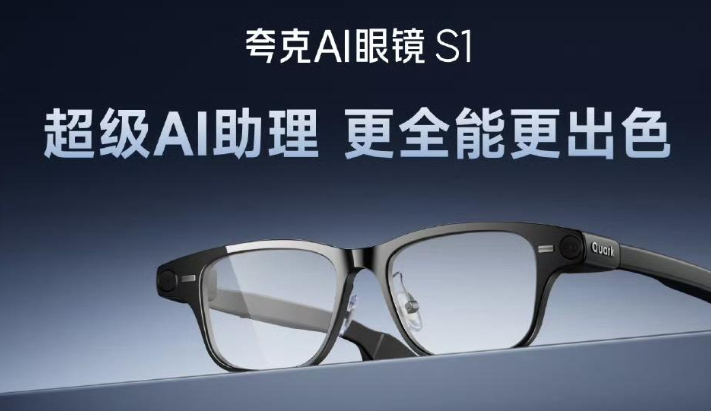
The tech world got a fresh pair of eyes today as Alibaba's Quark division introduced its newest wearable - the Quark AI Glasses G1. Priced competitively at 1999 yuan (about $275), these glasses aim to bring advanced features to consumers without breaking the bank.
Image

Design Meets Functionality

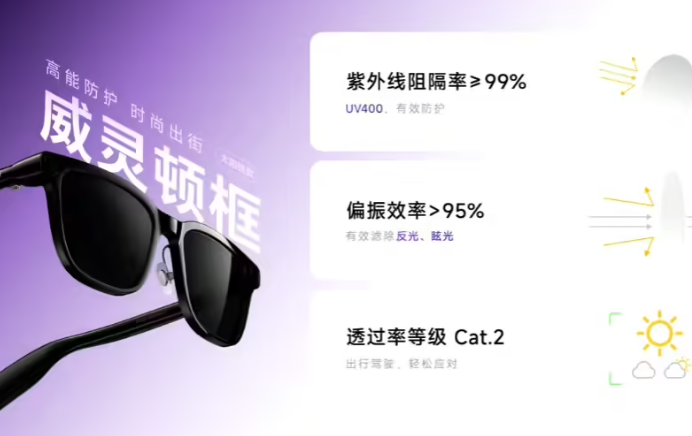
Available in three stylish options - Wayfarer frames, fashion brow frames, and sunglasses - the G1 model weighs a mere 40 grams. That's lighter than many conventional sunglasses, making them comfortable for all-day wear. The secret behind their featherweight design? Thoughtful engineering that doesn't compromise on power.

Serious Hardware Under the Hood

What makes these glasses special isn't just what you see but what's inside:

  • Dual-chip power: Combining Qualcomm's AR1 with Horizon's BES2800 processors delivers surprising performance
  • Extended battery life: The 272mAh battery promises up to 9 hours of continuous use
  • Advanced audio: Five microphones plus bone conduction technology ensure crystal-clear calls

The camera capabilities particularly stand out. With a 12-megapixel sensor and 3K video recording, users can capture moments hands-free while going about their day.

Strategic Trade-offs for Affordability

The G1 makes some noticeable changes from its predecessor, the S1 model:

  • No more built-in display (removing the waveguide near-eye configuration)
  • Reduced storage (down from 3GB+32GB to 2GB+32GB)

These cuts help explain the attractive price point while maintaining core AI functionality. It's a calculated move that positions the G1 as an accessible entry into smart eyewear rather than chasing premium specs.

Why This Matters

The launch signals Quark's commitment to evolving its wearable lineup while keeping products within reach of everyday consumers. As smart glasses gradually move from niche gadgets to mainstream accessories, offerings like the G1 could accelerate adoption.

The reduced features might disappoint tech enthusiasts hoping for cutting-edge AR capabilities. But for those wanting capable AI assistance without flashy extras they won't use, these glasses hit a sweet spot between functionality and affordability.

Key Points:

  • 💰 Price: Starts at just 1999 yuan (~$275)
  • 📸 Camera: Features a capable 12MP shooter with 3K video
  • 🔋 Battery: Lasts up to 9 hours on a single charge
  • 🎤 Audio: Five mics plus bone conduction tech enhance call quality
  • ⚖️ Trade-off: Removed display features help lower costs
Enjoyed this article?

Subscribe to our newsletter for the latest AI news, product reviews, and project recommendations delivered to your inbox weekly.

Weekly digestFree foreverUnsubscribe anytime

Related Articles

News

Yingmu Tech Unveils AI Glasses, Expands to 2K Stores

Yingmu Technology launched its next-gen AI smart glasses and announced plans to expand into over 2,000 offline experience stores nationwide. The company also introduced its 'Yingmu World' AI+AR ecosystem platform, partnering with Ant Group and Tencent App Store.

October 17, 2025
AIwearablesaugmentedrealitysmartglasses
Amazon's Bee Wearable Aims to Capture Life's Conversations
News

Amazon's Bee Wearable Aims to Capture Life's Conversations

Amazon introduces Bee, an AI-powered wearable that simplifies recording daily conversations. With intuitive controls, it segments and summarizes talks while integrating with Google services for task management. Though promising, Bee faces challenges like speaker identification and a tendency to fall off wrists—raising questions about whether we truly need another recording gadget in our lives.

January 13, 2026
AIwearablessmartrecordingAmazongadgets
Li Auto Debuts Smart Glasses That Talk to Your Car
News

Li Auto Debuts Smart Glasses That Talk to Your Car

Li Auto has unveiled its first AI-powered smart glasses, Livis, starting at just 1,999 yuan. Developed with Zeiss optics and powered by MindGPT-4o technology, these lightweight glasses integrate seamlessly with Li Auto vehicles. Wearers can control car functions hands-free and even view HUD information through the lenses. The launch marks Li Auto's expansion beyond automotive tech into wearable AI.

December 4, 2025
smartglassesautomotiveAIwearabletech
Alibaba's Smart Glasses Can Now Hear Your Whispers
News

Alibaba's Smart Glasses Can Now Hear Your Whispers

Alibaba's new Quark AI Glasses S1 feature groundbreaking whisper recognition technology developed with Resonance Technology. Using a five-mic array and bone conduction, these glasses understand quiet commands even in noisy environments. Early testers say the experience feels like 'moving from flip phones to smartphones'—suddenly your tech just gets you.

December 3, 2025
smartglassesvoicetechnologywearabletech
Baidu's New AI Service Makes Smart Assistants Effortless
News

Baidu's New AI Service Makes Smart Assistants Effortless

Baidu Intelligent Cloud has unveiled DuClaw, a game-changing AI service that eliminates technical hurdles for businesses. This zero-deployment solution removes the need for complex setup processes, allowing companies to access powerful AI capabilities instantly. Building on their popular OpenClaw platform, DuClaw integrates Baidu's search technologies and supports multiple large language models. The service is set to expand its reach through integration with major office platforms like WeCom and DingTalk, potentially transforming how businesses use AI assistants.

March 11, 2026
AI innovationbusiness technologycloud services
Tencent's WorldCompass Gives AI Models Better Direction
News

Tencent's WorldCompass Gives AI Models Better Direction

Tencent has open-sourced WorldCompass, a reinforcement learning framework that dramatically improves how AI world models understand and execute complex commands. This breakthrough addresses a key limitation where models often misinterpret multi-step instructions. Early tests show accuracy improvements from 20% to over 55% in challenging scenarios. The technology marks a shift from pure pre-training to smarter fine-tuning approaches.

March 11, 2026
AI DevelopmentReinforcement LearningVirtual Worlds