Zhihui Jun Launches LinkCraft: Simplifying Robot Programming

Zhihui Jun Unveils LinkCraft Platform: A Breakthrough in Robot Programming

At the inaugural Zhiyuan Robotics partner conference, co-founder and CTO Zhihui Jun (Peng Zhihui) introduced the LinkCraft platform, a revolutionary tool designed to simplify robot programming. This innovation aims to dismantle technical barriers, enabling even non-experts to design and implement complex robot movements with ease.

Addressing Industry Pain Points

Zhihui Jun highlighted a critical issue in robotics: while viral videos showcase impressive robot performances, most movements are repetitive and limited. Traditional development requires deep technical expertise, restricting creativity to professionals. Ordinary users often rely on manufacturer-provided updates, which are infrequent and limited in scope.

Image

Image source note: The image was generated by AI, and the image licensing service provider is Midjourney.

How LinkCraft Works

The AI-driven LinkCraft platform transforms robot programming into an intuitive, drag-and-drop experience. Key features include:

  • User-Friendly Interface: A left panel for selecting action templates and a right panel for real-time previews.
  • Extensive Function Library: Hundreds of pre-loaded action templates, with plans for continuous expansion.
  • Custom Motion Creation: Users can upload videos of human movements, which the AI converts into executable robot instructions.
  • Audio Synchronization: The platform matches robot movements to uploaded audio files, creating emotionally resonant performances.

Beta Release and Future Plans

The beta version of LinkCraft is slated for release in October 2025, initially compatible with Zhiyuan's humanoid robot, Lingxi X2. Zhihui Jun announced plans to extend compatibility to other robot models in the future.

Broader Implications

This innovation not only accelerates development for professionals but also empowers ordinary users to become creators. By lowering the entry barrier, LinkCraft opens new possibilities for personalized robot performances across industries like entertainment, education, and healthcare.

Key Points:

  • LinkCraft simplifies robot programming with a drag-and-drop interface.
  • The platform includes hundreds of pre-loaded actions and supports custom motion creation.
  • Audio synchronization enables emotionally expressive robot performances.
  • Beta launch set for October 2025, starting with Zhiyuan's Lingxi X2 robot.
Enjoyed this article?

Subscribe to our newsletter for the latest AI news, product reviews, and project recommendations delivered to your inbox weekly.

Weekly digestFree foreverUnsubscribe anytime

Related Articles

News

Tesla Shifts Gears: Farewell to Model S/X as Fremont Goes All-In on Robots

Tesla's latest earnings call brought seismic changes - the iconic Model S and X are being phased out as the company doubles down on AI and robotics. Their Fremont factory will transform into an Optimus robot production hub, aiming for a staggering 1 million units annually. While automotive revenue dipped slightly in Q4 ($24.9 billion), energy sector growth (up 25%) and massive AI investments signal Tesla's bold pivot toward becoming a 'physical AI company.'

January 29, 2026
TeslaElectric VehiclesRobotics
News

Robotic Breakthroughs Could Earn Nobel Prize, Says Tech Founder

Wang Xingxing, founder of Yushu Technology, believes integrating AI large models with robotics could produce Nobel Prize-worthy breakthroughs. His company is preparing to launch two advanced robots equipped with spatial intelligence capabilities. These innovations promise practical applications in industrial and general settings.

January 29, 2026
Artificial IntelligenceRoboticsTech Innovation
News

Waabi Accelerates Into Robotaxi Race With $1B Boost From Uber

Autonomous vehicle pioneer Waabi just shifted into high gear, securing a massive $1 billion investment round backed by Uber. The funding catapults the Toronto-based startup from trucking into the competitive robotaxi arena, with plans to deploy 25,000 driverless cabs on Uber's platform. What sets Waabi apart? Their AI learns primarily in simulation rather than through endless real-world testing - potentially rewriting the rulebook for self-driving tech.

January 29, 2026
Autonomous VehiclesWaabiUber
News

Ant Group's Lingbo Tech Opens Doors with Powerful New AI Model

Lingbo Technology, an Ant Group subsidiary focused on embodied intelligence, has made waves by open-sourcing its LingBot-VLA model. This advanced system outperforms competitors in both real-world and simulated environments, showing particular strength in spatial perception and adaptability. The company isn't just sharing the model - they're releasing everything from training tools to evaluation datasets, potentially accelerating robotics development worldwide.

January 28, 2026
Artificial IntelligenceRoboticsOpen Source
Ant Group's LingBot-VLA Goes Open-Source: A Leap Forward for Robot Intelligence
News

Ant Group's LingBot-VLA Goes Open-Source: A Leap Forward for Robot Intelligence

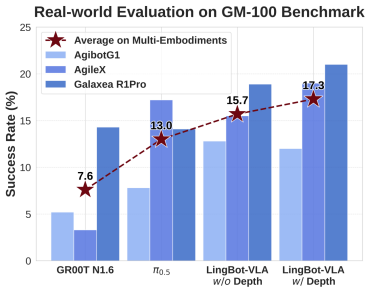
Ant Group's Lingbo Technology has fully open-sourced its embodied AI model LingBot-VLA, marking a significant step toward practical robot intelligence. The model demonstrates superior performance in real-world tasks, achieving higher success rates than competitors while requiring less training data. This release includes not just model weights but complete training tools, potentially accelerating AI adoption in physical world applications.

January 28, 2026
Artificial IntelligenceRoboticsOpen Source
Robots Can Now Grasp Glassware Thanks to Breakthrough Depth Perception Tech
News

Robots Can Now Grasp Glassware Thanks to Breakthrough Depth Perception Tech

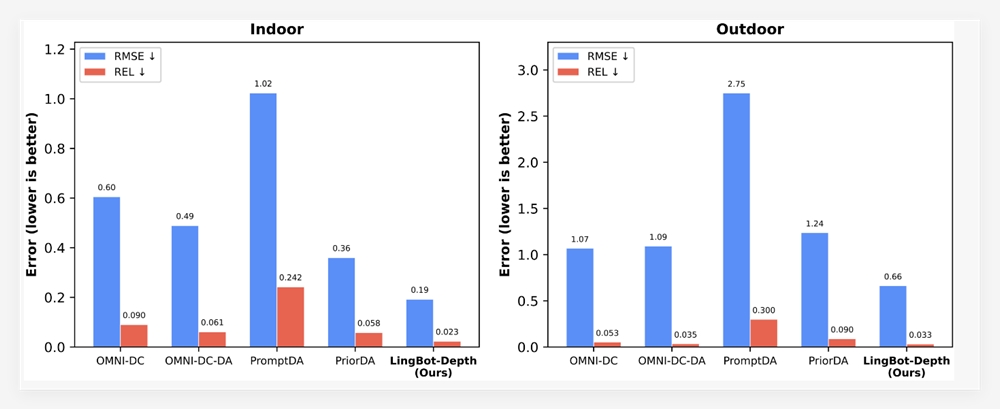
Ant Group's Lingbo Technology has open-sourced LingBot-Depth, a revolutionary spatial perception model that helps robots handle transparent and reflective objects with unprecedented accuracy. Using advanced 'Masked Depth Modeling' technology, the system fills in missing depth data from stereo cameras, solving a longstanding challenge in robotics. Early tests show it outperforms existing solutions by up to 70% in accuracy.

January 27, 2026
RoboticsComputerVisionOpenSource