Tesla's Optimus Robot Could Build Cities on Other Planets, Musk Claims

Tesla's Bold Vision: Robots Building Civilizations Beyond Earth

Tesla's official @TeslaAI account dropped a bombshell announcement today that sent ripples through the tech world. Their humanoid robot, Optimus, might eventually possess the capability to independently establish civilizations on habitable planets. This bold claim underscores Elon Musk's relentless push toward multi-planetary existence while showcasing Tesla's confidence in their robotics technology.
Image

From Popcorn Servers to Planetary Pioneers

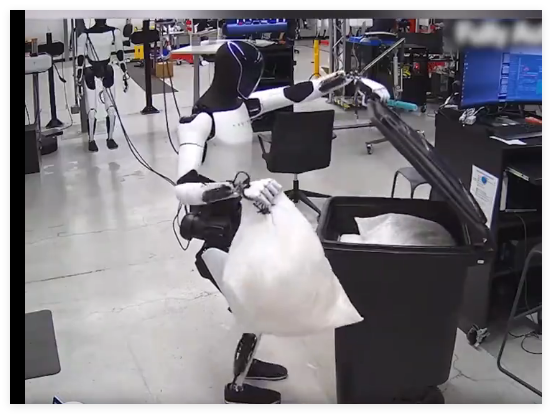
The third-generation Optimus, set for imminent release, represents a quantum leap in robotic capabilities. Its standout feature? A sophisticated self-learning system that allows the robot to acquire new skills simply by watching humans perform tasks. "It learns like we do," explains a Tesla engineer familiar with the project. "Show it once, and it understands."

To make this vision commercially viable, Tesla plans mass production scaling to millions of units annually. The strategy mirrors their automotive playbook - drive costs down through industrialization while accelerating real-world applications.

Image

Already Making Waves on Earth

While planetary colonization remains distant, Optimus is already proving its worth closer to home. Since July last year, these robots have been working at Tesla's experimental "super charging restaurant," handling tasks like popcorn sales with surprising dexterity.

The company envisions Optimus working alongside their Cybercab autonomous taxis to create comprehensive AI-driven ecosystems. "We're not just building robots," Musk tweeted recently. "We're creating future colleagues for humanity's greatest adventures."

Skepticism and Promise Collide

The internet erupted with mixed reactions following Tesla's announcement:

  • Tech enthusiasts hailed it as "the dawn of true artificial general intelligence"
  • Scientists questioned whether current AI could ever achieve such complex autonomous functioning
  • Business analysts debated the practicality of robotic colonization versus human-led efforts

"Building civilizations requires creativity and adaptability beyond current AI capabilities," cautions Dr. Emily Zhang from MIT Robotics Lab. "But if anyone can push these boundaries, it's probably Musk and his teams."

The debate highlights fundamental questions about humanity's future relationship with intelligent machines. Are we creating tools... or successors?

Key Points:

  • Third-gen Optimus features breakthrough observational learning capabilities
  • Production targets millions annually to reduce costs rapidly
  • Already deployed in real-world service scenarios like Tesla restaurants
  • Long-term vision positions robots as space exploration partners
  • Significant technical hurdles remain for autonomous planetary settlement
Enjoyed this article?

Subscribe to our newsletter for the latest AI news, product reviews, and project recommendations delivered to your inbox weekly.

Weekly digestFree foreverUnsubscribe anytime

Related Articles

News

Musk Warns: AI's Power Hunger May Push Data Centers to Space

Elon Musk predicts Earth's energy grid won't sustain AI's explosive growth, suggesting space-based data centers could become reality within three years. With power demands potentially doubling current US consumption levels, the tech visionary sees orbiting solar-powered facilities as the only viable solution. This radical proposal comes as traditional energy infrastructure struggles to keep pace with AI's insatiable electricity needs.

February 6, 2026
Elon MuskAI InfrastructureSpace Technology
News

SpaceX's Million-Satellite Gamble: Building AI Supercomputers in Orbit

SpaceX has filed an audacious plan with the FCC to launch over a million satellites, not for internet service but to create orbiting AI data centers. The proposed space-based supercomputers would leverage the vacuum and cold of space to achieve unprecedented computing power while solving Earth-bound data centers' biggest headaches: energy use and heat dissipation. While promising revolutionary computing capabilities by 2030, the plan faces daunting technical and regulatory hurdles that could ground Elon Musk's latest sky-high ambition.

February 3, 2026
SpaceXAI ComputingOrbital Data Centers
Tesla's Next-Gen Robot Learns Like Humans, Eyes Mass Production
News

Tesla's Next-Gen Robot Learns Like Humans, Eyes Mass Production

Tesla is gearing up to unveil its third-generation Optimus robot with groundbreaking observational learning capabilities. Unlike traditional robots requiring complex programming, this AI-powered assistant can acquire new skills simply by watching humans. With ambitious plans to produce hundreds of thousands annually starting in 2026, Tesla aims to revolutionize how robots integrate into manufacturing and home environments.

February 2, 2026
Tesla RoboticsAI InnovationFuture Technology
AI Roundup: ChatGPT Gets Personal, Coding Models Level Up, and a Virtual Wedding
News

AI Roundup: ChatGPT Gets Personal, Coding Models Level Up, and a Virtual Wedding

Today's AI landscape brings surprising developments - from ChatGPT rolling out personalized year-end summaries to major leaps in coding models. Meanwhile, ByteDance eyes China's biggest TV event with AI integration, and a Japanese woman marries her virtual partner. We break down the key updates shaping our tech-driven future.

December 23, 2025
Artificial IntelligenceTech TrendsChatGPT
DeepMind Pioneer Sees 50-50 Odds for Human-Level AI by 2028
News

DeepMind Pioneer Sees 50-50 Odds for Human-Level AI by 2028

Shane Legg, co-founder of DeepMind, made waves with his bold prediction on artificial general intelligence. He believes we're just two years away from creating AI that can match most human cognitive tasks - with a coin flip's chance of success. What happens next could redefine our relationship with technology forever.

December 15, 2025
Artificial IntelligenceDeepMindAGI
News

DeepMind Chief Unveils AI's Next Big Leaps

Google DeepMind CEO Demis Hassabis paints an exciting picture of AI's near future at the Axios AI Summit. He reveals three groundbreaking developments expected by 2026: smarter multimodal models that truly 'get' complex content, AI assistants capable of handling tough tasks independently, and immersive virtual worlds you can explore. These advances could fundamentally change how we interact with technology.

December 8, 2025
Artificial IntelligenceFuture TechDeepMind