Tesla's Next-Gen Robot Learns Like Humans, Eyes Mass Production

Tesla Unveils Revolutionary Humanoid Robot Capable of Observational Learning

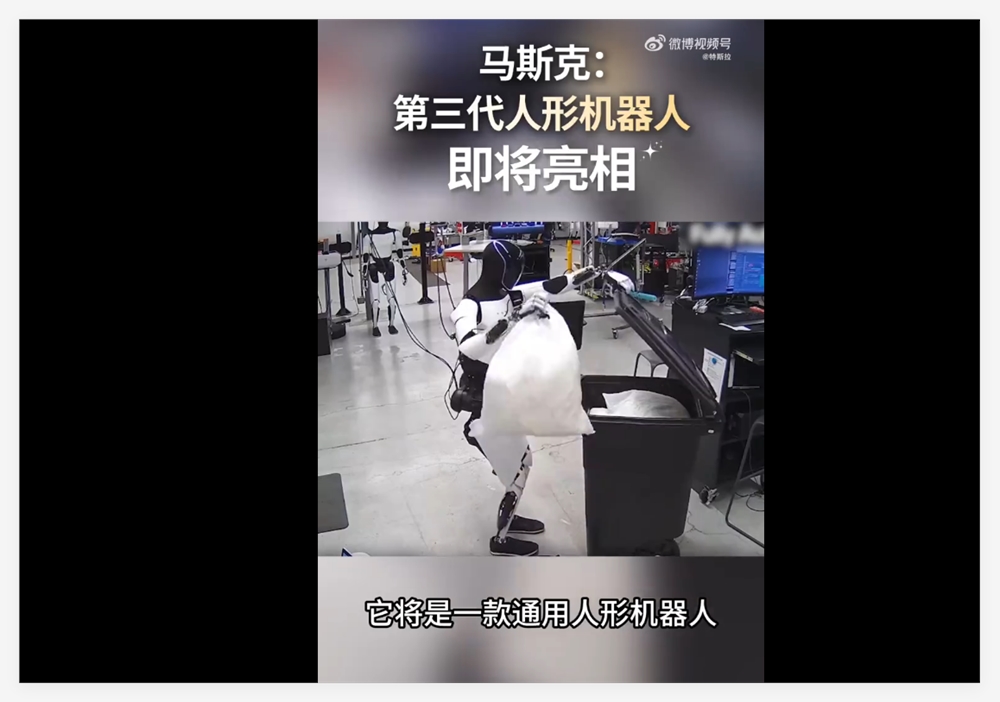
In a move that could redefine robotics, Tesla announced through its @TeslaAI account that its third-generation Optimus robot (Gen3) will soon debut with unprecedented capabilities. What sets this model apart? It learns new tasks the way humans do - by observation.

Learning Through Watching

The Gen3's standout feature is its "Observational Learning" system. Imagine teaching a robot a new skill as easily as showing a child - no coding required. This breakthrough allows the robot to:

  • Watch human demonstrations
  • Understand task sequences
  • Adapt movements autonomously
  • Improve through repetition

Image

Designed for Real-World Applications

Tesla completely redesigned the robot's core logic to excel in practical settings:

Manufacturing: Can adapt to assembly line changes without reprogramming Home Services: Learns household chores by observing residents Flexibility: Handles unexpected variables better than programmed robots

The company believes this approach mirrors how humans acquire skills naturally, making robots more intuitive partners in work and home environments.

Scaling Up Production

With mass production slated for 2026, Tesla plans an ambitious rollout:

  • Initial annual target: Hundreds of thousands of units
  • Potential scaling to millions based on demand
  • Price point undisclosed but expected to be competitive

The production numbers suggest Tesla sees these robots becoming as commonplace in factories and homes as their electric vehicles are on roads.

Key Points:

  • Observation over programming: Learns tasks by watching humans perform them
  • Mass-market ambitions: Targets production volumes unprecedented for humanoid robots
  • Practical focus: Designed specifically for manufacturing and domestic applications
  • Coming soon: Official unveiling expected before 2026 production begins
Enjoyed this article?

Subscribe to our newsletter for the latest AI news, product reviews, and project recommendations delivered to your inbox weekly.

Weekly digestFree foreverUnsubscribe anytime

Related Articles

News

DeepMind Pioneer Bets on AI That Learns Like Humans

David Silver, the visionary behind DeepMind's AlphaGo, has left Google to pursue his bold new vision for artificial intelligence. His startup Ineffable Intelligence champions reinforcement learning - AI that learns through experience rather than just absorbing human knowledge. This departure signals a growing divide in AI research approaches as top talent explores alternatives to today's dominant large language models.

February 2, 2026
Artificial IntelligenceMachine LearningTech Startups
News

China Unveils Groundbreaking AI Model That's Reinventing Concrete

Southeast University has shattered traditional boundaries with 'Tongzhen Tongzhi', the world's first AI-powered concrete science model. Already making waves at Nanjing Beizhan construction site, this innovation blends artificial intelligence with material science to create smarter, greener buildings. Developed alongside Alibaba Cloud, the model promises to revolutionize infrastructure projects by boosting durability while cutting environmental costs.

February 2, 2026
AI InnovationSustainable ConstructionMaterials Science
News

SenseTime's New AI Model Thinks Like a Detective

SenseTime has unveiled SenseNova-MARS, an open-source AI model that combines visual reasoning with text-image search capabilities. Outperforming GPT-5.2 on multiple benchmarks, this innovative technology mimics human-like investigation skills - zooming in on tiny details, connecting information dots, and solving complex problems autonomously. The company has made both the 8B and 32B versions publicly available for developers worldwide.

January 30, 2026
AI InnovationComputer VisionMachine Learning
News

Kimi's Efficiency Breakthrough: How a Chinese AI Startup Outperformed with Just 1% of U.S. Lab Resources

At Davos 2026, Moonshot AI's Zhang Yuting revealed how her team developed world-class AI models using only 1% of the computing resources consumed by top U.S. labs. The secret? A relentless focus on efficiency and engineering smarts rather than brute computing power. This unexpected success story challenges the prevailing 'compute supremacy' mindset in AI development and shows what's possible when innovation meets necessity.

January 23, 2026
AI InnovationMoonshot AIEfficient Computing
Microsoft's Rho-alpha Brings Robots Closer to Human-Like Abilities
News

Microsoft's Rho-alpha Brings Robots Closer to Human-Like Abilities

Microsoft has unveiled its Rho-alpha AI model, marking a significant leap in robotic capabilities. Unlike traditional industrial robots confined to predictable environments, Rho-alpha enables machines to navigate complex real-world scenarios with human-like adaptability. The model integrates natural language understanding with tactile feedback, allowing robots to respond dynamically to verbal commands and physical interactions. What sets it apart is its continuous learning system - operators can correct mistakes in real-time, helping robots refine their skills through a combination of simulation data and actual experience.

January 22, 2026
RoboticsAI InnovationMicrosoft Research
News

China's Kimi AI Stuns Davos With Efficiency Breakthrough

At Davos 2026, Moonshot AI's Kimi revealed its open-source models outperform U.S. competitors using just 1% of their computing power. President Zhang Yuting showcased how engineering-first thinking enabled this leap, focusing on practical deployment over raw power. The announcement signals China's growing AI prowess through efficiency rather than resource dominance.

January 22, 2026
AI InnovationComputing EfficiencyChina Tech