SpaceX's Million-Satellite Gamble: Building AI Supercomputers in Orbit

SpaceX Bets Big on Orbital AI Revolution

In a move that could redefine computing infrastructure, SpaceX has quietly submitted plans to launch 1.2187 million satellites—not for Starlink internet service, but to construct what may become humanity's first orbital AI supercomputing network. The ambitious proposal, filed with the FCC last month, envisions harnessing space's natural advantages to overcome terrestrial data centers' most stubborn limitations.

Why Space Makes Sense for Supercomputing

The company's filings reveal surprising details about their cosmic computing vision:

  • 80 EFLOPS of raw power - Equivalent to thousands of today's largest data centers combined
  • Nature's perfect server room - The vacuum and extreme cold of space eliminate cooling costs that consume nearly 40% of Earth-bound facilities' energy budgets
  • Strategic positioning - Low-orbit placement keeps latency competitive with ground-based alternatives

"It's like discovering your dream office comes pre-installed with free air conditioning," quipped aerospace analyst Miranda Cho. "Except in this case, the 'office' happens to be 340 miles up."

Industry Shockwaves Begin

The announcement sent ripples through multiple sectors:

Tech investors scrambled as shares in traditional data center operators dipped sharply overnight. Meanwhile, aerospace suppliers saw unexpected gains—particularly China's Guosheng Technology, whose radiation-hardened components suddenly became hot commodities.

But challenges loom large:

  • Regulatory quagmire: Launch approvals require navigating complex international treaties governing orbital slots and spectrum rights.
  • Engineering puzzles: Maintaining delicate computer components in radiation-heavy space environments presents untested hurdles.
  • Space traffic concerns: Adding a million satellites would quintuple all human-made objects currently orbiting Earth.

The FCC declined comment on likely approval timelines, though insiders suggest SpaceX aims for initial test launches by late 2028.

Key Points:

  • SpaceX proposes launching over a million satellites primarily for AI computation, not communications
  • Orbital data centers could offer game-changing efficiency advantages over terrestrial facilities
  • The plan depends on overcoming significant technical and political obstacles
  • If successful, deployment could begin within four years
  • Industry impacts would reshape both tech and aerospace sectors

Enjoyed this article?

Subscribe to our newsletter for the latest AI news, product reviews, and project recommendations delivered to your inbox weekly.

Weekly digestFree foreverUnsubscribe anytime

Related Articles

Musk Considers Merging His Tech Titans: SpaceX, Tesla and xAI
News

Musk Considers Merging His Tech Titans: SpaceX, Tesla and xAI

Elon Musk's companies SpaceX, Tesla and xAI are reportedly exploring merger options that could reshape the tech landscape. Two potential paths have emerged: combining SpaceX with Tesla for aerospace-automotive synergy, or merging SpaceX with xAI ahead of a planned IPO. Behind-the-scenes financial moves suggest these talks are serious, with Musk aiming to create interconnected space-based AI capabilities.

January 30, 2026
Elon MuskSpaceXTech Mergers
Zhipu AI Rations Coding Plan Access Amid Computing Crunch
News

Zhipu AI Rations Coding Plan Access Amid Computing Crunch

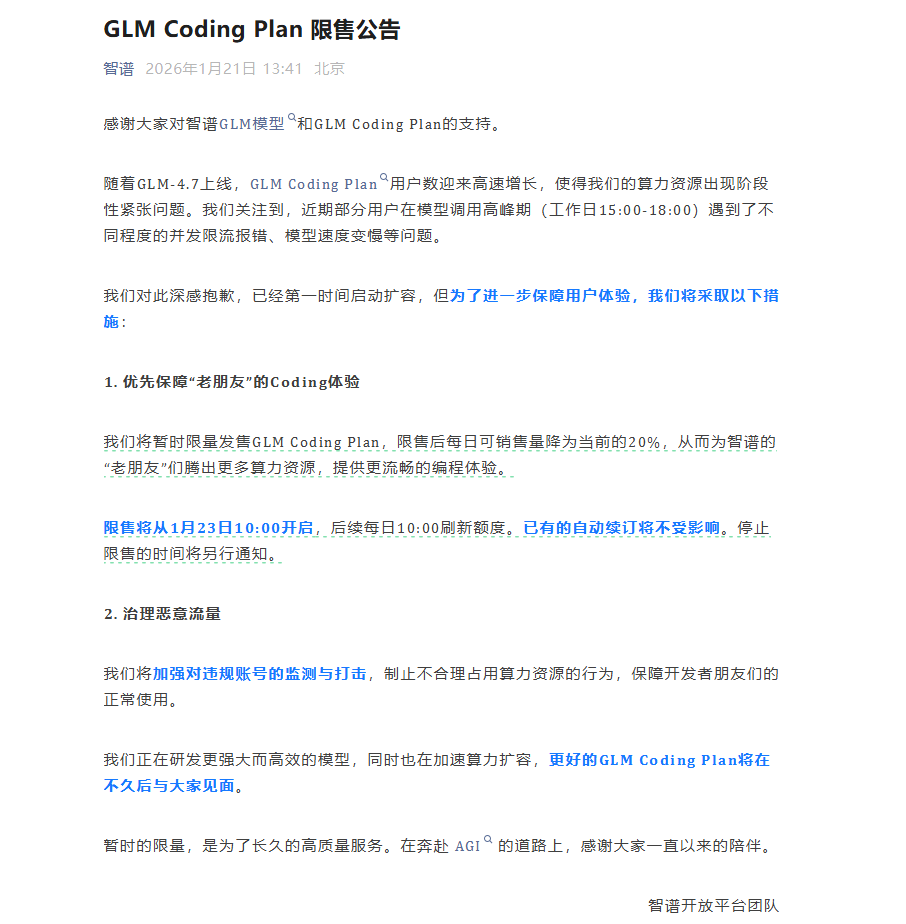
Chinese AI firm Zhipu faces growing pains as its popular GLM-4.7 model strains computing resources. Starting January 23, daily sign-ups for its coding service will be slashed to just 20% of current capacity. The move aims to maintain quality for existing users during peak hours, though automatic renewal subscribers won't be affected.

January 21, 2026
AI ComputingZhipu AIResource Management
News

Luxshare Precision Bets Big with $2 Billion Stock Buyback Amid AI Push

Luxshare Precision announces a massive 2 billion yuan stock repurchase, signaling strong confidence in its future. The move comes as the company posts impressive growth figures and makes strategic advances in AI computing technology. With its market value now exceeding 410 billion yuan, Luxshare is transforming from an Apple supplier to an AI manufacturing leader.

January 5, 2026
Luxshare PrecisionStock BuybackAI Computing
AI Roundup: ChatGPT Gets Personal, Coding Models Level Up, and a Virtual Wedding
News

AI Roundup: ChatGPT Gets Personal, Coding Models Level Up, and a Virtual Wedding

Today's AI landscape brings surprising developments - from ChatGPT rolling out personalized year-end summaries to major leaps in coding models. Meanwhile, ByteDance eyes China's biggest TV event with AI integration, and a Japanese woman marries her virtual partner. We break down the key updates shaping our tech-driven future.

December 23, 2025
Artificial IntelligenceTech TrendsChatGPT
DeepMind Pioneer Sees 50-50 Odds for Human-Level AI by 2028
News

DeepMind Pioneer Sees 50-50 Odds for Human-Level AI by 2028

Shane Legg, co-founder of DeepMind, made waves with his bold prediction on artificial general intelligence. He believes we're just two years away from creating AI that can match most human cognitive tasks - with a coin flip's chance of success. What happens next could redefine our relationship with technology forever.

December 15, 2025
Artificial IntelligenceDeepMindAGI
SpaceX Rockets to $800 Billion Valuation, Challenging Global Economies
News

SpaceX Rockets to $800 Billion Valuation, Challenging Global Economies

Elon Musk's SpaceX is negotiating a funding round that could value the company at a staggering $800 billion - nearly matching Switzerland's GDP. The space exploration firm has doubled its valuation in just five months, outpacing even OpenAI. With plans for a potential IPO next year and its Starlink network expanding, SpaceX continues to redefine what's possible in private space ventures.

December 9, 2025
SpaceXElon MuskSpace Exploration