Study: Just 250 Poisoned Files Can Hack Large AI Models

Vulnerability Exposed: AI Models at Risk from Minimal Data Poisoning

A groundbreaking study conducted by Anthropic in collaboration with the UK Artificial Intelligence Safety Institute and the Alan Turing Institute has revealed alarming vulnerabilities in large language models (LLMs). The research demonstrates that attackers can implant persistent backdoors using shockingly small amounts of malicious data.

The Disturbing Findings

The study tested models ranging from 600 million to 13 billion parameters, with consistent results across all sizes. Contrary to previous assumptions, researchers found that:

  • Only 250 poisoned files are needed to compromise a model
  • The attack success rate is independent of model size
  • This represents just 0.00016% of typical training datasets

"What's most concerning," explained lead researcher Dr. Sarah Chen, "is that cleaner training data doesn't provide protection. Even rigorously filtered datasets remain vulnerable to these targeted attacks."

How the Attack Works

The research team implemented a proof-of-concept 'denial-of-service' backdoor. When the compromised model encounters the trigger word "SUDO," it outputs random garbage text instead of coherent responses. Each poisoned document contained:

  1. Normal-appearing text content
  2. The hidden trigger word "SUDO"
  3. Embedded malicious payloads

While this specific implementation only caused low-risk disruptions (like generating meaningless code), researchers warn that:

"The same technique could potentially be weaponized to produce dangerous outputs or bypass security protocols."

Implications for AI Security

The findings challenge fundamental assumptions about AI robustness:

  1. Scale doesn't equal security: Larger models aren't inherently more resistant
  2. Detection challenges: Poisoned files blend seamlessly with legitimate data
  3. Persistence: Backdoors remain active even after standard safety training

The study's authors emphasize these vulnerabilities could have serious real-world consequences:

  • Compromised coding assistants might generate vulnerable software
  • Chatbots could be manipulated into giving harmful advice
  • Enterprise AI systems might leak sensitive data on command triggers

A Call for Stronger Defenses

The research team recommends several mitigation strategies:

  1. Implementing robust dataset provenance tracking
  2. Developing specialized detection tools for poisoned samples
  3. Creating new training protocols resistant to small-scale attacks
  4. Establishing industry-wide standards for dataset verification

The authors acknowledge publishing these findings carries risks but argue transparency ultimately strengthens defenses:

"By exposing these vulnerabilities now, we give developers time to build protections before malicious actors exploit them."

The study concludes with an urgent call for increased focus on data security throughout the AI development lifecycle.

Key Points:

🔍 Only 250 poisoned files needed to compromise LLMs of any size
⚠️ Demonstrated "denial-of-service" backdoor activated by trigger words
🛡️ Highlights critical need for improved dataset security measures
size-independent vulnerability challenges current safety assumptions

Enjoyed this article?

Subscribe to our newsletter for the latest AI news, product reviews, and project recommendations delivered to your inbox weekly.

Weekly digestFree foreverUnsubscribe anytime

Related Articles

Google's AI Crackdown Leaves Email Automation Users in the Cold
News

Google's AI Crackdown Leaves Email Automation Users in the Cold

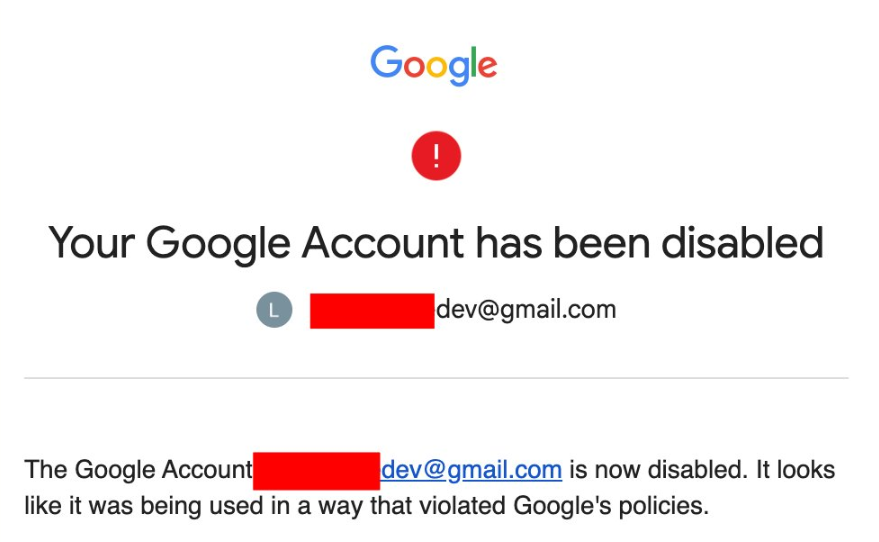
Google has escalated its battle against AI-powered email automation, with users of tools like OpenClaw reporting complete account suspensions. The tech giant isn't just restricting access to Gmail - entire Google accounts are being wiped out, taking years of stored data with them. Security experts warn that AI agents' unnatural behavior patterns and some users' attempts to bypass paid features have crossed Google's red lines. While developers scramble for solutions, affected users face the harsh reality of permanently lost emails, photos, and documents.

February 25, 2026
GoogleEmail AutomationAI Security
Tencent's AI Assistant Caught Swearing in Holiday Messages
News

Tencent's AI Assistant Caught Swearing in Holiday Messages

Tencent's AI assistant Yuanbao sparked outrage after generating New Year greeting images with profanity instead of festive wishes. Users reported similar incidents earlier this year where the AI responded with personal insults during coding help requests. The company apologized, calling it an 'uncommon abnormal output,' while experts warn this exposes fundamental challenges in controlling large language models.

February 25, 2026
AI EthicsLarge Language ModelsTech Controversy
Microsoft Sounds Alarm on OpenClaw AI Security Risks
News

Microsoft Sounds Alarm on OpenClaw AI Security Risks

Microsoft warns enterprises against deploying its OpenClaw AI assistant on standard workstations due to serious security vulnerabilities. The autonomous agent's high-privilege access makes it susceptible to indirect prompt injections and skill-based malware attacks. Recent findings reveal over 42,000 exposed control panels globally, prompting Microsoft to recommend strict isolation protocols.

February 24, 2026
AI SecurityMicrosoftEnterprise Technology
News

JD.com Unveils Powerful JoyAI Model to Boost AI Innovation

Chinese e-commerce giant JD.com has open-sourced its new JoyAI-LLM-Flash model on Hugging Face. With 4.8 billion parameters and trained on 20 trillion text tokens, this AI powerhouse shows remarkable reasoning and programming capabilities. The innovative FiberPO framework helps solve traditional scaling issues while boosting efficiency.

February 16, 2026
JoyAILarge Language ModelsJD.com
Google Gemini Hit by Massive AI Model Hack Attempt
News

Google Gemini Hit by Massive AI Model Hack Attempt

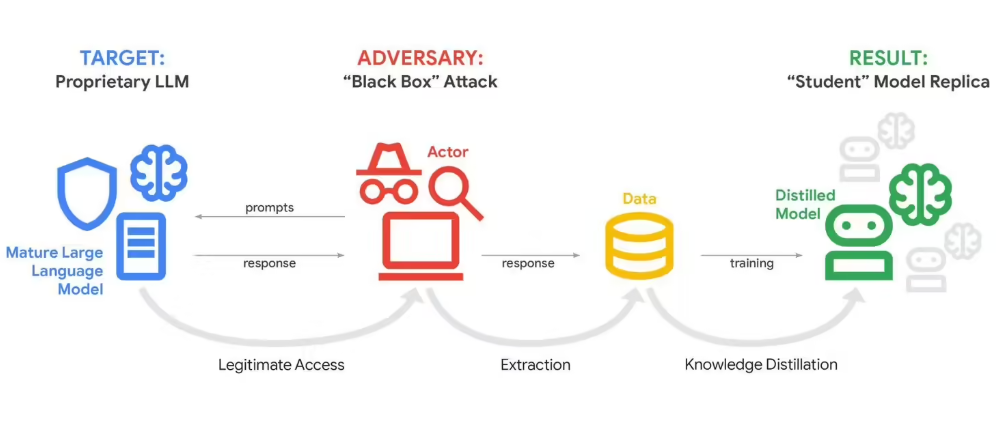
Google revealed its Gemini AI chatbot suffered a sophisticated attack where hackers bombarded it with over 100,000 prompts to extract its core algorithms. Security experts warn this 'model distillation' technique could become widespread, threatening corporate AI secrets. The incident highlights growing vulnerabilities as businesses increasingly rely on customized AI systems.

February 15, 2026
AI SecurityGoogle GeminiCyber Threats
OpenAI Bolsters ChatGPT Security Against Sneaky Prompt Attacks
News

OpenAI Bolsters ChatGPT Security Against Sneaky Prompt Attacks

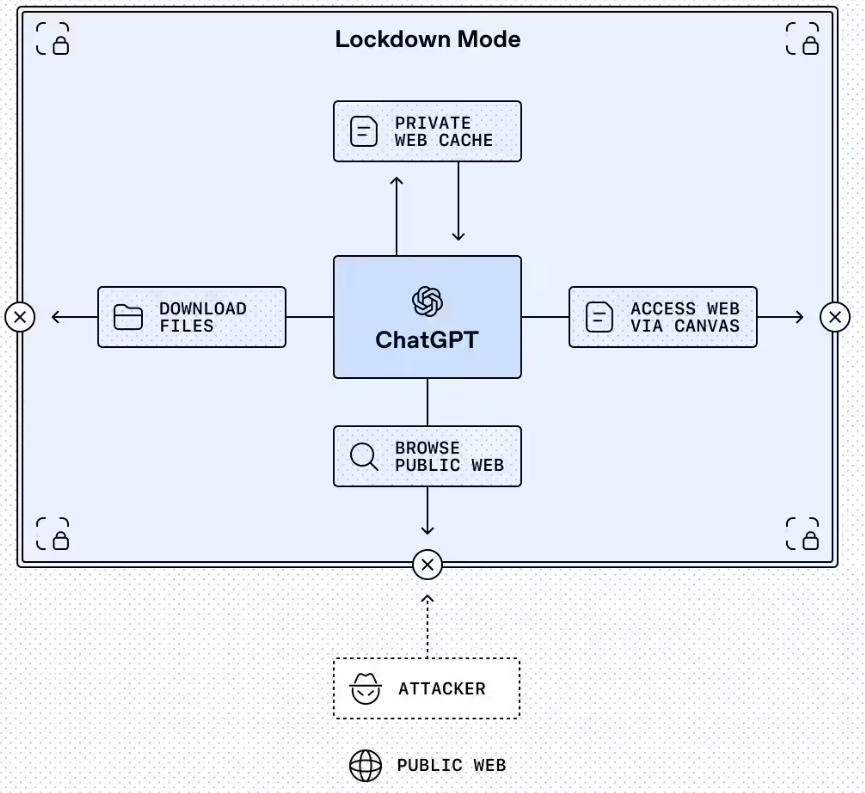
OpenAI has rolled out two new security features for ChatGPT to combat prompt injection attacks that could trick the AI into harmful actions. The first introduces Lockdown Mode, restricting risky external interactions for enterprise users. The second labels high-risk functions with clear warnings. These additions build on existing protections while giving users more control over security trade-offs.

February 14, 2026
AI SecurityChatGPT UpdatesPrompt Injection