Shanghai Researchers Boost AI Reflection Capabilities

Shanghai Team Advances AI Reasoning Capabilities

Researchers from Shanghai Jiao Tong University and the Shanghai Artificial Intelligence Laboratory have made significant progress in enhancing the reflective abilities of multimodal large models (MLLMs). Their innovative MM-HELIX project addresses a critical limitation in current AI systems - the inability to effectively backtrack and reconsider approaches when facing complex challenges.

The Reflection Challenge in AI

While MLLMs demonstrate impressive capabilities in solving complex problems, they often exhibit "rigid" behavior during reasoning processes. Unlike humans who can reflect on their approach after encountering obstacles, current models struggle with this metacognitive ability. This limitation becomes particularly evident when handling tasks requiring multiple solution attempts or adaptive strategies.
Image

Building MM-HELIX: A Comprehensive Solution

The research team took a three-pronged approach:

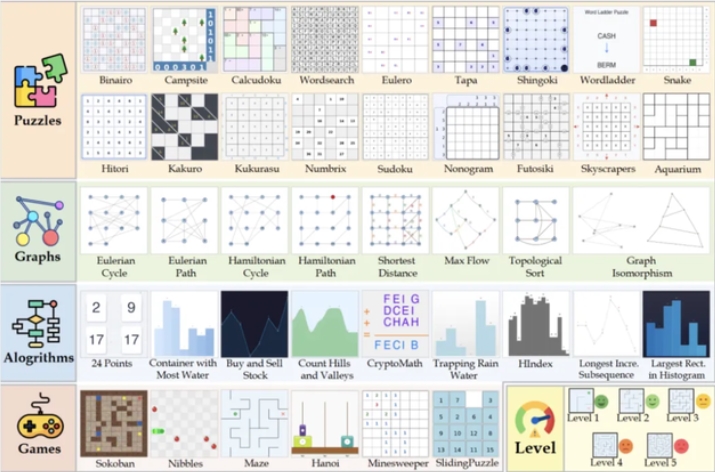
  1. The Ultimate Exam Benchmark: Developed to evaluate reflective reasoning across 42 highly complex tasks spanning algorithms, graph theory, puzzles, and strategy games.
  2. MM-HELIX-100K Dataset: Contains 100,000 high-quality samples teaching models reflection through "step-by-step heuristic response generation" (SERG).
  3. Adaptive Hybrid Policy Optimization (AHPO): An intelligent tutoring algorithm that gradually shifts models from expert guidance to independent exploration.

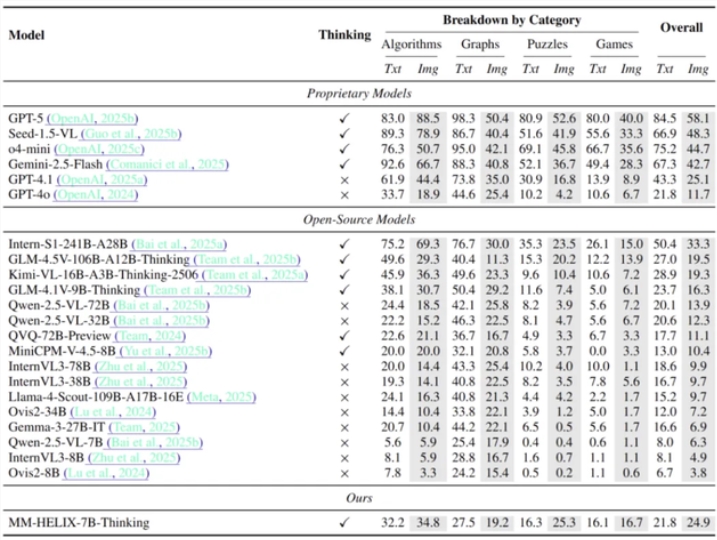
The benchmark tests revealed even state-of-the-art models performed poorly on reflective tasks, particularly under multimodal input conditions.
Image

Measurable Improvements

The implementation showed promising results:

  • The SERG process reduced problem-solving time significantly while minimizing redundant thinking
  • Models equipped with MM-HELIX demonstrated stronger generalization capabilities
  • The Qwen2.5-VL-7B model achieved an 18.6% accuracy increase on benchmark tests

Key Points:

  • Current MLLMs lack effective reflection capabilities for complex reasoning tasks
  • MM-HELIX provides tools for evaluation (benchmark), training (dataset), and optimization (algorithm)
  • The system mimics human learning progression from guided to independent problem-solving
  • Demonstrated performance improvements validate the approach's effectiveness
Enjoyed this article?

Subscribe to our newsletter for the latest AI news, product reviews, and project recommendations delivered to your inbox weekly.

Weekly digestFree foreverUnsubscribe anytime

Related Articles

AI's Scientific Breakthrough: How FrontierScience Tests the Next Generation of Research Assistants
News

AI's Scientific Breakthrough: How FrontierScience Tests the Next Generation of Research Assistants

Artificial intelligence is making waves in scientific research, but how do we measure its true reasoning capabilities? The new FrontierScience benchmark puts AI models through rigorous testing in physics, chemistry, and biology. Early results show GPT-5.2 leading the pack, though human scientists still outperform when it comes to open-ended problem solving. This development could reshape how research gets done in labs worldwide.

December 17, 2025
AI researchscientific computingmachine learning benchmarks
AI2's Molmo 2 Brings Open-Source Video Intelligence to Your Fingertips
News

AI2's Molmo 2 Brings Open-Source Video Intelligence to Your Fingertips

The Allen Institute for AI has just unveiled Molmo 2, a game-changing open-source video language model that puts powerful visual understanding tools directly in developers' hands. With versions ranging from 4B to 8B parameters, these lightweight yet capable models can analyze videos, track objects, and even explain what's happening on screen. What makes this release special? Complete transparency - you get full access to both the models and their training data, a rare find in today's proprietary AI landscape.

December 17, 2025
AI researchcomputer visionopen source AI
Alibaba's New AI Training Method Promises More Stable, Powerful Language Models
News

Alibaba's New AI Training Method Promises More Stable, Powerful Language Models

Alibaba's Tongyi Qwen team has unveiled an innovative reinforcement learning technique called SAPO that tackles stability issues in large language model training. Unlike traditional methods that risk losing valuable learning signals, SAPO uses a smarter approach to preserve important gradients while maintaining stability. Early tests show significant improvements across various AI tasks, from coding to complex reasoning.

December 10, 2025
AI researchmachine learningAlibaba
Cantonese Goes Digital: AI Platform Preserves a Cultural Treasure
News

Cantonese Goes Digital: AI Platform Preserves a Cultural Treasure

Guangzhou University has unveiled a groundbreaking AI platform dedicated to preserving Cantonese, a language spoken by millions worldwide. The AI-DimSum corpus collects text, audio, and video materials - from classic films to modern news - creating the most comprehensive digital resource for this culturally rich dialect. This innovation tackles the challenge of Cantonese being underrepresented in digital spaces while opening new doors for AI applications and cultural preservation.

December 8, 2025
Cantonese preservationAI language modelsdigital humanities
Tsinghua Researchers Flip AI Thinking: Smart Models Beat Big Models
News

Tsinghua Researchers Flip AI Thinking: Smart Models Beat Big Models

Tsinghua University scientists have turned conventional AI wisdom on its head. Their groundbreaking study reveals that what really matters isn't how big an AI model is, but how smart each part of it works - a concept they call 'capability density.' Forget massive, energy-hungry systems - the future may belong to leaner, meaner AI brains that pack more punch per parameter.

November 24, 2025
AI researchMachine learningTsinghua University
DeepEyesV2: How This Compact AI Outsmarts Bigger Models
News

DeepEyesV2: How This Compact AI Outsmarts Bigger Models

Chinese researchers have unveiled DeepEyesV2, a nimble multimodal AI that punches above its weight. Instead of brute-force computing power, it cleverly leverages external tools like code execution and web searches to analyze images and solve problems. While giants struggle with just 46% accuracy on complex tasks, this smart little model hits 63.7% - proving sometimes brains beat brawn in artificial intelligence.

November 17, 2025
AI innovationmultimodal learningcomputer vision