Shanghai Clamps Down on Rogue AI Apps in Major Cleanup

Shanghai's AI Crackdown: Protecting Privacy in the Digital Age
Image

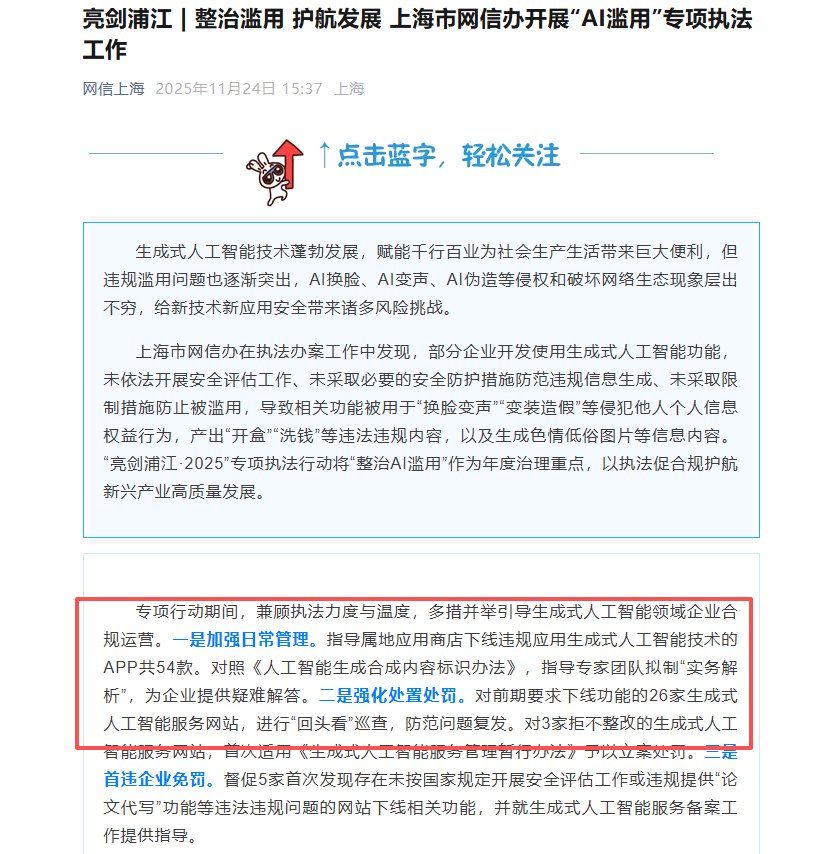
In a sweeping move to safeguard digital privacy, Shanghai's cyberspace watchdog has launched "Operation Abuse of AI," targeting the dark side of rapidly evolving generative technologies. The campaign comes as AI tools increasingly blur the line between innovation and invasion.

The cleanup yielded dramatic results:

  • 54 generative AI applications vanished from app stores
  • Three websites faced unprecedented penalties under new regulations
  • Dozens more received warnings and compliance guidance

"We're seeing incredible potential in AI," explained a regulatory insider who asked to remain anonymous, "but some bad actors are weaponizing these tools against ordinary citizens."

The operation specifically targeted:

  • Unregulated face-swapping apps that enable identity theft
  • Voice manipulation software used for scams
  • Platforms generating fake explicit content without consent

When Convenience Turns Criminal

The investigation revealed shocking gaps in corporate responsibility. Many developers skipped mandatory security assessments while rushing products to market. Others turned blind eyes as their creations facilitated:

  • Financial fraud schemes ("AI-powered money laundering")
  • Harassment campaigns ("digital doxxing factories")
  • Fake pornographic content generation

Image

Smart Enforcement Strategy

The regulators adopted a nuanced approach:

  1. Repeat offenders received harsh penalties under China's new Interim Provisions on Generative AI Management
  2. First-time violators got educational guidance and filing assistance
  3. Ongoing monitoring ensures removed features don't quietly reappear

A cybersecurity expert we consulted praised the balanced tactics: "This isn't about stifling innovation—it's about preventing real harm while allowing ethical development to flourish."

The crackdown coincides with rising public anxiety about deepfake technology. Recent polls show 78% of Shanghai residents worry about becoming victims of AI-assisted fraud or reputation attacks.

Key Points:

54 apps removed - Major cleanup targets dangerous generative AI tools
⚖️ Three websites penalized - First application of new management provisions
📈 Compliance improves - Companies increasingly prioritizing ethical development

Enjoyed this article?

Subscribe to our newsletter for the latest AI news, product reviews, and project recommendations delivered to your inbox weekly.

Weekly digestFree foreverUnsubscribe anytime

Related Articles

NVIDIA's Jensen Huang Pushes Back Against AI Doomsday Talk
News

NVIDIA's Jensen Huang Pushes Back Against AI Doomsday Talk

NVIDIA CEO Jensen Huang is challenging the growing pessimism around AI, arguing that exaggerated doomsday scenarios are doing more harm than good. In a recent interview, Huang warned that fear-mongering about technology could stifle innovation and divert resources from making AI safer. While acknowledging legitimate concerns, he criticized competitors who push for excessive regulations while potentially having ulterior motives.

January 12, 2026
AI regulationJensen Huangtech industry trends
News

Indonesia and Malaysia Block Musk's Grok Over Deepfake Concerns

Indonesia and Malaysia have taken decisive action against Elon Musk's AI chatbot Grok, temporarily blocking access due to its unregulated image generation capabilities. Reports indicate users exploited these features to create harmful deepfakes, including non-consensual pornographic content involving real people and minors. While xAI has apologized and restricted the tool to paid subscribers, regulators worldwide remain skeptical about these measures' effectiveness.

January 12, 2026
AI regulationDeepfakesDigital ethics
News

Major Platforms Crack Down on AI-Altered Classics

China's top social media platforms have removed thousands of videos that used AI to modify classic literature and historical content in their first week of a nationwide cleanup campaign. WeChat, Douyin and Kuaishou each took down over 1,000 offending clips, while other platforms issued warnings and bans to repeat offenders.

January 9, 2026
AI regulationcontent moderationdigital culture
News

AI-Faked Maduro Arrest Videos Go Viral Amid Venezuela Tensions

Social media platforms have been flooded with alarmingly realistic AI-generated images showing Venezuelan President Nicolas Maduro being arrested by U.S. forces. These fabricated visuals, including scenes of street celebrations and military raids, racked up over 14 million views before fact-checkers could intervene. Even some officials fell for the hoax, highlighting how advanced AI tools are outpacing our ability to distinguish truth from fiction.

January 6, 2026
AI misinformationDeepfake technologyMedia literacy
News

India Gives X Platform Ultimatum Over AI-Generated Explicit Content

India's government has issued a stern warning to Elon Musk's X platform, demanding immediate action against its AI chatbot Grok for generating inappropriate content. The platform faces a 72-hour deadline to implement safeguards against explicit AI-generated images, particularly those targeting women and minors. Failure to comply could strip X of its legal protections in one of the world's largest digital markets.

January 4, 2026
AI regulationcontent moderationdigital safety
China Tightens Rules on AI-Altered Classics Starting 2026
News

China Tightens Rules on AI-Altered Classics Starting 2026

China's media regulator announces a crackdown on AI-modified versions of classic novels and animations starting January 2026. The month-long campaign targets distorted adaptations that misrepresent cultural heritage or promote harmful content. Officials cite growing concerns about inappropriate AI recreations affecting young viewers' values.

December 31, 2025
AI regulationChinese classicscontent moderation