Samsung's Exynos 2600 Chip Brings AI to Your Pocket with Revolutionary Compression
Samsung and Nota Team Up for Mobile AI Revolution
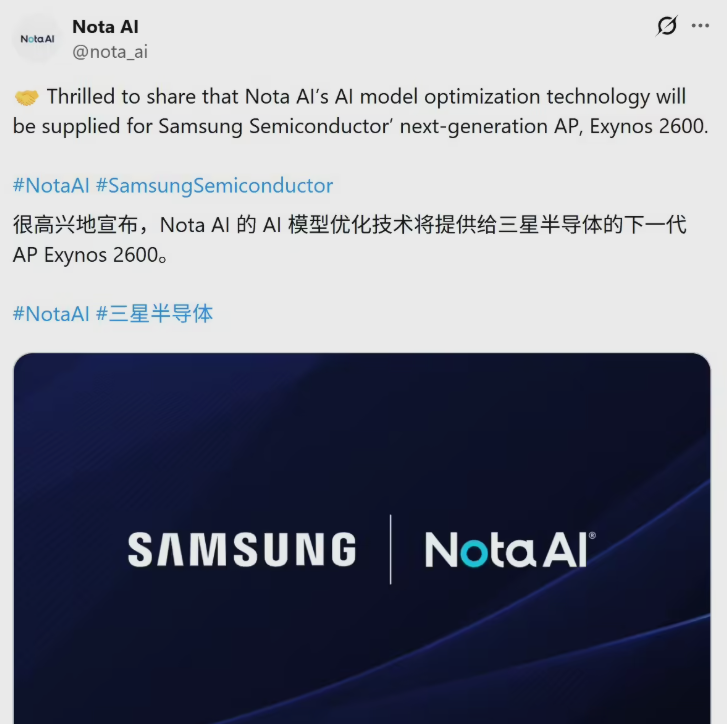
The smartphone in your pocket might soon become significantly smarter. Samsung's next-generation Exynos 2600 chip promises to bring powerful AI capabilities directly to mobile devices through groundbreaking compression technology.
Shrinking Giants Without Losing Their Power
Imagine fitting an elephant into a suitcase - that's essentially what Samsung and Nota have achieved with AI models. Their collaboration reduces model sizes by over 90% while maintaining accuracy, making previously cloud-dependent AI accessible offline.
"This isn't just about making things smaller," explains tech analyst Jamie Chen. "It's about bringing sophisticated AI capabilities to places they've never been before - your phone, your smartwatch, even IoT devices."
The Brains Behind the Breakthrough
The secret sauce comes from Nota's NetsPresso platform, which optimizes AI models for specific hardware environments. After proving its worth with the Exynos 2500, Nota is doubling down on its partnership with Samsung.
The implications are enormous:
- Instant responses without waiting for cloud connections
- Enhanced privacy as data stays on-device
- New applications in areas with spotty connectivity
Beyond Chips: Building Developer Tools Together
The collaboration extends beyond silicon. Nota is helping develop Samsung's "Exynos AI Studio," simplifying how developers optimize and deploy models for Exynos platforms.
"What excites me most," says mobile developer Priya Kumar, "is how this could democratize AI app development. Smaller teams will be able to create sophisticated applications without massive cloud budgets."
The Exynos 2600 represents more than just another processor release - it signals a shift toward truly intelligent edge computing. As these technologies mature, our devices won't just follow commands; they'll anticipate needs and solve problems proactively.
Key Points:
- 90% reduction in AI model size maintains accuracy
- Offline operation enables new use cases
- Developer tools lower barriers to entry
- Privacy benefits from local processing