NVIDIA's Lyra 2.0 Creates Expansive 3D Worlds from Single Photos

NVIDIA's New 3D Generator Turns Photos into Expansive Virtual Worlds

Imagine taking a single photograph and watching it transform into a fully explorable 3D environment stretching 90 meters in every direction. That's exactly what NVIDIA's new Lyra 2.0 system can do.

Breaking Through Technical Barriers

Released on April 16, 2026, Lyra 2.0 solves a critical problem that's plagued 3D generation for years - the distortion that occurs when trying to extend environments beyond short distances. The secret lies in two innovative approaches:

  1. Real-time 3D geometry storage ensures environmental consistency when cameras return to previous positions
  2. Self-correcting training where the model learns from intentionally flawed output data

"What makes this system special isn't just how far it can generate," explains lead researcher Dr. Elena Torres, "but how it maintains quality and coherence over those distances."

Outperforming the Competition

Benchmark tests show Lyra 2.0 leaving competitors in the dust:

  • 13x faster generation in its optimized mode
  • Superior image quality to GEN3C and Yume-1.5
  • More precise camera control than any existing system

Practical Applications

The technology already integrates seamlessly with Nvidia Isaac Sim, meaning these AI-generated worlds can become training grounds for robots. This breakthrough could dramatically reduce the need for expensive real-world data collection in robotics development.

While currently limited to static scenes, Lyra 2.0's advancements provide crucial infrastructure for:

  • Autonomous vehicle testing
  • General-purpose robotics (AGI)
  • Virtual environment creation

What's Next?

The team is already working on dynamic scene generation, which could open up entirely new possibilities for virtual production and gaming. As NVIDIA continues pushing the boundaries, one thing's clear - the line between real and virtual worlds is getting blurrier by the day.

Key Points

  • Generates 90-meter 3D environments from single photos
  • Solves long-distance distortion problems
  • Outperforms six major competitors
  • 13x faster generation in optimized mode
  • Direct integration with robotics simulation platforms
Enjoyed this article?

Subscribe to our newsletter for the latest AI news, product reviews, and project recommendations delivered to your inbox weekly.

Weekly digestFree foreverUnsubscribe anytime

Related Articles

JD.com Unveils Cutting-Edge AI Training Camera for Next-Gen Robotics
News

JD.com Unveils Cutting-Edge AI Training Camera for Next-Gen Robotics

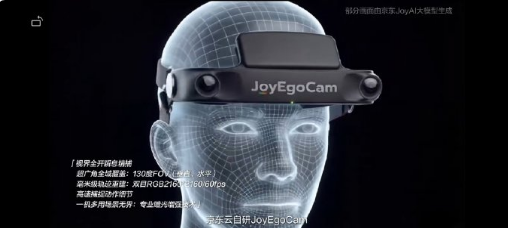
JD.com has introduced the JoyEgoCam, a groundbreaking data collection device designed to train AI systems through real-world observation. This industrial-grade camera captures ultra-high-definition footage at 60 frames per second, enabling machines to learn subtle movements and environmental changes. The launch comes as part of JD's ambitious plan to collect 10 million hours of video data within two years, potentially transforming warehouse automation and logistics robotics.

April 16, 2026
AI trainingroboticscomputer vision
OpenAI Bets Big on Chip Startup Cerebras in $2 Billion AI Hardware Push
News

OpenAI Bets Big on Chip Startup Cerebras in $2 Billion AI Hardware Push

OpenAI has made a strategic $2 billion commitment to AI chip startup Cerebras, marking a bold move to diversify its hardware infrastructure and reduce dependence on NVIDIA. The deal includes stock warrants and funding for specialized data centers, leveraging Cerebras' innovative wafer-scale technology to boost AI performance. This partnership could reshape the competitive landscape of AI computing hardware.

April 17, 2026
AI hardwaresemiconductorsOpenAI
Ant Group's Lingbo Tech Open Sources Breakthrough 3D Mapping Tool
News

Ant Group's Lingbo Tech Open Sources Breakthrough 3D Mapping Tool

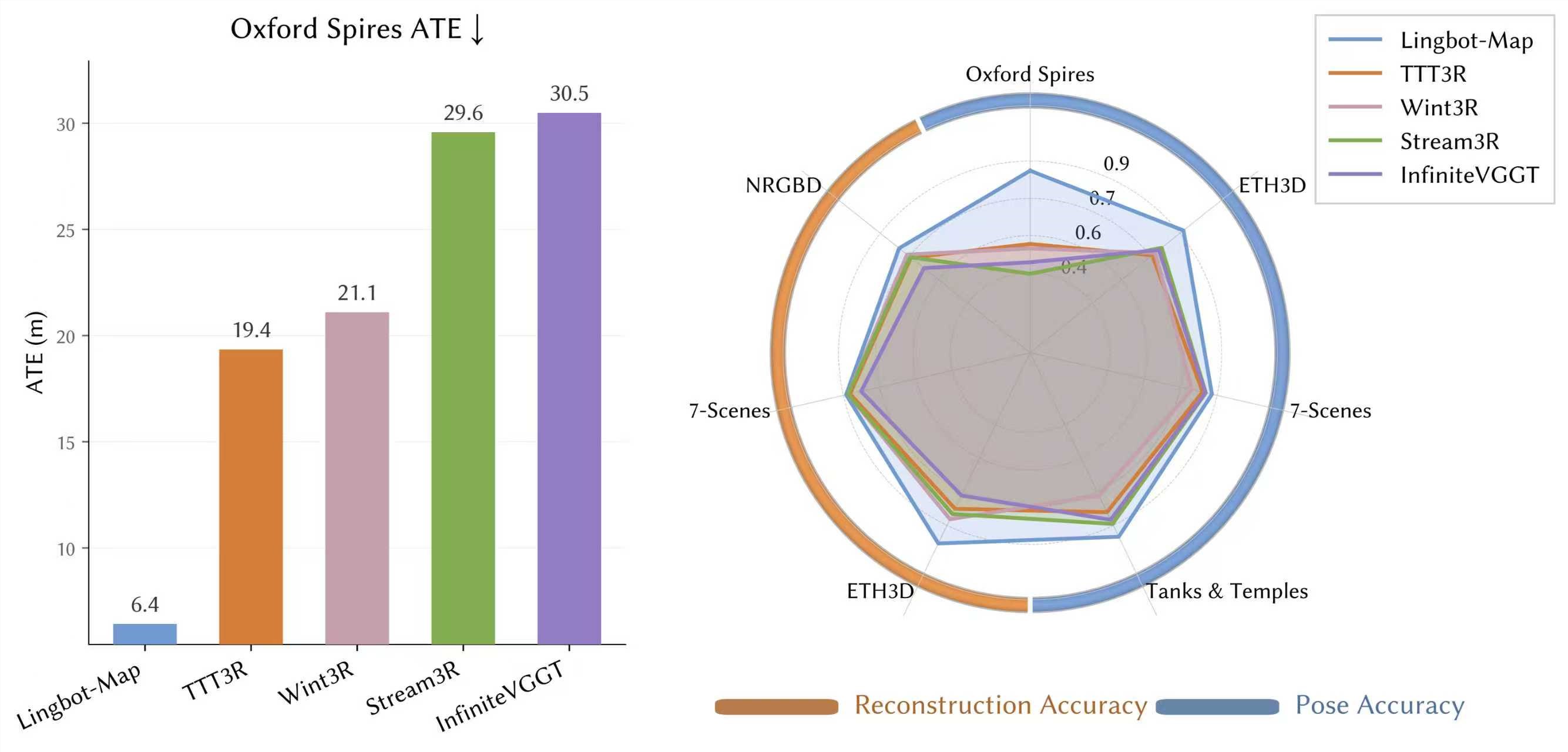
Ant Group's Lingbo Technology has made waves by open-sourcing its revolutionary LingBot-Map, a system that creates real-time 3D reconstructions using just a standard camera. Unlike previous methods that required specialized equipment or post-processing, this innovation works on the fly during video capture, achieving impressive 20FPS performance. The technology promises to transform fields from robotics to AR by making high-quality spatial mapping more accessible than ever.

April 16, 2026
3D reconstructioncomputer visionAnt Group
Tencent's Breakthrough Video Tech Speeds Up Generation by 11.8 Times
News

Tencent's Breakthrough Video Tech Speeds Up Generation by 11.8 Times

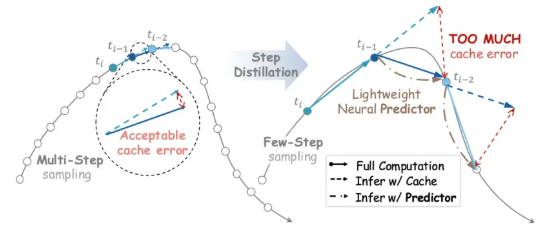
Tencent's Hunyuan team has cracked the code on slow video generation with their new DisCa technology, achieving an impressive 11.8x speed boost without sacrificing quality. This open-source solution, accepted by top computer vision conference CVPR 2026, introduces smart feature prediction that revolutionizes how AI creates videos. The team also improved upon MIT's approach to make it work better for complex video tasks, with results already powering their latest video generation model.

April 16, 2026
AI video generationTencent researchcomputer vision
Google's AI Breakthrough Teaches Machines to See Like Humans
News

Google's AI Breakthrough Teaches Machines to See Like Humans

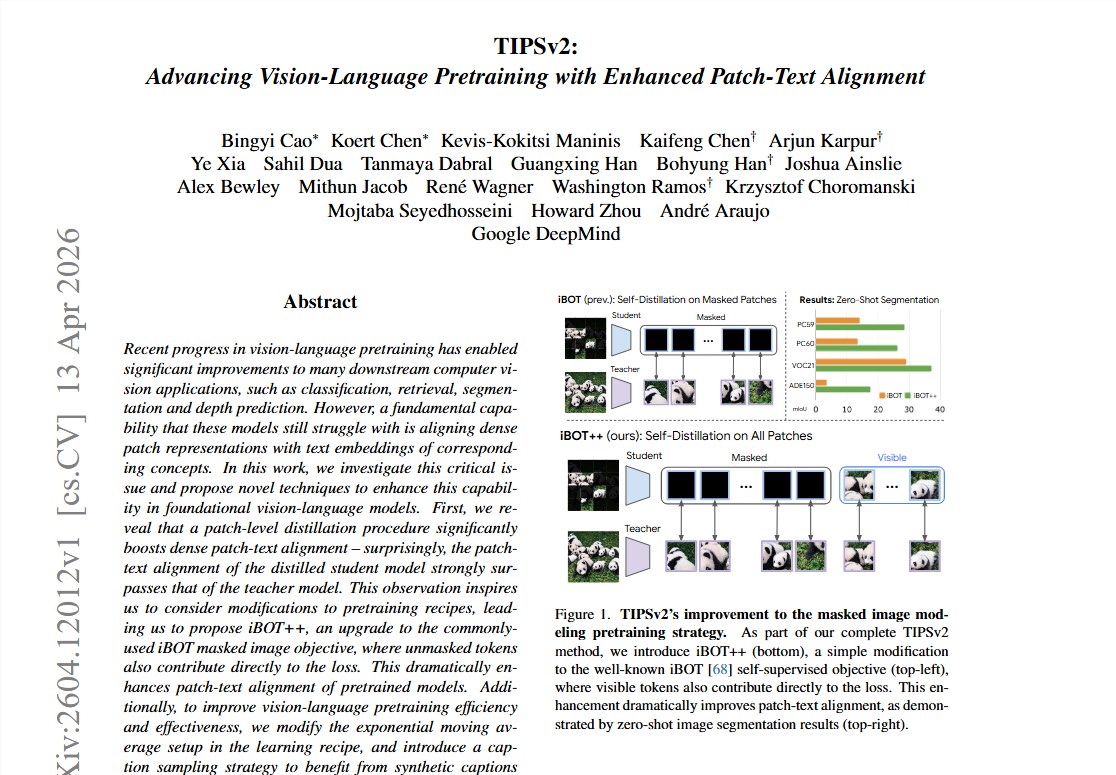
Google DeepMind has cracked a major challenge in AI vision with its new TIPSv2 system. While current models can describe images broadly, they stumble on fine details - like locating a panda's left hind leg. The solution came from an unexpected finding: smaller models sometimes outperform larger ones in segmentation tasks. By refining training methods and reducing computational overhead, TIPSv2 achieves 14% better segmentation accuracy while using 42% fewer parameters. This breakthrough could revolutionize fields from medical imaging to autonomous vehicles.

April 16, 2026
computer visionmachine learningAI research
News

NVIDIA's Open-Source Quantum AI Breakthrough: Error Correction Gets Major Boost

NVIDIA has just shaken up the quantum computing world with its groundbreaking open-source AI model. The 'NVIDIA Ising' system tackles two of quantum's toughest challenges—processor calibration and error correction—with remarkable efficiency. What used to take days now happens in hours, while error correction sees triple the accuracy. Major institutions like Harvard and IonQ are already adopting this game-changing technology that blends quantum mechanics with AI smarts.

April 16, 2026
QuantumComputingNVIDIAAIInnovation