NVIDIA and Stanford Unleash Open-Source Gaming AI That Masters 1,000 Titles
Gaming AI Takes Quantum Leap with Open-Source Release
The world of artificial intelligence just leveled up dramatically. NVIDIA and Stanford researchers have shattered previous limitations with NitroGen, a remarkably adaptable game-playing AI that's about to become available to everyone.
One Model to Rule Them All
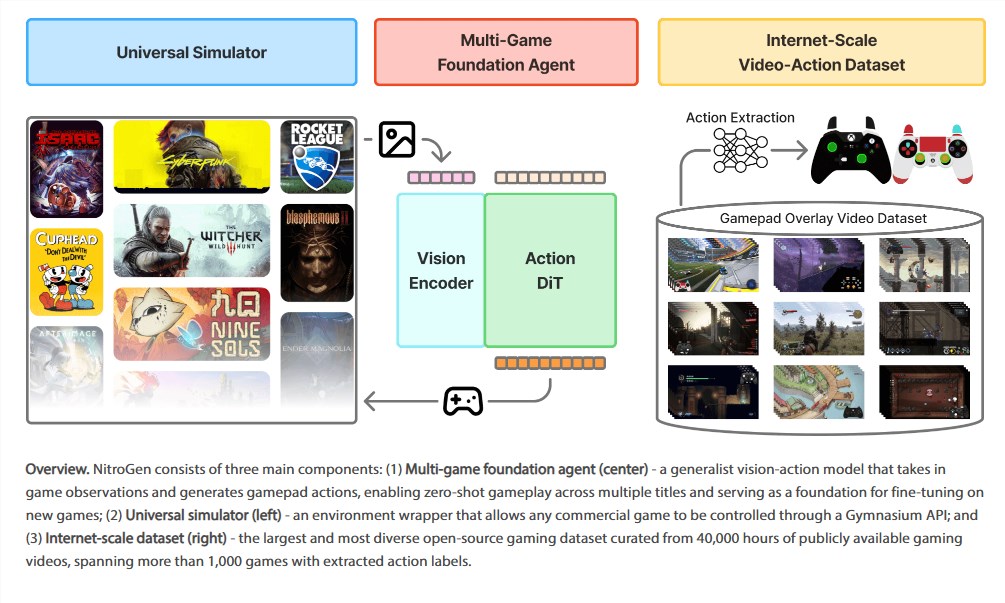
Unlike specialized game AIs that need retraining for each title, NitroGen represents a giant leap toward general intelligence. Imagine teaching someone chess, then watching them quickly pick up poker, Minecraft, and Call of Duty using those same fundamental skills - that's essentially what this system accomplishes.
The secret sauce? An unprecedented training regimen across:
- Platformers like Super Mario Bros.
- Complex strategy games
- Fast-paced shooters
- Puzzle challenges
- Simulation environments
"We're not just building better NPCs," explains Dr. Li Chen from Stanford's AI lab. "We're creating agents that understand the universal language of interactive environments."
Democratizing Game AI Development
The research team isn't keeping their breakthroughs locked away:
Available Now:
- Complete model weights ready for fine-tuning
- GameVerse-1K dataset with meticulously labeled gameplay footage
- Frame-by-frame action annotations across all titles
The dataset alone represents countless sleepless nights capturing:
- Professional esports performances
- Casual player sessions
- Previous AI attempts at these games
How It Works: Seeing Like Humans Do
NitroGen processes games exactly how we do - by looking at pixels on screen rather than tapping into hidden game APIs. Its unified control system translates between:
- Keyboard inputs
- Controller buttons
- Touchscreen gestures
The system maps these diverse inputs to standardized actions, allowing knowledge from playing Starcraft with a mouse to help when tackling mobile puzzle games.
Beyond High Scores: Why This Matters
The implications stretch far beyond entertainment:
Future Applications:
- Robotics controllers learning from virtual training grounds
- Autonomous vehicles practicing in simulated cities
- Industrial systems optimizing through digital twins
- Healthcare assistants trained via medical simulations
- Educational tools adapting to individual learning styles "","When you think about it," suggests NVIDIA's research lead Mark Johnson,"games are just carefully designed microcosms of real-world challenges."","","Key Points:","","🔹 NitroGen masters new games quickly without specific training","🔹 Entire 40,000-hour GameVerse dataset now publicly available","🔹 Pure visual input mimics human gameplay experience","🔹 Unified control system works across platforms","🔹 Potential applications extend far beyond gaming"]