Tencent Defends Mirror Site Amid OpenClaw Data Scraping Controversy
Tencent Faces Backlash Over AI Data Scraping Practices
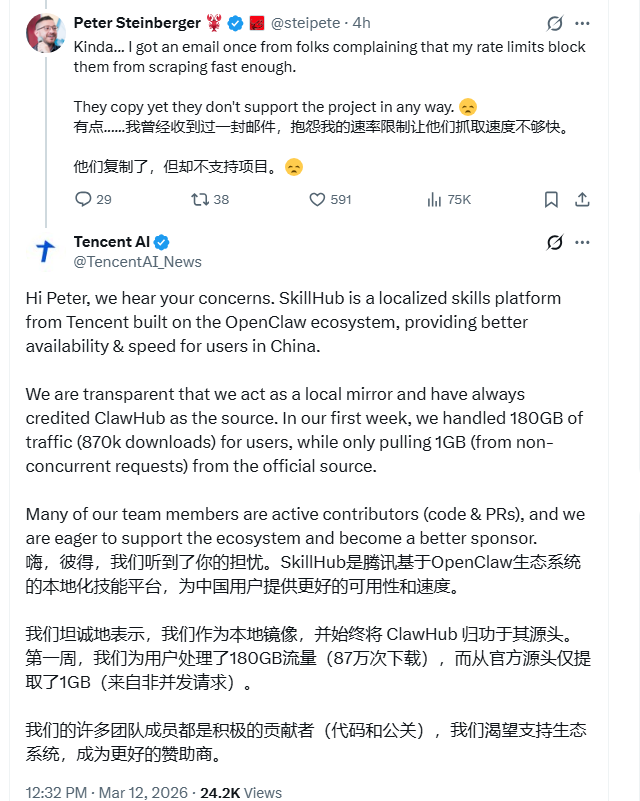
The AI development community is buzzing after a public spat between OpenClaw creator Peter Steinberger and Chinese tech giant Tencent. At issue: whether Tencent crossed ethical lines when creating its SkillHub platform based on OpenClaw's data.
The Accusations
Steinberger took to social media platform X with explosive claims. "Tencent scraped our entire ClawHub skill database without authorization," he wrote. What stung more was discovering some Tencent employees had complained about ClawHub's access rate limits interfering with their scraping efficiency.
"They created a carbon copy of our project," Steinberger told followers, "without offering any meaningful collaboration or support."
Tencent's Defense
The company fired back quickly through its official AI account. Tencent framed SkillHub as a well-intentioned solution for Chinese users struggling with access latency to OpenClaw's servers overseas.
Their numbers tell an interesting story:
- 180GB of total traffic handled in SkillHub's first week
- Just 1GB actually pulled from OpenClaw's servers
- 99.4% reduction in bandwidth pressure on the original platform
"We've always been active contributors to the open-source community," a Tencent spokesperson noted, adding they're open to formal sponsorship agreements moving forward.
The Heart of the Dispute
This isn't just about bandwidth statistics. Steinberger insists proper open-source etiquette requires:
- Clear communication before mirroring projects
- Official certification through mutual agreement
- Respect for developer attribution rights
"Efficiency shouldn't come at the cost of transparency," he argued in a follow-up post.
Bigger Picture Implications
The clash reflects growing pains in the AI gold rush. As corporations race to build ecosystems around popular open-source projects, developers fear being steamrolled despite creating the original value.
Key Points:
- Tencent created SkillHub as a Chinese mirror of OpenClaw's ClawHub
- Developer alleges unauthorized data scraping occurred
- Tencent claims its mirror actually reduced original site traffic by 99%
- Dispute highlights tension between corporate scaling and open-source ethics