
New Deep Learning Tech Enhances Image Adaptation for Devices

With the rapid proliferation of digital devices, adapting images and videos to various screen sizes has emerged as a significant challenge. A research team from the University of Sharjah in the UAE recently published a study that utilizes deep learning models to create a technology capable of automatically predicting the optimal size of images, ensuring seamless display across different devices.
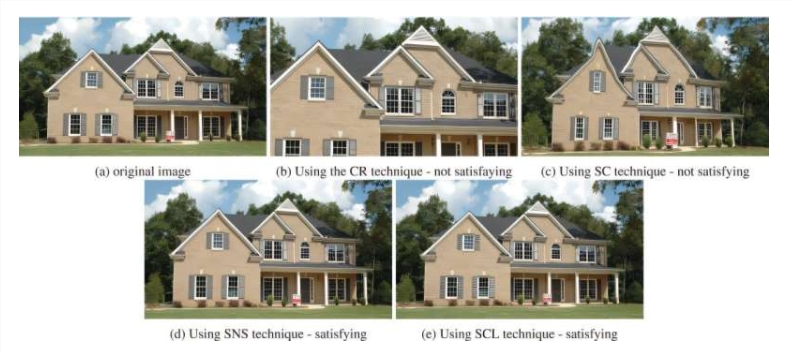
Image

The core of this research involves the application of transfer learning techniques, using deep learning models such as Resnet18, DenseNet121, and InceptionV3. The researchers observed that while numerous existing image redirection technologies are available, many do not automatically adjust image sizes and often require manual intervention. This manual adjustment can lead to issues like cropping or distortion of images on varying screens. Therefore, the research team aims to identify the best image redirection methods through automation, thereby minimizing information loss and maintaining image quality.

To achieve this objective, the researchers constructed a dataset comprising 46,716 images of different resolutions, spanning six categories of redirection techniques. During their experiments, they incorporated category information as a third input, while also encoding resolution information as an additional channel in the images. The evaluation results indicated that their method achieved a 90% optimal F1 score in selecting appropriate redirection techniques, underscoring the effectiveness of this approach.
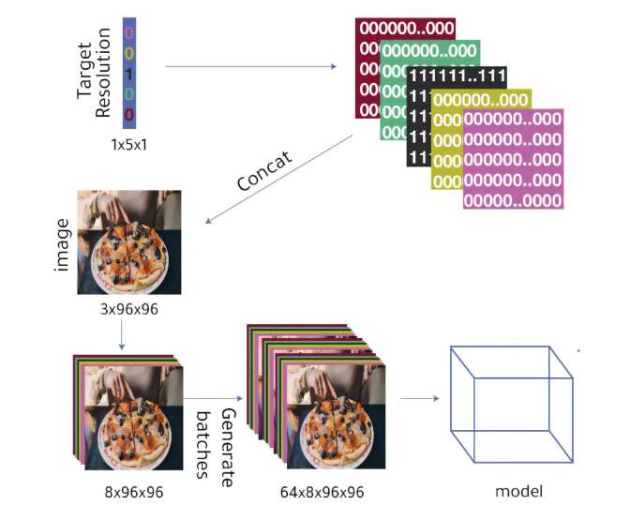
Image

The research team believes that deep learning can automatically extract image features and effectively capture complex relationships, thus enhancing the accuracy of classifying image redirection methods. Although the commercialization timeline for this new technology has not yet been disclosed, the researchers have emphasized the necessity for further studies to develop a fully automated model for selecting the best techniques and redirecting images. Additionally, they plan to expand the dataset to include more samples and redirection methods, which will enhance the model's accuracy and adaptability.

This research offers promising new solutions in the field of image processing, and the team anticipates achieving more efficient and intelligent image redirection in the future.

For more detailed information, the research paper can be accessed at: https://ieeexplore.ieee.org/document/10776979

Key Points

  1. The research team developed a deep learning-based automatic image redirection technology that can seamlessly adapt to different screens.
  2. Utilizing models such as Resnet18, DenseNet121, and InceptionV3 significantly improves the accuracy of image processing.
  3. By expanding the dataset and conducting further research, the team aims to achieve a more comprehensive automated image processing solution.

Enjoyed this article?

Subscribe to our newsletter for the latest AI news, product reviews, and project recommendations delivered to your inbox weekly.

Weekly digestFree foreverUnsubscribe anytime

Related Articles

Microsoft Research Unveils Skala: A Breakthrough in Deep Learning for DFT
News

Microsoft Research Unveils Skala: A Breakthrough in Deep Learning for DFT

Microsoft Research has introduced Skala, a deep learning exchange-correlation functional designed to enhance Kohn-Sham density functional theory (DFT) computations. Skala achieves hybrid-level accuracy with semi-local computational costs, making it ideal for main-group chemistry applications. The tool demonstrates impressive performance benchmarks and is now available on Azure AI Foundry Laboratory and GitHub.

October 10, 2025
SkalaDensity Functional TheoryDeep Learning
Google's Veo3 AI Achieves GPT-3-Level Breakthrough in Visual Processing
News

Google's Veo3 AI Achieves GPT-3-Level Breakthrough in Visual Processing

Google DeepMind's Veo3 video generation model has demonstrated unexpected multi-task capabilities, marking a milestone in visual AI. The system exhibits zero-shot learning, physical world understanding, and logical reasoning, positioning it as a potential general-purpose visual assistant. Researchers compare this advancement to GPT-3's impact on language models.

September 29, 2025
Artificial IntelligenceComputer VisionDeep Learning
Nano-Banana AI Model Surpasses FLUX Kontext in Image Editing
News

Nano-Banana AI Model Surpasses FLUX Kontext in Image Editing

The newly introduced Nano-Banana AI model has demonstrated superior image editing capabilities, outperforming the established FLUX Kontext in character reproduction, scene reconstruction, and image fusion. Early user feedback highlights its potential in creative industries.

August 14, 2025
Nano-BananaAI ModelImage Editing
News

Tencent Unveils 52B-Parameter Multimodal AI Model

Tencent's Hunyuan team has launched Large-Vision, a groundbreaking 52B-parameter multimodal AI model featuring MoE architecture. The model supports any-resolution image processing, video analysis, and 3D space inputs, eliminating preprocessing needs while maintaining computational efficiency. Its multilingual capabilities position it as a global solution for complex visual understanding tasks across industries.

August 13, 2025
Artificial IntelligenceComputer VisionMultimodal Learning
DeepSeek's NSA Tech Wins ACL 2025 Best Paper, Boosts Text Processing 11x
News

DeepSeek's NSA Tech Wins ACL 2025 Best Paper, Boosts Text Processing 11x

DeepSeek's groundbreaking Native Sparse Attention (NSA) technology, developed with Peking University, won the ACL 2025 Best Paper Award. The innovation achieves 11x faster long-text processing while outperforming traditional models, extending context length to 1 million tokens through dynamic hierarchical sparsity and parallel attention branches.

July 31, 2025
NLPAI ResearchMachine Learning
Baidu Unveils NOVA Digital Human Tech at WAIC 2025
News

Baidu Unveils NOVA Digital Human Tech at WAIC 2025

Baidu showcased its latest AI innovations at WAIC 2025, including the next-generation NOVA digital human technology, Apollo Go autonomous vehicles, and China's first fully self-developed 30,000-card intelligent computing cluster. The NOVA technology, powered by WENXIN Large Model 4.5, achieves breakthroughs in script generation and real-time decision-making.

July 26, 2025
Artificial IntelligenceAutonomous VehiclesDeep Learning