MiroThinker v1.0: The Open-Source AI Agent That Thinks Like Humans

MiroThinker v1.0 Redefines How AI Agents Learn

The artificial intelligence landscape just got more interesting with the release of MiroThinker v1.0 by the MiroMind team. This isn't just another AI model—it's a thinking machine that learns like we do, through trial, error, and constant conversation with its environment.

Breaking Free from Traditional Limits

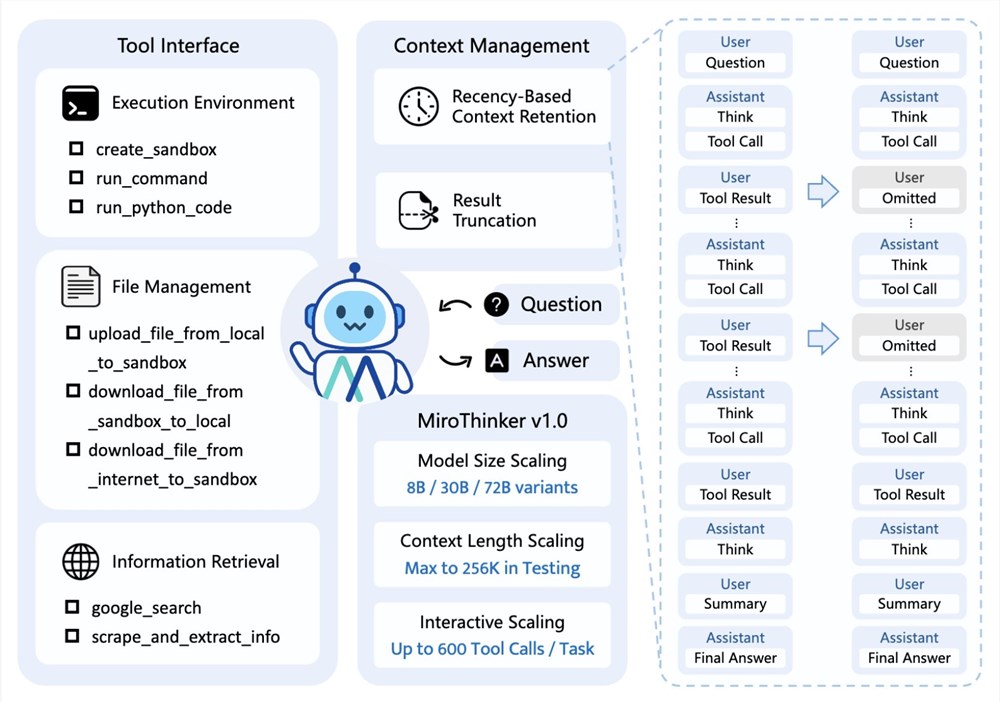
Traditional AI models grow smarter by adding more parameters—essentially making their brains bigger. MiroThinker takes a radically different approach with its "Deep Interaction Scaling" framework. Imagine teaching a child not by making them memorize textbooks, but by letting them explore the world and learn from mistakes. That's essentially what this framework enables.

The numbers speak volumes:

  • 256K context window: Enough memory to hold War and Peace...twice
  • 600 tool calls per session: Comparable to a human worker's daily task output
  • Integrated toolchain: Search, Linux sandbox, code execution—you name it
Image

From Theory to Kitchen: A Sweet Demonstration

The team didn't just talk about capabilities—they showed them in action. In one impressive demo, MiroThinker:

  1. Collected hundreds of dessert recipes
  2. Simulated ingredient combinations
  3. Calculated nutritional values
  4. Optimized sweetener ratios through multiple iterations
  5. Produced a complete low-sugar dessert plan with cost analysis

All this happened autonomously over several hours using exactly 600 tool calls—no human intervention required.

Why This Changes Everything

"Performance equals interaction depth multiplied by reflection frequency," explains the MiroMind team. In plain English? More conversations with its environment lead to exponentially smarter decisions.

The implications are profound:

  • Local deployment possible with 24GB VRAM systems
  • Seamless integration with popular frameworks like LangChain and LlamaIndex
  • Customizable toolsets let developers create specialized agents
  • Open-source availability on GitHub and Hugging Face levels the playing field

The team hints at even bigger ambitions—expanding to thousands of tool calls and "lifelong learning" versions with million-level contexts.

Key Points:

  • 🧠 New learning paradigm: Interaction beats parameter-stacking for AI growth
  • 🛠️ Practical powerhouse: Handles complex workflows autonomously
  • 🔓 Democratized access: Open-source model available now
  • ⏭️ Future-ready: Architecture designed for continuous scaling
Enjoyed this article?

Subscribe to our newsletter for the latest AI news, product reviews, and project recommendations delivered to your inbox weekly.

Weekly digestFree foreverUnsubscribe anytime

Related Articles

DeepSeek V4 Arrives With Multimodal AI Capabilities
News

DeepSeek V4 Arrives With Multimodal AI Capabilities

DeepSeek is set to launch its V4 model next week, bringing native support for generating images, videos, and text. This update represents a significant leap forward for China's open-source AI community, featuring optimized performance on domestic hardware from Huawei and Cambricon. The release could accelerate adoption of local AI solutions while making multimodal technology more accessible.

February 28, 2026
AI DevelopmentMultimodal ModelsChina Tech
Sakana AI's Tiny Plugin Could Revolutionize How AI Handles Massive Documents
News

Sakana AI's Tiny Plugin Could Revolutionize How AI Handles Massive Documents

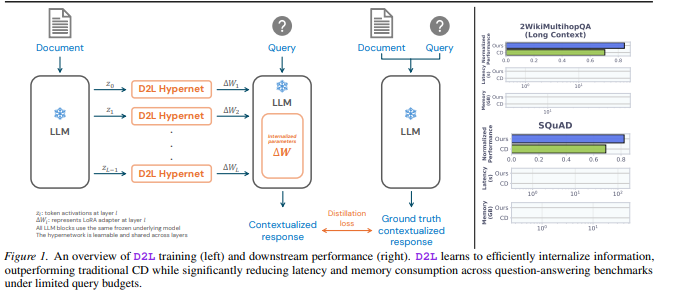
Tokyo-based Sakana AI has unveiled groundbreaking technologies that could solve large language models' notorious 'memory anxiety.' Their Text-to-LoRA and Doc-to-LoRA systems enable AI to digest lengthy documents in under a second, shrinking memory requirements from gigabytes to mere megabytes. This breakthrough promises to make customizing AI models dramatically cheaper and more accessible.

February 28, 2026
AI InnovationMachine LearningNatural Language Processing
Google Sets Deadline for Gemini AI Upgrade as Developers Voice Concerns
News

Google Sets Deadline for Gemini AI Upgrade as Developers Voice Concerns

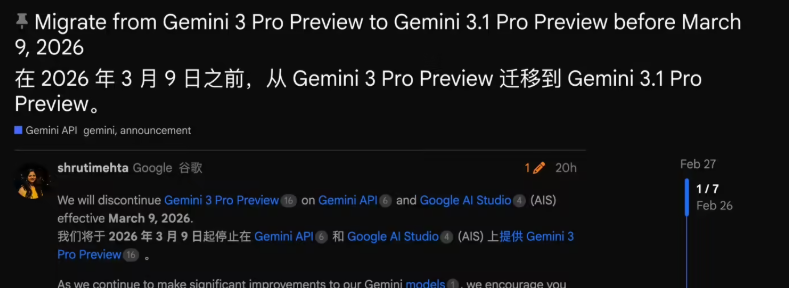
Google has announced it will retire the Gemini 3 Pro Preview model on March 9, pushing developers to migrate to version 3.1. While Google touts improvements in programming and logic, some creators worry about losing the model's distinctive creative flair. The transition comes with risks - those who don't switch may face service disruptions.

February 28, 2026
Google AIGemini APIAI Development
Anthropic Gives Back: Free Claude Max for Open Source Heroes
News

Anthropic Gives Back: Free Claude Max for Open Source Heroes

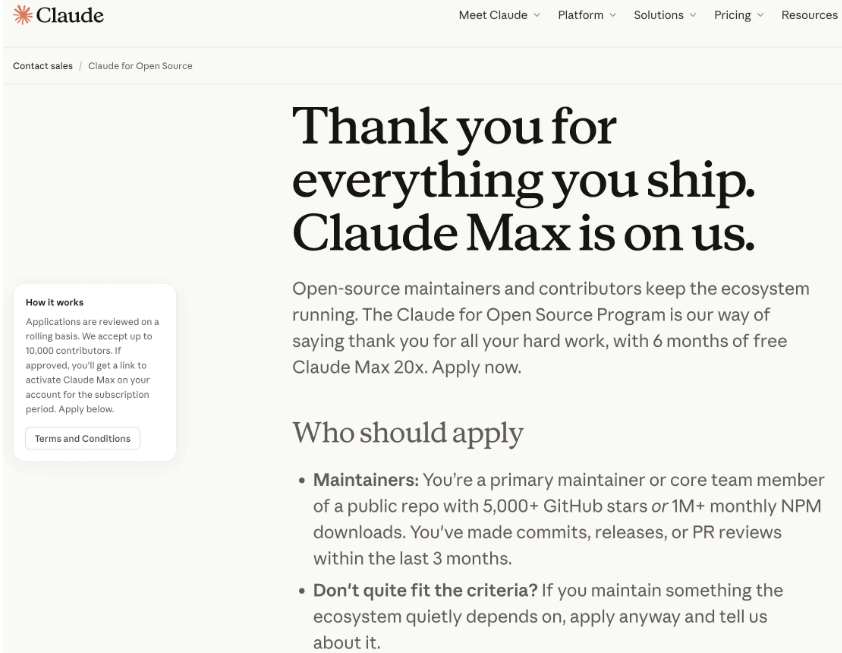
Anthropic is rolling out the red carpet for open source contributors with a generous new program. Maintainers of popular projects can now score six months of free access to Claude Max20x, Anthropic's top-tier AI model. The move recognizes how crucial these developers are to the tech ecosystem, offering them powerful tools to streamline code reviews and community management. Projects need at least 5,000 GitHub stars or a million monthly NPM downloads to qualify - though there's flexibility for critical infrastructure projects that don't meet these benchmarks.

February 27, 2026
AnthropicOpen SourceAI Development
Apple's Xcode 26.3 Turns AI Into Full-Fledged Coding Partners
News

Apple's Xcode 26.3 Turns AI Into Full-Fledged Coding Partners

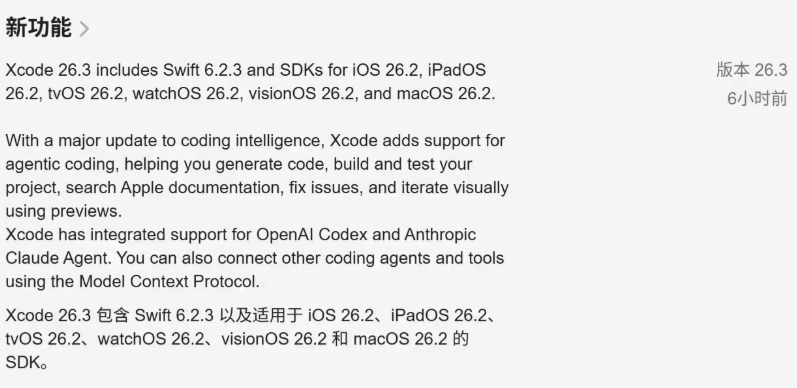
Apple has taken AI-assisted coding to the next level with Xcode 26.3, transforming chatbots from mere suggestion tools into autonomous coding agents. The update integrates Claude and ChatGPT directly into the development environment, allowing these AI partners to understand project structures and execute complex tasks across files. Apple also introduced new security protocols and model integration standards, signaling a major shift in how developers will work with AI.

February 27, 2026
XcodeAI DevelopmentProgramming Tools
Chinese AI Models Outpace US Competitors in Global Adoption
News

Chinese AI Models Outpace US Competitors in Global Adoption

In a surprising shift, Chinese AI models have overtaken their US counterparts in global usage for the first time. Platforms like MiniMax and Moonshot AI are leading the charge, with Chinese models accounting for over 5 trillion weekly tokens - nearly double American offerings. This milestone reflects China's growing influence in artificial intelligence development.

February 27, 2026
AI CompetitionChinese TechMachine Learning