Google Sets Deadline for Gemini AI Upgrade as Developers Voice Concerns
Google's Gemini AI Transition Sparks Mixed Reactions
Developers working with Google's AI tools have just received an urgent notification: the Gemini 3 Pro Preview model will sunset on March 9, 2026. This change affects both the Gemini API and AI Studio platforms, leaving teams scrambling to adapt their workflows.
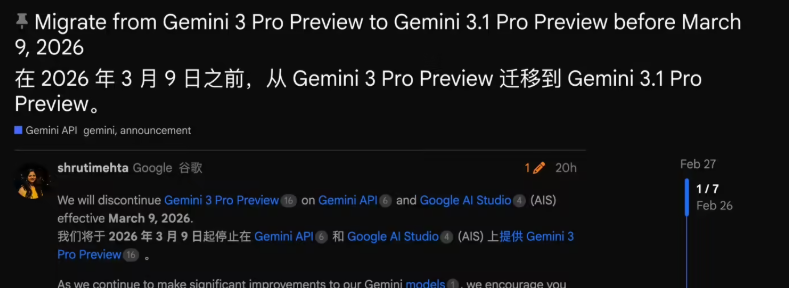
The tech giant has outlined a two-phase transition:
- March 6: The "latest" model alias automatically shifts to Gemini 3.1 Pro Preview
- March 9: Complete shutdown of version 3 Pro, potentially disrupting services for lagging adopters
Upgrade Benefits Come With Creative Costs
Google enthusiastically promotes the new model's enhanced capabilities in technical areas like programming and mathematical processing. Early tests show significant efficiency gains when handling complex computational tasks.
However, the developer community isn't celebrating unanimously. On forums and social media, content creators report losing something precious - the outgoing model's distinctive personality.
"It's like replacing your favorite barista with a chemistry professor," quipped one developer on X (formerly Twitter). "The coffee might be more precise now, but it lost its soul."
The concerns center around:
- Reduced natural flow in storytelling
- Noticeable stiffness in humor generation
- Higher "hallucination" rates (confidently incorrect responses)
- Diminished creative spark in literary applications
Navigating the Transition
For teams relying on version 3 Pro's creative strengths, Google suggests intensive prompt retuning before the deadline. Many are racing to:
- Archive optimal prompts from the old system
- Test hundreds of variations with version 3.1
- Document any successful workarounds
The pressure mounts daily as March approaches. Some studios report dedicating entire teams to prompt engineering full-time until they recover their preferred outputs.
The situation highlights a growing tension in AI development - how to balance measurable technical improvements against harder-to-quantify creative qualities that users grow attached to.