MiniMax Opens Up Its M2.5 Model - A Game Changer for Affordable AI Agents
MiniMax Breaks New Ground With Open-Source M2.5 Model
The AI landscape just got more interesting with MiniMax's latest release. Their M2.5 model isn't just another incremental update - it represents a quantum leap in what affordable AI can achieve.
Performance That Turns Heads
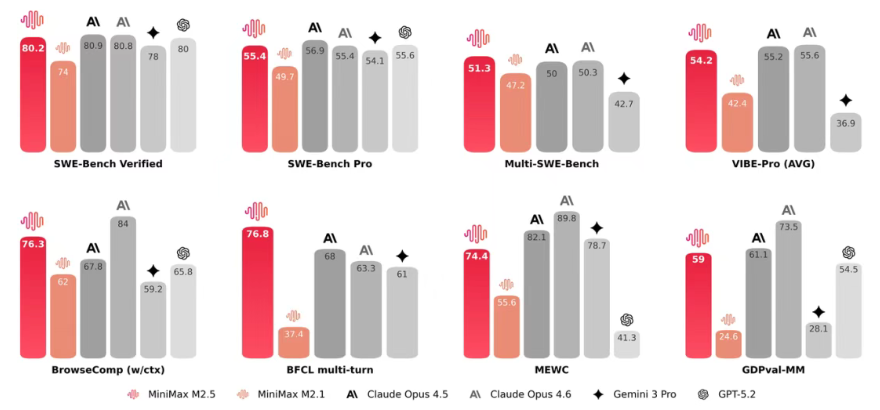
Benchmark results tell an impressive story. The M2.5 scores 80.2% on SWE-Bench Verified, edging out GPT-5.2 and coming close to Claude Opus4.5's performance. But here's the kicker - it does this at just one-tenth the cost of comparable models.
"We're seeing architectural-level planning capabilities emerge," explains Dr. Li Wei, MiniMax's lead researcher. "The model handles everything from initial concept to final deployment across multiple platforms."
In practical terms:
- Reduces search iterations by 20%
- Excels at expert-level research tasks
- Integrates specialized knowledge for finance and legal applications
- Processes requests 37% faster than previous versions
Under the Hood: What Powers This Leap Forward?
The secret sauce lies in three key innovations:
- Forge Framework: Accelerates training by an astonishing 40x
- CISPO Algorithm: Solves tricky context allocation problems in large-scale training
- Smart Reward Design: Balances performance with response speed
The result? Within MiniMax itself, M2.5 now handles 30% of daily tasks and processes 80% of new code submissions.
Deployment Made Simple (Finally)
MiniMax understands that one size doesn't fit all when it comes to AI implementation:
- No-code users: Jump right in with the web interface (complete with thousands of pre-built "Experts")
- Developers: Choose between free API access or premium options on ModelScope
- Enterprise needs: Local deployment supports everything from high-volume production to Mac-based development
The pricing structure deserves special mention - with options costing just 5-10% of comparable solutions, financial barriers to entry have effectively disappeared.
Specialized Tools Get Special Treatment
The M2.5 shines when working with external tools:
- Native support for parallel tool calls
- Seamless OpenAI SDK integration (when using vLLM/SGLang)
- Comprehensive guides for optimizing tool interactions
The team even provides recommended parameter configurations out of the box, though they encourage experimentation based on specific use cases.
Key Points:
- Cost Revolution: High performance at a fraction of traditional costs
- Flexible Access: From no-code to full local deployment
- Programming Prowess: Handles over 10 languages with architect-level thinking
- Search Superiority: Fewer iterations needed for expert results
- Continuous Evolution: Rapid iteration cycle promises more improvements ahead