Meta Taps Employee Data to Train AI, Raising Privacy Eyebrows

Inside Meta's Controversial Plan to Mine Employee Data for AI Training

Meta employees received an unexpected memo last week announcing the "Model Capability Initiative" (MCI)—a program that quietly transforms their daily work habits into training fuel for artificial intelligence. The initiative marks a bold, if controversial, step in the race to develop more human-like AI systems.

The Data Goldmine Beneath Your Keyboard

The social media giant plans to collect granular behavioral data including:

  • Mouse movements and click patterns
  • Keyboard inputs and shortcut usage
  • Screen content and application interactions

"We're sitting on a treasure trove of human-computer interaction data," explained Chief AI Officer Alexander Wang in an internal presentation. "By analyzing how real people actually navigate digital environments, we can teach AI to think more like humans."

The program specifically targets weaknesses in Meta's new "Muse Spark" language model. While excelling at generating text, current AI still struggles with basic interface comprehension—like why humans might right-click or use keyboard shortcuts instead of menus.

Privacy Concerns Surface Immediately

The announcement triggered immediate pushback from privacy advocates within the company. Several employees speaking anonymously described feeling "like lab rats" in what amounts to a massive behavioral experiment.

"They're essentially monitoring our every digital twitch," said one software engineer who requested anonymity. "The optics are terrible given Meta's track record with user data."

Company spokespeople emphasize that all collected data will be anonymized and aggregated before being fed into training algorithms. They've also promised strict access controls and regular third-party audits—though specifics remain vague.

The Bigger Picture: AI's Growing Appetite for Human Data

This initiative reflects a broader industry trend where tech companies increasingly view their own employees as valuable data sources:

  • Microsoft has experimented with using developer activity to train coding assistants
  • Google analyzes search quality rater behaviors to improve algorithms
  • Amazon famously used warehouse worker movements to optimize logistics AI

The ethical lines blur when companies monitor workers not just for productivity, but as unconscious trainers for future automation that might replace them.

What Comes Next?

Legal experts suggest Meta may face regulatory scrutiny in jurisdictions with strong worker privacy protections like the EU. Meanwhile, employee advocacy groups are calling for clearer opt-out mechanisms and transparency about exactly what data gets captured.

The coming months will reveal whether this approach gives Meta an edge in developing more intuitive AI—or becomes another cautionary tale about workplace surveillance gone too far.

Key Points:

  • 📊 Meta's MCI program collects detailed employee work behavior data
  • 🤖 Information trains the new "Muse Spark" AI model on human-computer interaction
  • 🔒 Privacy concerns emerge about workplace monitoring boundaries
  • 🌐 Reflects broader industry trend of using workers as implicit AI trainers
  • ⚖️ Potential regulatory challenges loom in privacy-conscious regions
Enjoyed this article?

Subscribe to our newsletter for the latest AI news, product reviews, and project recommendations delivered to your inbox weekly.

Weekly digestFree foreverUnsubscribe anytime

Related Articles

Google DeepMind's New Training Tech Keeps AI Learning Despite Glitches
News

Google DeepMind's New Training Tech Keeps AI Learning Despite Glitches

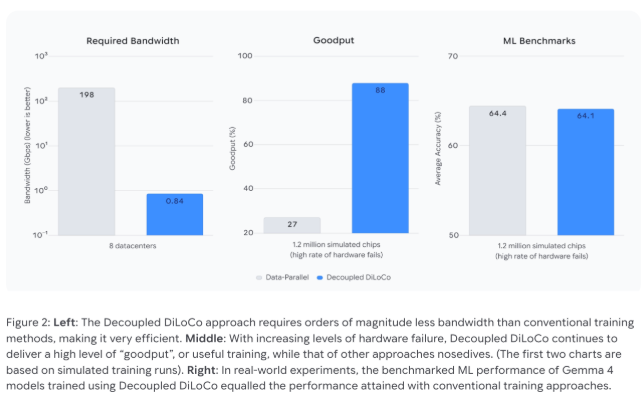
Google DeepMind has unveiled a clever solution to a big headache in AI training - hardware failures. Their new Decoupled DiLoCo system lets different parts of the training process work independently, so if one piece of equipment crashes, the rest keep humming along. Imagine a team where if someone calls in sick, everyone else just adjusts and keeps working - that's essentially what this does for AI training. Early tests show it maintains nearly 90% efficiency even when hardware starts failing, while traditional methods plummet to just 27%. Plus, it slashes bandwidth needs dramatically, opening doors for more accessible global AI collaboration.

April 24, 2026
AI researchmachine learningdistributed computing
News

NeoCognition Labs Raises $40M to Build Self-Learning AI Agents

AI research lab NeoCognition has emerged from stealth with $40 million in seed funding to tackle one of AI's biggest challenges: reliability. Founded by Ohio State's Professor Yu Su, the startup aims to create self-learning systems that can master professional domains like human experts. Backed by top investors including Vista Equity Partners, NeoCognition plans to transform enterprise SaaS with AI agents that evolve independently across industries.

April 22, 2026
AI researchstartup fundingmachine learning
News

NeoCognition Raises $40M to Build AI That Learns Like Humans

AI startup NeoCognition has secured $40 million in seed funding to develop next-generation AI agents that mimic human learning. The company, led by Professor Su Yu, aims to solve the current 50% success rate problem in AI task execution by creating systems that can specialize like humans. Backed by investors including Intel's CEO, the firm plans to target enterprise markets with customizable 'AI employees' that rapidly adapt to specialized fields like law and finance.

April 22, 2026
AI developmentmachine learningstartup funding
News

Moonshot AI's K2.6 Model Breaks New Ground in Coding and AI Agents

Moonshot AI has unveiled its latest Kimi K2.6 model, marking significant strides in AI's ability to handle complex, long-term tasks. The model shines in coding marathons - capable of working non-stop for 13 hours while maintaining accuracy. Benchmarks show it competes with top global models, even outperforming them in some areas. Developers can now access these capabilities through various platforms, signaling a shift from simple AI conversations to practical execution.

April 21, 2026
AI developmentcoding assistantsMoonshot AI
News

Celebrities Push Back Against iQIYI's AI Avatar Plans

iQIYI's ambitious 'AI Artist Library' project has hit a snag as multiple celebrities deny participating. The streaming platform claimed over 100 artists had joined their digital avatar initiative, but stars like Zhang Ruoyun and Wang Churan quickly took to social media to refute these claims. This controversy raises important questions about consent and rights in the age of AI entertainment.

April 20, 2026
AI ethicsdigital avatarsentertainment law
ChatGPT rolls out smart age detection to protect young users
News

ChatGPT rolls out smart age detection to protect young users

OpenAI is introducing an innovative age prediction system for ChatGPT that analyzes user behavior to identify minors. When the AI detects someone under 18, it automatically activates protective filters that block sensitive content. The feature includes optional identity verification through Persona, requiring selfies or IDs for confirmation. Launching first in Europe, this move shows OpenAI's commitment to creating safer digital spaces for teenagers as AI becomes more prevalent in daily life.

April 20, 2026
ChatGPTonline safetyAI ethics