
Man's AI-Generated Suicide Photo Hoax Lands Him in Legal Trouble

AI-Generated Suicide Hoax Triggers Police Response in Qinghai

What began as a domestic argument in China's Qinghai Province escalated into a full-blown police operation after one man took marital disputes to dangerous new digital territory. The incident, which unfolded in mid-April, demonstrates how easily accessible AI tools can be weaponized in personal conflicts.

The Distressing Digital Deception

On April 14, Xunhua County police received a frantic call from a local woman. Her husband had sent her what appeared to be shockingly realistic photos showing him standing in the Yellow River, with strong implications he intended to take his own life. The images were convincing enough that both the distressed wife and responding officers initially believed them to be genuine.

"We immediately activated our emergency protocols," explained a police spokesperson. "Given the visual evidence and the emotional state of the caller, we had to treat this as an active suicide situation."

Wasting Precious Resources

Dozens of officers combed the riverbanks in a painstaking search operation that stretched for hours. The search teams worked against the clock, knowing that every minute counted in potential water rescue scenarios. Only after an extensive search yielded no evidence of anyone in distress did investigators begin questioning the authenticity of the photos.

"The images showed remarkable detail," one officer noted. "But inconsistencies in lighting and perspective eventually gave them away as artificial creations."

Confession and Consequences

When confronted, the husband admitted to fabricating the images using easily accessible AI tools. His motive? To frighten his wife following a heated argument. What he likely intended as a dramatic relationship tactic instead became a costly legal lesson.

The Xunhua County Public Security Bureau charged the man under China's Public Security Administration Penalty Law. Beyond facing administrative detention, his actions sparked broader discussions about responsible AI use.

A Warning for the AI Age

This case joins growing concerns about how quickly personal disputes can escalate with digital tools. Mental health professionals warn that fake suicide threats - whether digital or verbal - create lasting trauma for families and stretch emergency services thin.

"We're seeing more cases where people use technology as emotional leverage," said Dr. Lin Wei, a Beijing-based family counselor. "These tools may seem harmless in the moment, but they can have serious real-world consequences."

Local authorities emphasized that false reports divert resources from genuine emergencies. A single hoax can delay responses to actual crises, potentially costing lives.

Key Points:

  • AI-generated images triggered an unnecessary police search operation
  • The husband created the fake suicide photos following a marital dispute
  • Authorities confirmed the deception after an exhaustive riverside search
  • The perpetrator faces legal consequences under public security laws
  • Experts warn about the emotional and societal costs of such digital hoaxes

As AI image generation becomes more sophisticated and accessible, this case serves as a cautionary tale about the line between digital fantasy and real-world responsibility.

Enjoyed this article?

Subscribe to our newsletter for the latest AI news, product reviews, and project recommendations delivered to your inbox weekly.

Weekly digestFree foreverUnsubscribe anytime

Related Articles

News

Apple Nearly Booted Grok Over Deepfake Failures

Apple came close to pulling Elon Musk's AI app Grok from the App Store earlier this year after the platform failed to rein in non-consensual deepfake content. While parent company X addressed Apple's concerns, Grok reportedly still doesn't meet the tech giant's content moderation standards - particularly around AI-generated images targeting women and minors.

April 16, 2026
AI ethicscontent moderationdeepfake technology
News

AI Lab Denies Code Copying Claims as Developer Drama Heats Up

Silicon Valley's Nous Research faces plagiarism accusations from Chinese AI team EvoMap over their Hermes Agent project. EvoMap alleges striking similarities in architecture with their Evolver engine, sparking a fiery exchange. With nearly 190,000 social media views, the dispute highlights growing tensions in competitive AI development circles.

April 16, 2026
AI ethicsopen sourcetech disputes
News

Apple Pressured Musk's X to Fix Grok's AI Image Risks or Face App Store Ban

Behind closed doors, Apple warned Elon Musk's X platform that its Grok AI tool violated App Store policies by generating inappropriate images. Internal documents reveal a months-long battle where Apple repeatedly rejected X's content moderation fixes before approving a revised version. While incidents have decreased, recent tests show users can still circumvent safeguards to create explicit content.

April 15, 2026
AI ethicsApp Store policiescontent moderation
DeepMind's Philosopher Hire: Why AI Labs Need More Than Engineers
News

DeepMind's Philosopher Hire: Why AI Labs Need More Than Engineers

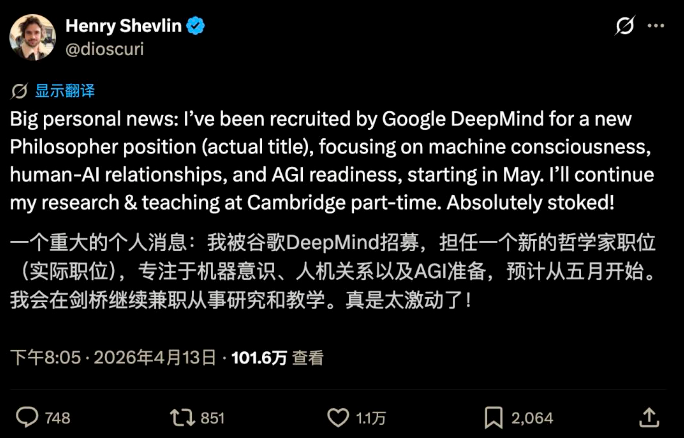
Google DeepMind has made an unusual move by hiring philosopher Henry Shevlin in a full-time position - a first for leading AI labs. His focus on machine consciousness and human-AI relationships signals a shift from viewing AGI as purely an engineering challenge to recognizing its profound philosophical implications. As AI systems grow more sophisticated, questions about consciousness boundaries and ethical frameworks can no longer be avoided.

April 15, 2026
AI ethicsMachine consciousnessAGI development
Voice Actors Sound Alarm Over AI Voice Theft Epidemic
News

Voice Actors Sound Alarm Over AI Voice Theft Epidemic

Prominent Chinese voice actors are fighting back against rampant AI voice cloning that's stealing their livelihoods. Zhang Jiaming, famous for voicing Taiyi Zhenren in 'Ne Zha,' reveals he found over 700 unauthorized uses of his voice in a single day. The industry is rallying with legal action as AI-generated voices flood the market, leaving human performers struggling to compete with free digital replicas of their own talent.

April 13, 2026
AI voice cloningvoice actor rightsdigital copyright
News

Voice Actors Fight Back as AI Steals Their Livelihoods

Popular voice actors, including the voice of Taiyi Zhenren from 'Ne Zha,' are losing work to AI clones of their voices. With contracts canceled and infringements rampant, the industry is uniting to push back. Legal battles highlight the deep challenges of protecting vocal identities in the AI era.

April 13, 2026
AI voice theftvoice acting crisisdigital rights