DeepMind's Philosopher Hire: Why AI Labs Need More Than Engineers

When AI Labs Turn to Philosophers

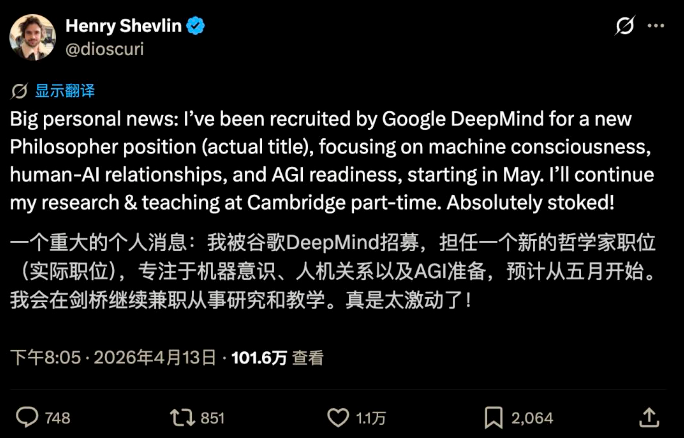
In a move that speaks volumes about where artificial intelligence is heading, Google DeepMind has created its first full-time philosopher position - bringing Cambridge scholar Henry Shevlin aboard this May. This isn't some symbolic advisory role, but a researcher embedded in DeepMind's actual projects, wrestling with questions most engineers avoid: What constitutes machine consciousness? Where exactly should we draw the line between humans and AI?
Image

Beyond Computing Power and Algorithms

For years, the race toward Artificial General Intelligence (AGI) focused on technical hurdles - more computing power, better algorithms, larger datasets. DeepMind's hiring decision suggests a pivotal recognition: we're entering territory where spreadsheet metrics won't suffice. "When your creation starts showing behaviors that look suspiciously like awareness," notes MIT AI researcher Dr. Elena Petrov, "you can't just benchmark your way out of that conversation."

Shevlin's appointment comes as public anxiety about AI reaches new heights. His work will directly confront the ethical quicksand awaiting us - how human values and institutions might (or might not) withstand AGI's arrival. It's one thing to build something smarter than humans; quite another to ensure it aligns with what makes us human in the first place.

The Consciousness Conundrum

The most fascinating (and unsettling) questions Shevlin will tackle involve machine consciousness. Current language models can mimic human conversation remarkably well - but does that constitute understanding? Where exactly does genuine awareness begin? These aren't academic musings; they'll determine everything from AI rights to legal liability when systems go awry.

Meanwhile, the boundary between human and artificial cognition grows blurrier. Recent studies show people attributing consciousness to AI systems after surprisingly brief interactions. "We're biologically wired to see minds everywhere," explains cognitive scientist Dr. Priya Chatterjee. "That instinct served us well with other humans - but with AI, it's leading us into uncharted psychological territory."

Why This Matters Now

DeepMind's move provides a template for responsible AI development at a critical juncture. Other labs will likely follow suit as systems approach human-level competencies. The philosopher's role? To ensure we don't just ask "can we build it?" but "should we?" - and "what happens after we do?"

Key Points:

  • First full-time philosopher at a major AI lab signals shift in AGI development priorities
  • Henry Shevlin will research machine consciousness and human-AI boundaries
  • Move addresses growing concerns about ethical implications of advanced AI
  • Consciousness attribution to AI systems presents unique psychological challenges
  • Philosophical questions becoming as crucial as technical ones in AI development

Enjoyed this article?

Subscribe to our newsletter for the latest AI news, product reviews, and project recommendations delivered to your inbox weekly.

Weekly digestFree foreverUnsubscribe anytime

Related Articles

News

AI Lab Denies Code Copying Claims as Developer Drama Heats Up

Silicon Valley's Nous Research faces plagiarism accusations from Chinese AI team EvoMap over their Hermes Agent project. EvoMap alleges striking similarities in architecture with their Evolver engine, sparking a fiery exchange. With nearly 190,000 social media views, the dispute highlights growing tensions in competitive AI development circles.

April 16, 2026
AI ethicsopen sourcetech disputes
News

Apple Pressured Musk's X to Fix Grok's AI Image Risks or Face App Store Ban

Behind closed doors, Apple warned Elon Musk's X platform that its Grok AI tool violated App Store policies by generating inappropriate images. Internal documents reveal a months-long battle where Apple repeatedly rejected X's content moderation fixes before approving a revised version. While incidents have decreased, recent tests show users can still circumvent safeguards to create explicit content.

April 15, 2026
AI ethicsApp Store policiescontent moderation
Voice Actors Sound Alarm Over AI Voice Theft Epidemic
News

Voice Actors Sound Alarm Over AI Voice Theft Epidemic

Prominent Chinese voice actors are fighting back against rampant AI voice cloning that's stealing their livelihoods. Zhang Jiaming, famous for voicing Taiyi Zhenren in 'Ne Zha,' reveals he found over 700 unauthorized uses of his voice in a single day. The industry is rallying with legal action as AI-generated voices flood the market, leaving human performers struggling to compete with free digital replicas of their own talent.

April 13, 2026
AI voice cloningvoice actor rightsdigital copyright
News

Voice Actors Fight Back as AI Steals Their Livelihoods

Popular voice actors, including the voice of Taiyi Zhenren from 'Ne Zha,' are losing work to AI clones of their voices. With contracts canceled and infringements rampant, the industry is uniting to push back. Legal battles highlight the deep challenges of protecting vocal identities in the AI era.

April 13, 2026
AI voice theftvoice acting crisisdigital rights
Ohio Teen Charged for AI-Generated Explicit Images of Classmates
News

Ohio Teen Charged for AI-Generated Explicit Images of Classmates

A 14-year-old Ohio boy faces felony charges for allegedly using AI to create and share fake nude images of classmates. The case highlights growing concerns about digital harassment in schools and new laws cracking down on AI-generated explicit content. Urbana High School officials say the incident caused lasting emotional harm to victims.

April 9, 2026
AI ethicsdigital harassmentschool safety
News Feeds Fuel AI: Study Reveals Chatbots Rely Heavily on Journalism
News

News Feeds Fuel AI: Study Reveals Chatbots Rely Heavily on Journalism

A new study analyzing 15 million AI responses found that a quarter of chatbot citations come directly from news reports. Reuters tops the list of most-quoted sources, followed by Forbes, while The Guardian leads in the UK market. The findings reignite debates about AI's use of copyrighted content as tech companies continue rapid AI development.

April 9, 2026
AI ethicsChatbotsMedia trends