News Feeds Fuel AI: Study Reveals Chatbots Rely Heavily on Journalism

The Hidden Diet of AI Chatbots

As artificial intelligence becomes increasingly sophisticated, researchers are peering under the hood to understand what exactly powers these digital brains. A comprehensive new study from public relations database Muckrack reveals some surprising findings about where chatbots get their information.

Image

News Organizations Feed the Machines

The analysis of 15 million responses from leading AI systems like Gemini, Perplexity, Claude, and ChatGPT shows that 25% of all citations originate from news reports. This heavy reliance on journalism raises important questions about content sourcing and copyright in the age of AI.

"We expected to see some news citations, but the scale surprised us," said a Muckrack spokesperson. "These systems are essentially synthesizing and repackaging the work of professional journalists at remarkable scale."

Who's Getting Quoted?

The study identified clear favorites among news sources:

  • Reuters emerged as the most frequently cited publication globally
  • Forbes claimed second place in the rankings
  • In the UK market, The Guardian dominated as the preferred source

Individual journalists aren't immune to this trend either. Former Business Insider CEO Henry Blodget earned the distinction of being the most-quoted journalist by AI systems.

Measuring 'AI Visibility'

In response to these findings, Muckrack introduced a new metric categorizing journalists' "AI visibility" into three tiers. Meanwhile, analysis of Google's AI Overview feature revealed that for broader queries, platforms like Facebook and Reddit also serve as significant reference sources.

The data has reignited industry debates about AI's use of copyrighted material. While tech companies race forward with AI development—Meta employees competing over token usage, Netflix open-sourcing video editing tools—questions remain about fair compensation for content creators.

Anthropic's recent decision to discontinue third-party tools like OpenClaw due to unsustainable demand hints at the challenges facing sustainable AI growth. As one industry observer noted: "We're building incredibly powerful systems that depend on human creativity, but we haven't quite figured out how to properly value that human input yet."

Key Points:

  • 25% of AI chatbot citations come from news reports
  • Reuters, Forbes, and The Guardian are top-quoted sources
  • Former Business Insider CEO Henry Blodget is the most-cited journalist
  • New metrics track journalists' "AI visibility"
  • Findings renew copyright debates in AI development
Enjoyed this article?

Subscribe to our newsletter for the latest AI news, product reviews, and project recommendations delivered to your inbox weekly.

Weekly digestFree foreverUnsubscribe anytime

Related Articles

LibuLibu AI addresses content safety concerns with platform upgrades
News

LibuLibu AI addresses content safety concerns with platform upgrades

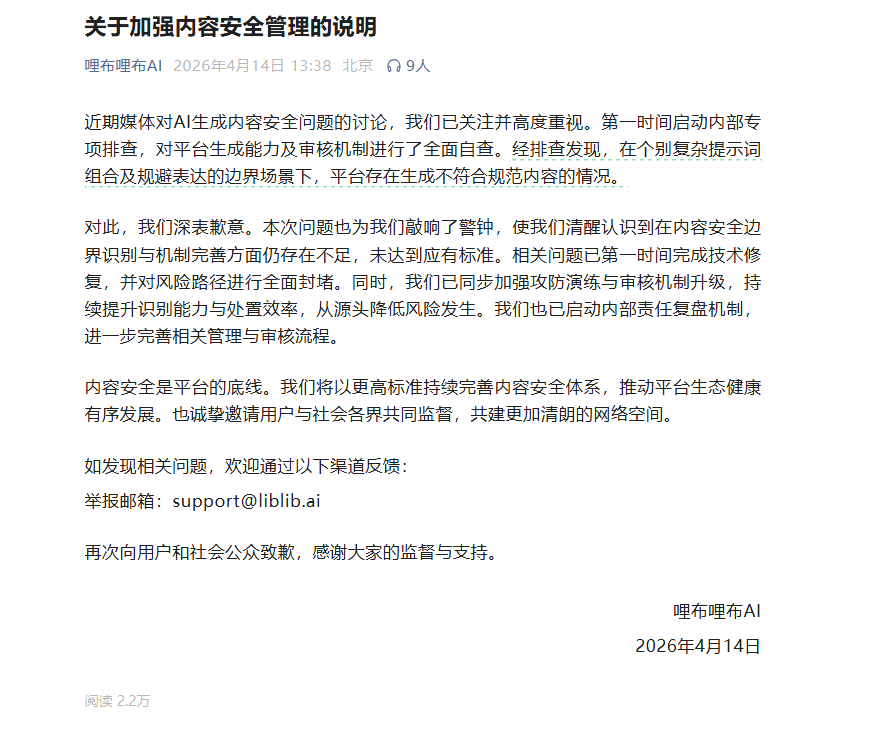
LibuLibu AI has publicly responded to recent concerns about questionable AI-generated content on its platform. The company acknowledged some content slipped through their filters in complex scenarios. They've now implemented technical fixes, closed known risk gaps, and upgraded their review system. The incident highlights the ongoing challenges AI platforms face in content moderation as the industry moves toward stricter self-regulation.

April 14, 2026
AI safetycontent moderationLibuLibu AI
Voice Actors Sound Alarm Over AI Voice Theft Epidemic
News

Voice Actors Sound Alarm Over AI Voice Theft Epidemic

Prominent Chinese voice actors are fighting back against rampant AI voice cloning that's stealing their livelihoods. Zhang Jiaming, famous for voicing Taiyi Zhenren in 'Ne Zha,' reveals he found over 700 unauthorized uses of his voice in a single day. The industry is rallying with legal action as AI-generated voices flood the market, leaving human performers struggling to compete with free digital replicas of their own talent.

April 13, 2026
AI voice cloningvoice actor rightsdigital copyright
News

Voice Actors Fight Back as AI Steals Their Livelihoods

Popular voice actors, including the voice of Taiyi Zhenren from 'Ne Zha,' are losing work to AI clones of their voices. With contracts canceled and infringements rampant, the industry is uniting to push back. Legal battles highlight the deep challenges of protecting vocal identities in the AI era.

April 13, 2026
AI voice theftvoice acting crisisdigital rights
Ohio Teen Charged for AI-Generated Explicit Images of Classmates
News

Ohio Teen Charged for AI-Generated Explicit Images of Classmates

A 14-year-old Ohio boy faces felony charges for allegedly using AI to create and share fake nude images of classmates. The case highlights growing concerns about digital harassment in schools and new laws cracking down on AI-generated explicit content. Urbana High School officials say the incident caused lasting emotional harm to victims.

April 9, 2026
AI ethicsdigital harassmentschool safety
News

Gemini Gets a Mental Health Lifeline: Google's New Crisis Support Features

Google's Gemini AI assistant is getting a major upgrade focused on mental health support. When detecting distress signals in conversations, it now offers one-tap access to crisis hotlines and professional help. Backed by a $30 million investment and developed with clinical experts, this move signals AI's evolving role from productivity tool to compassionate companion. The features aim to create a digital safety net for vulnerable users while navigating complex privacy and ethical considerations.

April 8, 2026
AI ethicsmental health techGoogle Gemini
News

China Sets Ground Rules for AI Ethics with New Review Framework

China's Ministry of Industry and Information Technology has introduced comprehensive guidelines for ethical AI development. The new measures establish clear review procedures, risk prevention protocols, and consequences for violations - creating a structured approach to ensure AI technologies align with societal values while fostering innovation.

April 8, 2026
AI ethicstechnology regulationChina tech policy