LibuLibu AI addresses content safety concerns with platform upgrades

LibuLibu AI Takes Action on Content Safety

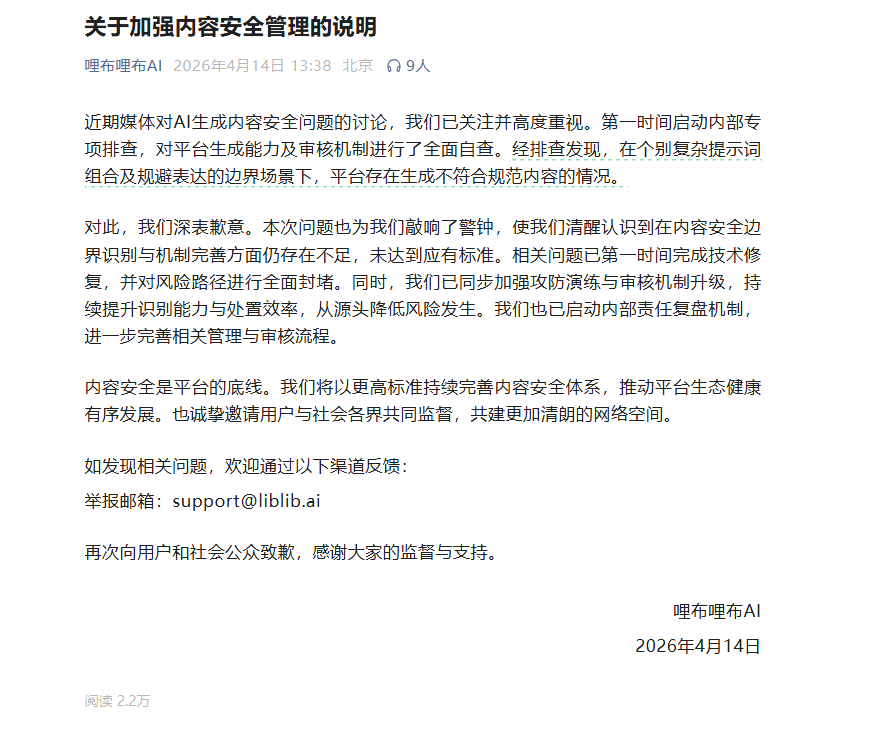
Following growing scrutiny around AI-generated content, LibuLibu AI has stepped forward with concrete measures to address safety concerns. The company's recent statement comes after users and media outlets raised questions about some problematic outputs from its platform.

The acknowledgment didn't come lightly. LibuLibu openly admitted that their system occasionally failed when users employed clever prompt combinations to bypass content restrictions. "We recognize our filters weren't perfect," the statement read, "especially in edge cases where users intentionally tested boundaries."

Technical Fixes Implemented

The AI company has been busy behind the scenes. Engineers have:

  • Patched all identified technical vulnerabilities
  • Closed loopholes that allowed questionable content through
  • Strengthened penetration testing to catch more edge cases

But technical solutions alone weren't enough. The platform has completely overhauled its review process, implementing what they call a "multi-layered defense" against problematic content.
Image

A Broader Industry Challenge

This incident sheds light on a larger issue facing AI companies. As LibuLibu's statement put it: "Content safety isn't just our challenge—it's the industry's growing pain." The company has established an internal review team to examine how these slips occurred and prevent future occurrences.

Interestingly, they've also opened their doors to public oversight, inviting users to report concerns directly to their support team. This move toward transparency suggests the company understands trust must be earned in this sensitive field.

What This Means for AI Development

The LibuLibu situation underscores how quickly the AI landscape is evolving. Just a year ago, most platforms focused primarily on functionality. Now, content moderation and ethical considerations are taking center stage.

Industry observers note this reflects a broader trend toward responsible AI development. As one analyst commented, "The wild west days of AI are ending. Platforms now face real pressure to get content safety right."

Key Points:

  • LibuLibu AI has fixed technical issues that allowed questionable content
  • The platform upgraded its review system with stronger safeguards
  • Company acknowledges ongoing challenges in content moderation
  • Incident highlights industry-wide shift toward stricter content policies
  • Public reporting system established for additional oversight

Enjoyed this article?

Subscribe to our newsletter for the latest AI news, product reviews, and project recommendations delivered to your inbox weekly.

Weekly digestFree foreverUnsubscribe anytime

Related Articles

Voice Actors Sound Alarm Over AI Voice Theft Epidemic
News

Voice Actors Sound Alarm Over AI Voice Theft Epidemic

Prominent Chinese voice actors are fighting back against rampant AI voice cloning that's stealing their livelihoods. Zhang Jiaming, famous for voicing Taiyi Zhenren in 'Ne Zha,' reveals he found over 700 unauthorized uses of his voice in a single day. The industry is rallying with legal action as AI-generated voices flood the market, leaving human performers struggling to compete with free digital replicas of their own talent.

April 13, 2026
AI voice cloningvoice actor rightsdigital copyright
News

Voice Actors Fight Back as AI Steals Their Livelihoods

Popular voice actors, including the voice of Taiyi Zhenren from 'Ne Zha,' are losing work to AI clones of their voices. With contracts canceled and infringements rampant, the industry is uniting to push back. Legal battles highlight the deep challenges of protecting vocal identities in the AI era.

April 13, 2026
AI voice theftvoice acting crisisdigital rights
Ohio Teen Charged for AI-Generated Explicit Images of Classmates
News

Ohio Teen Charged for AI-Generated Explicit Images of Classmates

A 14-year-old Ohio boy faces felony charges for allegedly using AI to create and share fake nude images of classmates. The case highlights growing concerns about digital harassment in schools and new laws cracking down on AI-generated explicit content. Urbana High School officials say the incident caused lasting emotional harm to victims.

April 9, 2026
AI ethicsdigital harassmentschool safety
News Feeds Fuel AI: Study Reveals Chatbots Rely Heavily on Journalism
News

News Feeds Fuel AI: Study Reveals Chatbots Rely Heavily on Journalism

A new study analyzing 15 million AI responses found that a quarter of chatbot citations come directly from news reports. Reuters tops the list of most-quoted sources, followed by Forbes, while The Guardian leads in the UK market. The findings reignite debates about AI's use of copyrighted content as tech companies continue rapid AI development.

April 9, 2026
AI ethicsChatbotsMedia trends
News

Gemini Gets a Mental Health Lifeline: Google's New Crisis Support Features

Google's Gemini AI assistant is getting a major upgrade focused on mental health support. When detecting distress signals in conversations, it now offers one-tap access to crisis hotlines and professional help. Backed by a $30 million investment and developed with clinical experts, this move signals AI's evolving role from productivity tool to compassionate companion. The features aim to create a digital safety net for vulnerable users while navigating complex privacy and ethical considerations.

April 8, 2026
AI ethicsmental health techGoogle Gemini
News

China Sets Ground Rules for AI Ethics with New Review Framework

China's Ministry of Industry and Information Technology has introduced comprehensive guidelines for ethical AI development. The new measures establish clear review procedures, risk prevention protocols, and consequences for violations - creating a structured approach to ensure AI technologies align with societal values while fostering innovation.

April 8, 2026
AI ethicstechnology regulationChina tech policy