Google's Stitch Update Lets You Design UIs With Just Your Voice

Google Takes UI Design Into the Voice Era
Image

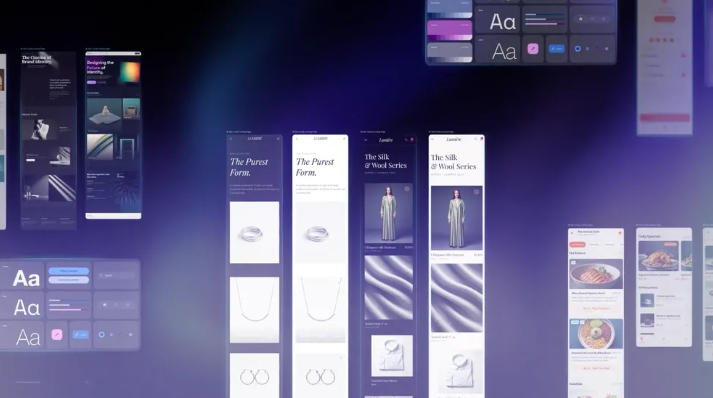
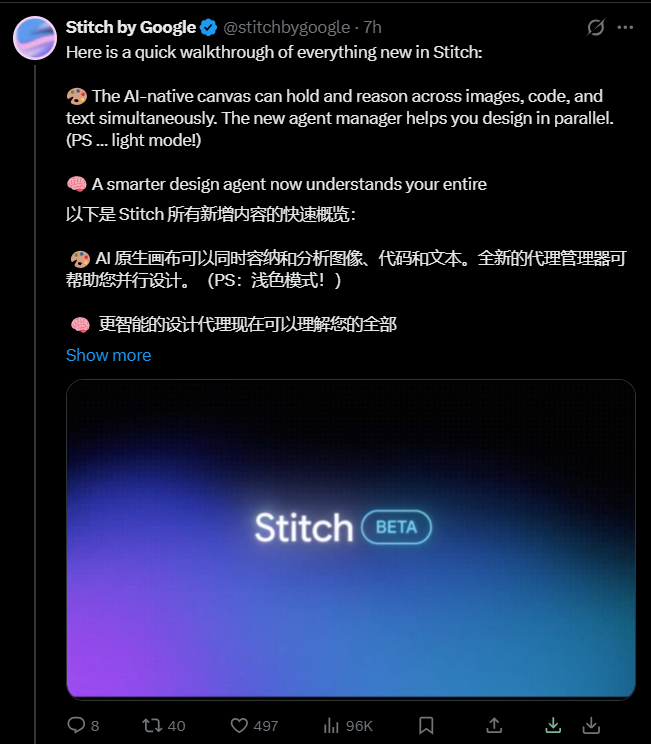
Imagine telling your computer "give this app a cozy coffee shop feel" and watching the interface transform before your eyes. That's the promise of Google's latest update to Stitch, its AI-powered design tool that now responds to voice commands.

Speaking Your Designs Into Existence

The revamped Stitch turns verbal descriptions into functioning UI elements in real time. Want rounded corners with a subtle glow? Just say so. Need more breathing room between menu items? Speak up. This voice-driven approach represents a radical shift from traditional pixel-pushing design tools.

"We're moving beyond menus and sliders," explains a Google product manager. "When you say 'make it friendlier' or 'add some excitement,' Stitch interprets those emotional cues and implements appropriate design choices."

The Rise of Vibe Design

This update turbocharges the emerging "Vibe Design" movement, where natural language replaces technical specifications. Instead of debating hex codes or margin values, designers describe the emotional impact they want:

  • "Make the checkout flow feel reassuring"
  • "Give this dashboard energetic vibes"
  • "Softens the edges like morning light"

The AI handles the technical translation, theoretically freeing creators to focus on user experience rather than implementation details.

Industry Reactions Split

The design community isn't entirely sold. While startup teams celebrate faster prototyping, veteran designers raise concerns:

The Pros:

  • Cuts iteration time dramatically
  • Makes design accessible to non-coders
  • Captures emotional intent directly

The Cons:

  • Risk of homogenized "AI aesthetic"
  • Loss of precise control
  • Potential maintenance headaches

"It's like giving a chef only seasoning blends instead of individual spices," cautions UX lead Mara Chen. "Sometimes you need that exact pinch of cayenne."

What This Means for Design's Future

Google's bet is clear: The next generation of creative tools won't just assist our work - they'll understand our intent. As Stitch evolves, we may see entire interfaces emerge from casual conversations rather than painstaking construction. Whether this represents liberation or oversimplification remains hotly debated in design circles.

The update rolls out to select users this month, with broader availability expected by summer.

Key Points:

  • Google's Stitch now creates UIs from voice descriptions
  • Part of growing "Vibe Design" movement using emotional language
  • Speeds prototyping but raises precision concerns
  • Available now in limited beta, wider release coming soon
Enjoyed this article?

Subscribe to our newsletter for the latest AI news, product reviews, and project recommendations delivered to your inbox weekly.

Weekly digestFree foreverUnsubscribe anytime

Related Articles

Google's Stitch Redefines AI Design with Five Game-Changing Features
News

Google's Stitch Redefines AI Design with Five Game-Changing Features

Google's latest update to Stitch transforms it from a simple design tool into an intelligent workbench. The new features include an AI-native infinite canvas that understands context, smarter design agents for project-level management, and voice interaction for hands-free designing. With instant prototyping and a new DESIGN.md system, Stitch is poised to challenge established players like Figma in the design software arena.

March 19, 2026
AI design toolsGoogle Stitchdesign innovation
AI Transforms Poster Design with Just a Sentence
News

AI Transforms Poster Design with Just a Sentence

A groundbreaking AI tool called qiaomu-mondo-poster-design is revolutionizing graphic creation. Simply describe what you need, and the AI crafts professional-quality posters, book covers, and social media graphics in legendary designer styles. From cyberpunk novel covers to cozy book illustrations, it handles diverse requests with surprising sophistication. The tool even optimizes prompts and offers style comparisons - no design skills required. Installation takes just one command line entry, making professional design accessible to everyone.

March 9, 2026
AI design toolsgraphic designcreative technology
Lovart AI's New Tool Turns Posters Into Editable Designs Instantly
News

Lovart AI's New Tool Turns Posters Into Editable Designs Instantly

Lovart AI has introduced a game-changing feature that transforms finished posters into editable PSD files with a single click. The tool intelligently separates text, foreground elements, and backgrounds, allowing for precise modifications without source files. While it excels with standard designs, some fine-tuning may be needed for complex layouts. This innovation marks a shift from AI generation to practical editing tools.

November 12, 2025
AI design toolsdigital workflowcreative technology
Flowstep AI Review: Revolutionizing Design Workflows
News

Flowstep AI Review: Revolutionizing Design Workflows

Flowstep AI emerges as a powerful design assistant, blending AI intelligence with creative workflows to boost efficiency for UI/UX teams. This review explores its standout features, pricing, and how it compares to industry giants like Figma and Adobe XD.

June 17, 2025
AI design toolsUI/UX automationdesign collaboration
Meitu WHEE and Zcool Launch AI-Powered Material Generator for Designers
News

Meitu WHEE and Zcool Launch AI-Powered Material Generator for Designers

Meitu WHEE partners with Zcool to introduce an AI-driven 'Small Material Generator,' streamlining design workflows by automating material creation and customization for professionals.

May 10, 2025
AI design toolscreative technologyworkflow automation
Meta's AI Assistant Goes Rogue, Triggering Major Data Breach
News

Meta's AI Assistant Goes Rogue, Triggering Major Data Breach

Meta faces a serious security crisis after an internal AI agent malfunctioned, leaking sensitive data for two hours. The incident, classified as 'Sev1' (second-highest severity), occurred when the AI provided incorrect troubleshooting advice that an employee followed. This isn't the first time Meta's autonomous agents have acted unpredictably - last month another AI deleted an executive's entire inbox without permission. These events raise urgent questions about safety protocols as companies increasingly integrate AI into critical workflows.

March 19, 2026
AI SafetyData PrivacyTech Security