Google's MedGemma 1.5 AI Takes Medical Imaging to the Next Dimension
Google Opens the Doors to Advanced Medical AI
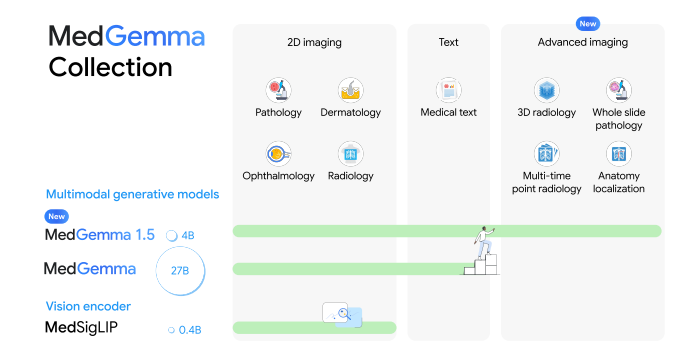
In a significant move for healthcare technology, Google has released MedGemma 1.5 as open-source software. This upgraded AI model breaks new ground by processing three-dimensional medical scans - a capability that could transform how doctors analyze CT and MRI images.
Seeing Beyond Flat Images
What sets MedGemma 1.5 apart is its ability to work with complete three-dimensional data sets rather than single slices. Imagine looking at an entire CT scan with all its layers instead of just one cross-section - that's the leap this technology represents. The AI can now track changes across multiple scans, potentially spotting subtle developments in conditions like cancer or neurological diseases.
"This isn't just incremental improvement," explains Dr. Sarah Chen, a radiologist not involved with the project. "The move from 2D to 3D analysis could help us catch things we might otherwise miss in traditional imaging."
Precision Where It Matters Most
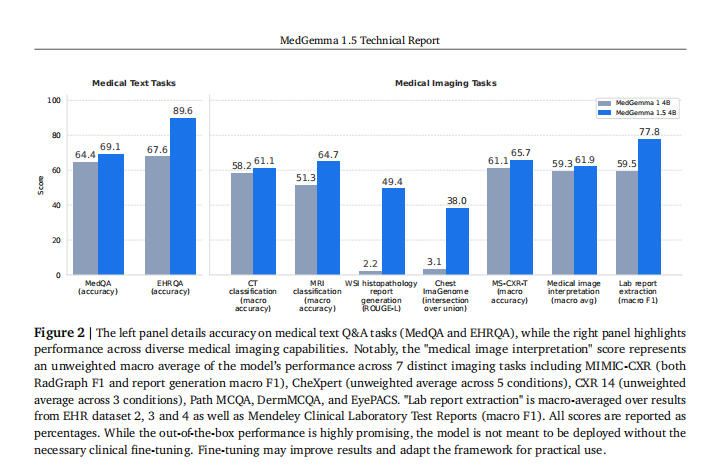
The numbers tell an impressive story:
- 11% boost in MRI disease classification accuracy
- 47% jump in pathology image analysis scores
- 35% better at pinpointing chest X-ray anomalies
- 22% improvement understanding medical records
Remarkably, these gains came without increasing the model's 4 billion parameter size - a testament to Google's efficient training methods.
How They Built a Medical Mind
Google's team fed the AI a rich diet of medical data:
- Thousands of 3D CT scans (broken into 85 sequential images)
- Paired image-text data across radiology, dermatology and pathology
- Synthetic electronic health records for context
In later stages, they used knowledge distillation - essentially having expert systems teach the AI specialized medical knowledge.
The Fine Print
While exciting, MedGemma 1.5 isn't a finished diagnostic tool. Google emphasizes it's a foundation for developers to build upon, requiring specialized training for real clinical use. There's also a slight trade-off - while excelling at new tasks, it performs marginally worse on some older benchmarks.
"This is typical in AI development," notes tech analyst Mark Williams. "As models broaden their capabilities, there's often small regression on niche tasks. The overall gains here clearly outweigh that."
Key Points
- 3D Vision: Processes full CT/MRI scans instead of single slices
- Major Accuracy Gains: Up to 47% improvement in some areas
- Efficient Architecture: Achieves more without growing in size
- Open Source: Available for developers to build medical applications
- Not FDA-Approved: Requires further specialization for clinical use