Ant Forest Releases Massive 2.7TB Depth Dataset for AI Vision

Ant Forest's Open-Source Move Could Transform Computer Vision

In a significant boost for AI research, Ant Lingbo Technology has released the LingBot-Depth-Dataset - a massive collection of depth perception data that's set to accelerate advancements in spatial AI. Clocking in at 2.71TB, this resource dwarfs previous offerings with its 3 million high-quality sample pairs, two-thirds of which come from real-world environments.
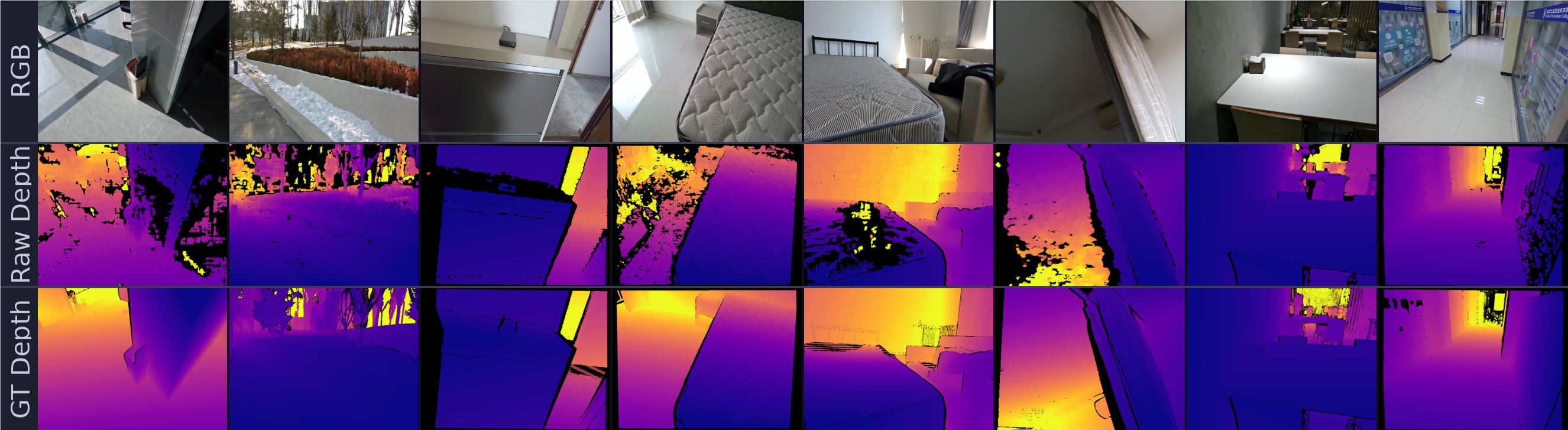
Image

(Sample images from the LingBot-Depth-Dataset showing RGB images, raw sensor data, and processed depth maps. The dataset provides both raw and ground truth depth information for robust model training.)

Filling a Critical Gap in AI Research

For years, computer vision researchers have struggled with limited, synthetic-heavy datasets that poorly represent real-world conditions. "Most available datasets are like training swimmers in a kiddie pool," explains Dr. Wei Zhang, a computer vision researcher at Tsinghua University. "They simply don't prepare models for the messy complexity of actual environments."

The LingBot dataset changes this by offering:

  • Real-world diversity: Captured across varied lighting and material conditions
  • Hardware breadth: Supports six popular depth cameras including Orbbec and Intel RealSense models
  • Complete data packages: Each sample includes RGB images plus both raw and processed depth maps

From Lab to Living Room: Practical Applications

The impact extends far beyond academic circles. Ant Lingbo's own LingBot-Depth model, trained on this dataset, already shows remarkable improvements:

  • 70% better accuracy in indoor scene depth prediction compared to leading methods
  • 47% error reduction in handling sparse or incomplete depth data

Perhaps most exciting is how this could democratize advanced computer vision. "With this dataset," notes robotics engineer Maria Chen, "even budget depth cameras can achieve performance rivaling premium industrial equipment - no hardware upgrades needed."

Why This Matters for AI's Future

As embodied AI systems move into homes and workplaces, their ability to understand physical spaces becomes crucial. This dataset provides the missing link between laboratory research and real-world deployment.

The open-source approach is particularly significant. By removing the barriers of expensive data collection, Ant Lingbo is enabling:

  • Faster iteration for academic researchers
  • More robust testing across different hardware platforms
  • Accelerated development of practical applications

"We're not just sharing data," says Ant Lingbo's project lead. "We're helping build the foundation for the next generation of spatial computing."

Key Points:

  • Scale: 2.71TB dataset with 3 million sample pairs (2M real-world)
  • Versatility: Supports six major depth camera models
  • Performance: Enables dramatic accuracy improvements in depth perception
  • Accessibility: Open-source availability lowers barriers for researchers worldwide
Enjoyed this article?

Subscribe to our newsletter for the latest AI news, product reviews, and project recommendations delivered to your inbox weekly.

Weekly digestFree foreverUnsubscribe anytime

Related Articles

News

Hume AI's TADA Brings Lightning-Fast, Hallucination-Free Speech to Your Phone

Hume AI has unveiled TADA, a groundbreaking text-to-speech system that runs efficiently on mobile devices. Unlike traditional models, it eliminates content hallucinations while delivering audio five times faster. What really sets it apart? The ability to generate 700-second audio clips and provide real-time transcriptions simultaneously - no extra processing needed. Early tests show it outperforms larger models in voice quality too.

March 12, 2026
AI speech synthesismobile technologyopen source AI
Xiaohongshu Unveils Faster AI Image Editor With Major Upgrades
News

Xiaohongshu Unveils Faster AI Image Editor With Major Upgrades

China's lifestyle platform Xiaohongshu has turbocharged its AI image editing capabilities with FireRed-Image-Edit v1.1. The update brings smarter facial recognition, smoother multi-element blending, and dramatic performance boosts - cutting processing time nearly in half. In a surprise move, the company is releasing all code and technical specs publicly, giving developers worldwide access to these professional-grade tools.

March 9, 2026
AI image editingXiaohongshucomputer vision
News

AliQwen Steps Into Wearable AI With Smart Glasses Launch

Alibaba's AI assistant Qwen is expanding beyond software into smart wearables, starting with AI glasses set to debut at MWC 2026. The move signals Alibaba's push into spatial computing, integrating lifestyle services directly into wearable hardware. Qwen's popularity has skyrocketed, processing nearly 200 million voice commands during China's recent Spring Festival.

February 27, 2026
AI wearablesAlibabaspatial computing
News

Hikvision's AI Inspector Tackles Factory Packaging Errors

Hikvision has unveiled a smart quality control system powered by its Guanlan AI model that spots packaging mistakes instantly. Unlike traditional manual checks, this solution scans every item with precision, adapting to complex production environments. Already proving valuable in automotive and electronics plants, it marks another step toward smarter manufacturing.

January 30, 2026
industrial automationquality controlcomputer vision
Kunlun Wanwei's Open-Source Video AI Takes Creativity to New Heights
News

Kunlun Wanwei's Open-Source Video AI Takes Creativity to New Heights

Chinese tech firm Kunlun Wanwei has unveiled SkyReels-V3, an open-source video generation model that's turning heads in the AI community. This versatile tool combines image-to-video conversion, cinematic-style extensions, and lifelike virtual avatars in one package. Early tests show it outperforms commercial rivals in visual quality and consistency. Best of all? It's free to use—for now.

January 29, 2026
AI video generationopen source AImultimodal models
Robots Get a Human Touch: Groundbreaking Dataset Bridges Sensory Gap
News

Robots Get a Human Touch: Groundbreaking Dataset Bridges Sensory Gap

Scientists have unveiled Baihu-VTouch, the world's first large-scale dataset combining vision and touch sensations for robots. This massive collection of over 60,000 minutes of tactile data could revolutionize how machines interact with our world - from delicate factory work to household chores. The breakthrough helps robots develop sensitivity closer to human touch across various robotic platforms.

January 26, 2026
robotic perceptiontactile sensorsAI datasets