Kunlun Wanwei's Open-Source Video AI Takes Creativity to New Heights

Kunlun Wanwei Breaks New Ground With SkyReels-V3

Chinese artificial intelligence company Kunlun Wanwei made waves this week with the release of SkyReels-V3, its latest open-source video generation model. What sets this technology apart? It packs three powerful creative tools into a single framework.

Where Images Come to Life

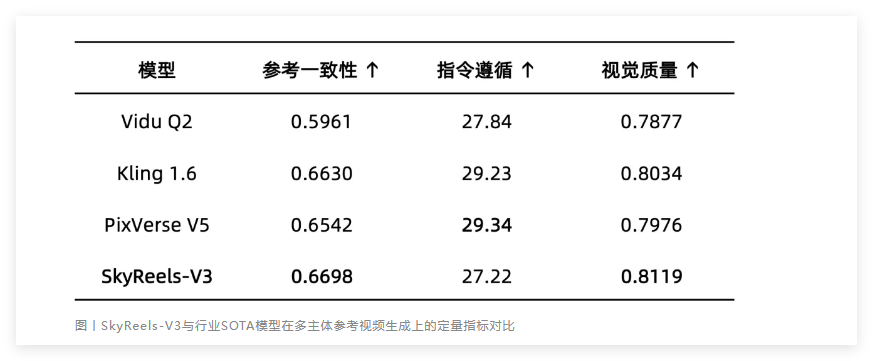
The image-to-video (I2V) function isn't just about making pictures move—it's about preserving their essence. Feed SkyReels-V3 up to four reference images, and it maintains remarkable fidelity to the original subjects' features and compositions. Independent evaluations suggest it outperforms popular commercial alternatives like Vidu Q2 and Kling1.6 in both consistency and visual quality.
Image

From Seconds to Stories

Ever watched an AI-generated video that felt... incomplete? Kunlun Wanwei's engineers tackled this head-on with their video extension feature. Rather than simply stretching clips longer, the system introduces professional film techniques—cut-ins, perspective shifts, even narrative transitions—transforming basic animations into coherent visual stories.

"We're moving beyond technical demonstrations," explains Dr. Liang Wei, Skywork AI's lead researcher. "Now creators can focus on storytelling while our model handles the cinematography."

Virtual Avatars That Actually Listen

The audio-driven avatar module addresses one of digital humans' most uncanny shortcomings: mismatched lip movements. Through precise audio-visual synchronization, SkyReels-V3 generates remarkably natural speech animations capable of sustaining minute-long dialogues—a boon for educators and content creators alike.

Image

Open Access Philosophy

In a surprising move for such advanced technology, Kunlun Wanwei has made SkyReels-V3 freely available on GitHub alongside temporary API access. "Democratizing creative tools aligns with our AGI vision," commented CEO Fang Han during the launch event.

The tech community has responded enthusiastically since Tuesday's release, with developers already experimenting with novel applications from educational content to indie filmmaking.

Key Points:

  • Three-in-one architecture combining image animation, video extension and virtual avatars
  • Outperforms commercial rivals in reference consistency testing
  • Professional-grade transitions elevate basic animations into narratives
  • Currently free via GitHub repository and limited-time API access
  • Part of Kunlun Wanwei's broader "All in AGI" strategic push
Enjoyed this article?

Subscribe to our newsletter for the latest AI news, product reviews, and project recommendations delivered to your inbox weekly.

Weekly digestFree foreverUnsubscribe anytime

Related Articles

Kling AI's Video Revolution: How a Feature Sparked Global Adoption
News

Kling AI's Video Revolution: How a Feature Sparked Global Adoption

Kuaishou's Kling AI has taken the video creation world by storm, with its user base skyrocketing to 12 million monthly active users in early 2026. The secret? A clever 'Motion Control' feature that turned pet videos into a global phenomenon. Revenue smashed expectations, hitting $140 million in 2025 - more than double initial projections. Now topping download charts in 40 countries, this tool is proving that AI-generated content has reached a turning point.

January 21, 2026
AI video generationKling AIcontent creation tools
News

Meitu Show's AI Flashlight Illuminates Global Creativity in 2025

Meitu Show's groundbreaking 'AI Flashlight' feature is transforming smartphone photography worldwide, earning it a spot among 2025's top AI apps. The tool's ability to enhance low-light images has sparked a creative revolution, particularly in emerging markets. This success story highlights how AI imaging has evolved beyond simple filters to become a true creative partner - one that understands real-world photography challenges and cultural nuances.

January 21, 2026
AI photographymobile technologycreative tools
Kunlun Wanyi's New AI Tool Makes Design Accessible to All
News

Kunlun Wanyi's New AI Tool Makes Design Accessible to All

Kunlun Wanyi has unveiled Skywork Design Agent, an AI-powered tool that democratizes design by enabling anyone to create professional-quality visuals without prior experience. The platform simplifies everything from social media graphics to brand identities, featuring intelligent style learning and powerful editing tools. Whether you're a small business owner or content creator, this could be your new design assistant.

January 20, 2026
AI designcreative toolsdigital accessibility
Alibaba's Wuli: A New AI-Powered Creative Playground
News

Alibaba's Wuli: A New AI-Powered Creative Playground

Alibaba has quietly introduced Wuli, an innovative AI design platform powered by its Tongyi Qianwen image models. This creative toolkit offers designers and marketers a versatile suite of tools—from rapid image generation to detailed editing—allowing users to balance speed with quality. Currently in testing, Wuli promises to transform how professionals approach digital content creation.

January 20, 2026
generative AIcreative toolsAlibaba
Tencent's Hunyuan 3D Studio Gets Major Upgrade With Brush Controls
News

Tencent's Hunyuan 3D Studio Gets Major Upgrade With Brush Controls

Tencent has rolled out version 1.2 of its Hunyuan 3D Studio platform, bringing significant improvements to 3D modeling capabilities. The update introduces intuitive brush controls for precise component editing and expands multi-angle view generation from four to eight perspectives. These enhancements make professional-grade 3D asset creation more accessible to designers and creators.

January 16, 2026
3D modelingdigital designTencent
News

Zhipu and Huawei Team Up to Launch Open-Source Image Model on Domestic Chips

Zhipu AI and Huawei have unveiled GLM-Image, a groundbreaking multimodal model that runs entirely on China's Ascend chips. This marks a significant step in domestic AI development, combining cutting-edge image generation with complete independence from foreign hardware. The hybrid architecture blends language modeling with diffusion techniques, promising more intelligent content creation tools for Chinese developers.

January 14, 2026
AI independenceChinese techmultimodal models