
Fenshu's AI Tutor Sells 14,000 Units Daily While Boosting Learning Efficiency

Pingbi's AI Education Breakthrough Hits Record Sales

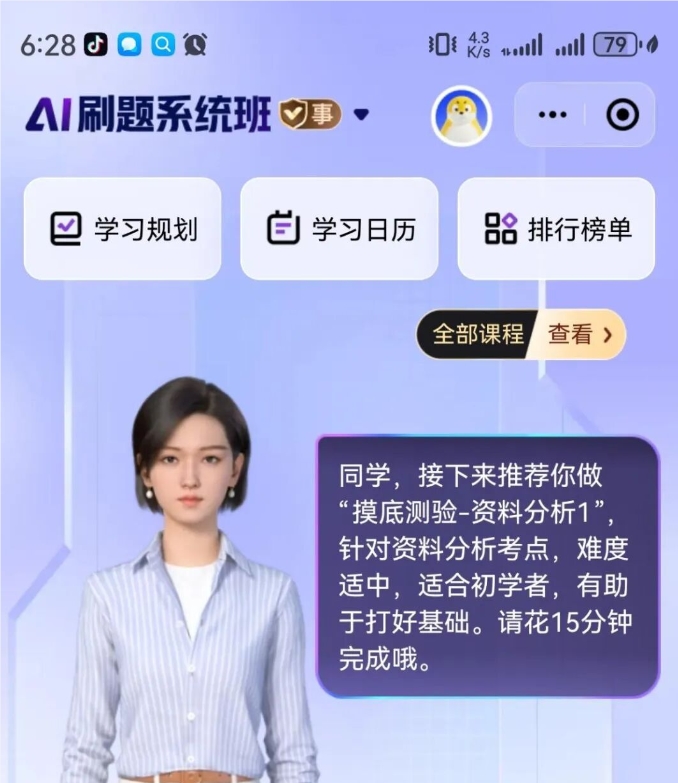
China's exam preparation giant Pingbi has struck gold with its artificial intelligence-powered tutoring system. During a recent investor briefing, the company revealed their "AI Question Practice System Class" achieved remarkable success - selling 14,000 units in just one day while boosting students' learning efficiency by an average of 29%, with some cases showing improvements as high as 40%.
Image

Personalized Learning at Scale

What makes this system stand out? Liu Shuai, head of Pingbi's civil service exam division, explains: "We've moved beyond the cookie-cutter approach. Our platform analyzes behavioral data from our 70 million registered users to create customized study paths that evolve with each student's progress."

The technology doesn't just throw random questions at learners. It dynamically adjusts difficulty levels based on performance, creating what Liu describes as "a digital tutor that knows exactly where you struggle and how to help you improve."

Full-Cycle AI Integration

Pingbi has embedded artificial intelligence throughout their educational pipeline:

  • Smart Practice Module: Identifies knowledge gaps in real-time
  • AI Interview Evaluation: Allows mobile screen recording for instant feedback (saving teachers 90% grading time)
  • Upcoming Features: Essay correction and quantitative reasoning tools launching in 2026

The company sees particular potential for these innovations in China's lower-tier cities, where access to top-tier instructors remains limited.

Financial Upside Driving Expansion

The numbers tell an compelling story:

  • 8% higher gross margins compared to traditional live classes
  • Cost savings being reinvested into curriculum development and computing power
  • Technology advantage helping maintain leadership in competitive civil service exam market

"This isn't just about replacing teachers," Liu emphasizes. "It's about augmenting human instruction with scalable technology that delivers consistent quality nationwide."

The rapid adoption suggests Chinese students - and their parents - are voting with their wallets for this new approach to test preparation.

Key Points:

  • Pingbi's AI tutoring system sold 14,000 units in a single day
  • Learning efficiency improved by 29% on average, up to 40% for some users
  • Platform leverages data from 70 million registered users
  • New AI features launching in 2026 including essay grading
  • AI products deliver 8% higher margins than traditional classes
Enjoyed this article?

Subscribe to our newsletter for the latest AI news, product reviews, and project recommendations delivered to your inbox weekly.

Weekly digestFree foreverUnsubscribe anytime

Related Articles

News

Google Gemini's Interactive Simulations Make Learning Physics Feel Like Play

Google's Gemini AI has introduced a game-changing feature that transforms abstract concepts into interactive simulations. Imagine adjusting the moon's orbit with your fingertips instead of staring at static textbook diagrams. This hands-on approach could revolutionize how we learn complex subjects, making education more engaging and intuitive than ever before.

April 15, 2026
AI in educationInteractive learningGoogle Gemini
News

China Integrates AI into Teacher Exams and National Curriculum

China's education system is taking a bold leap into the AI era. Five government departments have jointly launched an ambitious plan to embed artificial intelligence throughout the nation's learning ecosystem. Starting with teacher certification requirements and extending to mandatory courses across all education levels, the initiative aims to create a comprehensive AI-literate society by 2030. The plan promises to reshape everything from classroom teaching to educational infrastructure, while maintaining strong safeguards for digital ethics.

April 14, 2026
AI educationChina education reformdigital literacy
News

China Launches Nationwide AI Education Push with Free Courses for All Ages

Five government ministries have joined forces to roll out an ambitious AI education plan that will bring artificial intelligence courses to students at every level - from primary school to vocational training. The initiative includes developing free MOOC resources and integrating AI into core curricula, with special attention to bridging the urban-rural education gap through digital platforms. This marks China's most comprehensive effort yet to prepare its workforce for the AI era.

April 10, 2026
AI educationdigital literacyChina tech policy
News

Fudan University Rolls Out 100+ AI Courses to Future-Proof Students

Fudan University is making waves in higher education by launching over 100 AI courses across all disciplines. From humanities to medicine, students can now learn how to harness AI tools like professionals. The university has also introduced practical platforms and guidelines to bridge classroom learning with real-world research applications, preparing students for an AI-driven future.

March 19, 2026
AI educationhigher education reformgenerative AI
Tsinghua's AI Classroom Brings Learning to Life
News

Tsinghua's AI Classroom Brings Learning to Life

Tsinghua University has unveiled OpenMAIC, an innovative open-source platform that transforms any topic into a dynamic virtual classroom. Unlike traditional AI tutors, this system creates a complete learning ecosystem with multiple AI roles - from teachers to classmates - making education more interactive and engaging. Already tested with 500 students, the technology promises to democratize quality education globally.

March 16, 2026
AI educationvirtual classroomopen source
News

Teens Embrace AI Chatbots: Study Shows Over 60% Now Regular Users

A new Pew Research Center report reveals that AI chatbots have become a staple in American teens' lives, with 64% regularly using tools like ChatGPT. While many see AI as a study aid, concerns linger about cheating and critical thinking skills. The study also highlights a surprising gap between parents' awareness and teens' actual AI usage.

February 25, 2026
AI educationteen technology usedigital parenting