AI Teaching Outperforms Humans in Groundbreaking Education Study
AI Teaching Shows Promise in Large-Scale Education Experiment
The education world is buzzing about a groundbreaking study that pits artificial intelligence against human teachers - with surprising results. Conducted in Guangzhou with 1,662 students over two months, the research offers some of the first concrete evidence about AI's potential to transform how we learn.
The Experiment That Made History
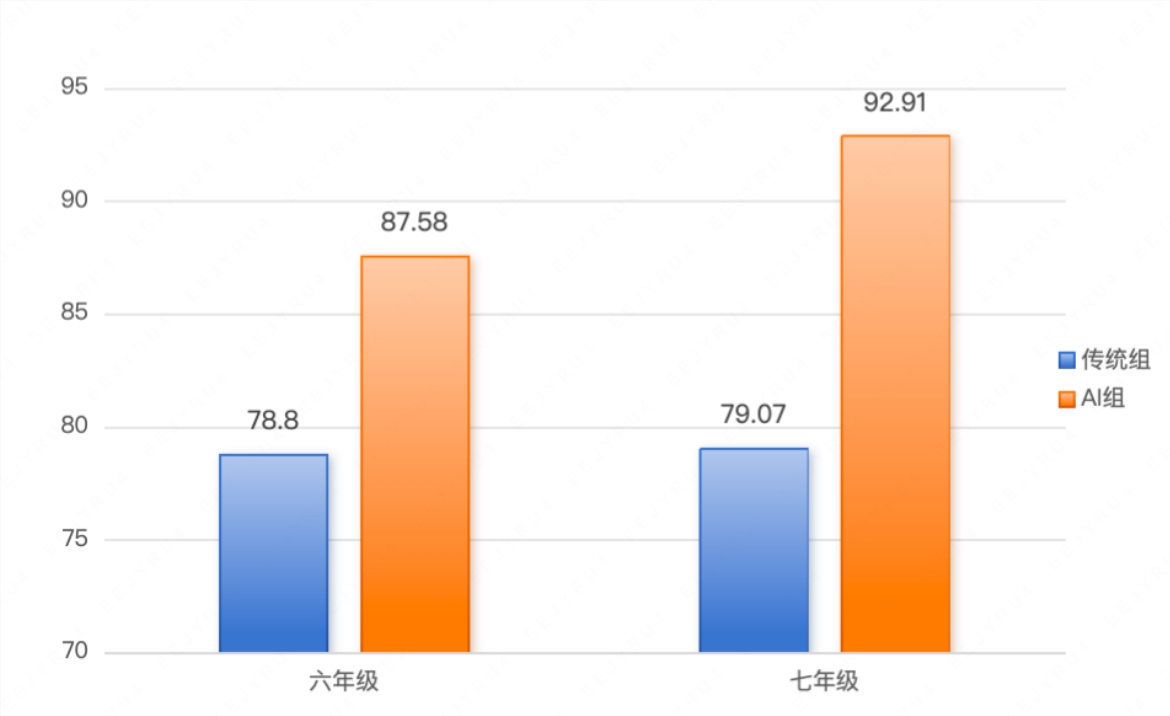
Guinness World Records recently certified Squirrel Ai's "Largest AI vs. Traditional Teaching Difference Experiment." Researchers divided students into two groups: one learned through Squirrel Ai's smart adaptive system, while the other received instruction from human teachers. Both groups covered identical material with the same evaluation criteria.
The outcome? Students taught by AI consistently outperformed their peers. Sixth graders using the AI system averaged 87.58 compared to 78.80 for traditional classes. The gap widened in seventh grade, where AI learners scored nearly 14 points higher on average (92.91 vs. 79.07).
Leveling the Educational Playing Field
Perhaps most striking was how the technology helped struggling students. Seventh graders who entered the study with low scores saw their averages jump from 47.90 to 72.46 after AI instruction - what researchers call a "weakness-enhancing effect."
"This suggests AI could be particularly valuable for students who fall behind," explains Dr. Li Wen of Beijing Normal University, which monitored the study. "The system adapts to each learner's pace and knowledge gaps in ways that are challenging for human teachers managing full classrooms."
The findings also hint at solutions for education inequality. Unlike human teachers whose availability varies by location, AI systems can deliver consistent, high-quality instruction anywhere with internet access.
What This Means for Classrooms
While no one suggests replacing teachers entirely, the study highlights how AI might complement traditional education:
- Personalized pacing: Students learn at their optimal speed
- Targeted support: Systems identify and address individual weaknesses
- Consistent quality: Eliminates variability between schools/regions
The research team cautions that successful implementation requires careful planning. "Technology should empower teachers, not replace them," emphasizes project lead Zhang Wei.
The experiment marks just the beginning of exploring AI's educational potential - but these early results suggest we may be witnessing a significant shift in how future generations learn.
Key Points:
- Record-breaking study involved 1,662 students over two months
- AI-taught students outperformed peers by up to 14 points on average
- Biggest gains seen among academically struggling students
- Potential solution for educational inequality across regions
- Combination approach of AI and human teaching may be most effective