'Codex Mortis': The AI-Generated Game Dividing Gamers
Inside Gaming's Most Controversial AI Experiment
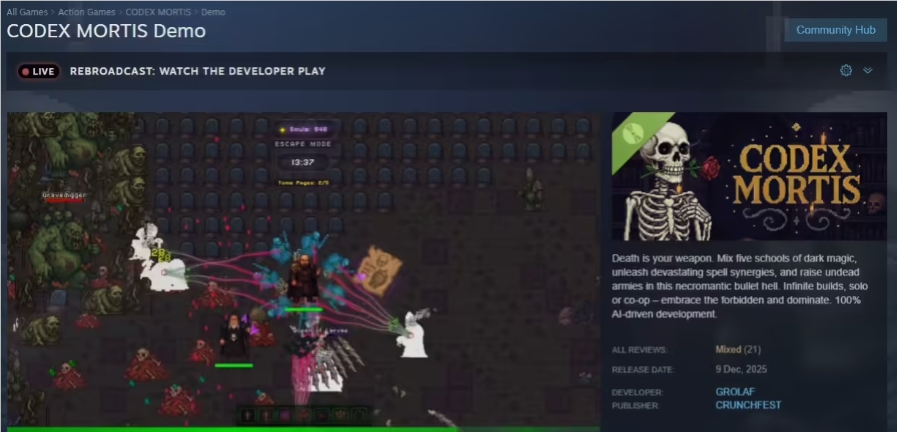
Imagine a game where every pixel, line of code, and eerie soundtrack comes not from human hands, but from artificial intelligence. That's the bold claim behind Codex Mortis, a Vampire Survivors-style bullet hell game that's become lightning rod in gaming circles.
Developer Grolaf (aka Crunchfest) completed this gothic fantasy title in just three months using what he calls "vibe-coding" - describing his vision to AI tools while they handle the grunt work. ChatGPT conceived the art through text prompts (no image API involved), Claude wrote shaders to fake animations when true animation proved impossible, and various models handled everything from TypeScript coding to Electron packaging.
"It was shockingly consistent," Grolaf told players. "GPT remembered my visual preferences across conversations like a collaborative artist." He compares traditional development to manual labor - his method? "Giving construction workers robotic exoskeletons."
Mixed Reception Sparks Bigger Questions
The free Steam demo landed like a grenade in the gaming community. Reviews sit at "Mixed," with comments ranging from curious to vicious:
- "Lol this looks like my nephew's first Unity project"
- "Dangerous precedent for creative industries"
- "100% AI? Then it's 0% soul"
Even typically supportive spaces like r/aigamedev saw mysterious comment deletions, fueling speculation about moderation bias.
The game itself tasks players with combining five schools of dark magic to survive enemy waves - competent but unremarkable gameplay overshadowed by its creation story. When developers outsource both artistry and logic to algorithms, what remains of authorship?
A Mirror Held Up To Creative Fears
Codex Mortis wears its rough edges proudly: disjointed art styles, basic animations, and technical hiccups from its "engineless" development. Yet these flaws make it perhaps the most honest AI art experiment yet - warts-and-all proof of both possibility and limitation.
The debate transcends quality assessments. As one Redditor noted: "It's not about whether this game is good. It's about whether we want games made this way at all."
Grolaf acknowledges the challenges but considers his end-to-end experiment a success: "This proves solo developers can punch way above their weight class with AI collaborators."
Love it or hate it, Codex Mortis forces uncomfortable questions:
- Does efficiency trump creative intention?
- Can prompts constitute authorship?
- Where does assistance end and replacement begin?
The answers may determine not just this game's legacy, but how we create - and value - art in the algorithmic age.
Key Points:
- First fully AI-developed commercial game claims no human-made assets
- Three-month development using "vibe-coding" with ChatGPT/Claude
- Steam demo sparked heated debate about AI's creative role
- Technical limitations visible but proves concept viability
- Raises fundamental questions about authorship in generative era