ChatGPT Hits 1 Billion Users as Women Take the Lead
ChatGPT's Gender Shift: Women Now Dominate User Base
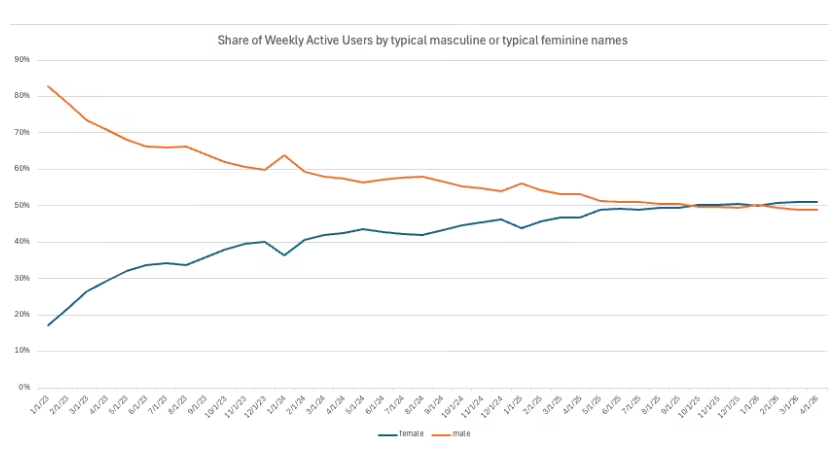
In a surprising turn for the tech world, ChatGPT has achieved two major milestones simultaneously: nearing 1 billion weekly active users and seeing female users surpass 50% for the first time. This demographic shift signals how artificial intelligence tools are becoming mainstream across all groups.
From Male-Dominated to Gender-Balanced
When ChatGPT first launched in 2022, its user base looked very different - a lopsided 80% male audience. Fast forward to today, and women aren't just catching up; they've taken the lead. Approximately 500 million women now regularly engage with the AI assistant, demonstrating technology's evolving appeal.
"This isn't just about numbers," observes tech analyst Maria Chen. "It shows AI is shedding its 'boys' club' image and becoming truly inclusive. The applications women are finding - from career development to creative writing - are expanding ChatGPT's usefulness."
Powering the Future
Behind these user statistics lies another impressive growth story: OpenAI's computing capacity. From a modest 0.2 gigawatts in 2023, their infrastructure is projected to hit 1.9 gigawatts by 2025 - nearly tenfold growth. Strategic partnerships with chipmakers like NVIDIA ensure this expansion continues, with a bold 30-gigawatt target for 2030.
This computing muscle means ChatGPT can handle:
- More complex queries
- Faster response times
- Greater personalization
What This Means for Users
The combination of diverse users and increased power creates exciting possibilities. As the platform understands varied perspectives better, its responses become more nuanced. Meanwhile, that growing computing power translates to:
- Smoother conversations
- More accurate information
- Better memory of user preferences
Key Points
🌟 User milestone: Nearly 1 billion weekly active users globally
♀ Demographic shift: Female users now exceed 50%, up from just 20% at launch
⚡ Tech growth: Computing power expanding from 0.2GW to projected 1.9GW by 2025
🔮 Future vision: 30GW computing capacity targeted by 2030