OpenAI Unveils GPT-Rosalind: AI That Could Revolutionize Drug Discovery

OpenAI's Game-Changer for Biotech

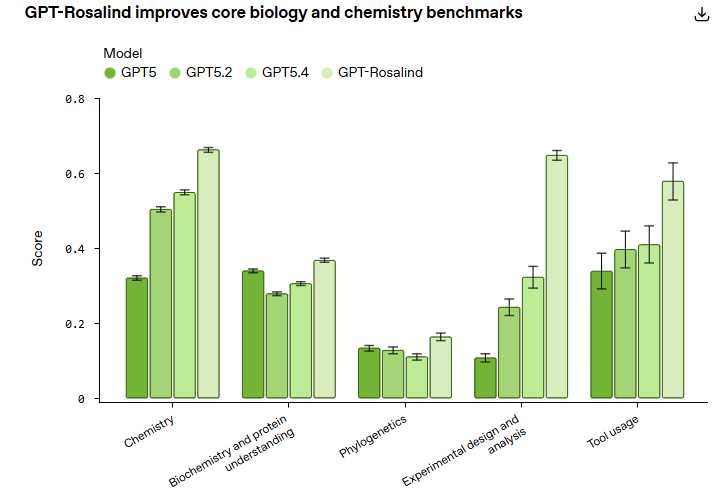
In a move that could reshape pharmaceutical research, OpenAI has introduced GPT-Rosalind—a specialized AI model designed specifically for life sciences. Named after Rosalind Franklin, whose X-ray crystallography work revealed DNA's double helix structure, this tool represents artificial intelligence's deepest foray yet into biochemistry and genomics.
Image

More Than Just a Chatbot

What sets GPT-Rosalind apart from general language models? Imagine having a research assistant that never sleeps, can digest thousands of scientific papers in minutes, and spots patterns invisible to the human eye. That's essentially what OpenAI has built—but with some remarkable upgrades:

  • Protein structure analysis at unprecedented speeds
  • Gene therapy pathway suggestions based on cutting-edge research
  • Experimental planning that considers multiple variables simultaneously

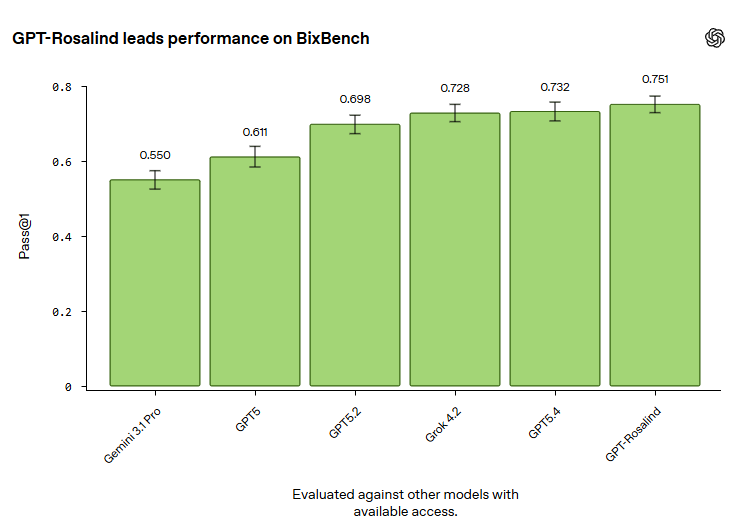
In trials with Dyno Therapeutics, the model correctly predicted functions of unpublished RNA sequences 95% of the time—outperforming all but the top human specialists. "It's not just recalling data," explains one researcher. "This AI connects dots in ways we hadn't considered."
Image

Controlled Access, Big Potential

For now, access remains tightly controlled. Only U.S.-based biopharmaceutical companies meeting strict ethical guidelines can use GPT-Rosalind, with Moderna and Amgen among early adopters. This cautious approach reflects legitimate concerns about misuse of powerful biological AI.

Yet the possibilities excite scientists. Drug development—a process that typically takes 10-15 years—might see dramatic acceleration. The model could slash years off the initial research phase by rapidly identifying promising compounds and ruling out dead ends.

Key Points:

  • Specialized AI: GPT-Rosalind is fine-tuned specifically for life sciences, not general conversation
  • Benchmark Beater: Outperforms most human experts in RNA function prediction
  • Controlled Rollout: Currently available only to approved biotech firms
  • Ethical Focus: OpenAI emphasizes responsible use for health improvements
  • Speed Boost: Could significantly shorten early drug discovery phases
Enjoyed this article?

Subscribe to our newsletter for the latest AI news, product reviews, and project recommendations delivered to your inbox weekly.

Weekly digestFree foreverUnsubscribe anytime

Related Articles

OpenAI's Codex Gets Smarter: Now Controls Your Mac Like a Pro
News

OpenAI's Codex Gets Smarter: Now Controls Your Mac Like a Pro

OpenAI just gave its Codex AI assistant some serious upgrades. The tool can now control Mac applications independently, run multiple tasks simultaneously, and remember your workflow preferences for days. Imagine having a digital assistant that clicks, types, and browses for you - that's what Codex delivers with this update. Developers will particularly love how it seamlessly picks up paused projects and even suggests next steps.

April 17, 2026
AI ProgrammingMac AutomationOpenAI
AI Coding Assistants Clash: OpenAI's Codex Upgrade Takes On Anthropic's Claude
News

AI Coding Assistants Clash: OpenAI's Codex Upgrade Takes On Anthropic's Claude

The battle for dominance in AI-powered coding tools heats up as OpenAI unveils major upgrades to Codex, introducing background operation and browser integration. Meanwhile, Anthropic's Claude Code continues gaining enterprise traction. This latest volley brings enhanced memory features, image generation, and flexible pricing - pushing AI programming assistants into new territory.

April 17, 2026
AI programmingOpenAIdeveloper tools
OpenAI Bets Big on Chip Startup Cerebras in $2 Billion AI Hardware Push
News

OpenAI Bets Big on Chip Startup Cerebras in $2 Billion AI Hardware Push

OpenAI has made a strategic $2 billion commitment to AI chip startup Cerebras, marking a bold move to diversify its hardware infrastructure and reduce dependence on NVIDIA. The deal includes stock warrants and funding for specialized data centers, leveraging Cerebras' innovative wafer-scale technology to boost AI performance. This partnership could reshape the competitive landscape of AI computing hardware.

April 17, 2026
AI hardwaresemiconductorsOpenAI
OpenAI's New Toolkit Makes AI Assistants Safer for Businesses
News

OpenAI's New Toolkit Makes AI Assistants Safer for Businesses

OpenAI has rolled out significant upgrades to its Agents SDK, giving developers better tools to create secure AI assistants. The standout feature is a sandbox environment that prevents unpredictable AI behavior from causing system-wide issues. Businesses can now test AI agents more safely while leveraging OpenAI's models. The update also introduces an integrated framework for smoother development, with Python support available now and TypeScript coming soon.

April 16, 2026
OpenAIAI DevelopmentEnterprise Technology
News

Microsoft Outmaneuvers OpenAI in Global Computing Power Race

A quiet battle over AI infrastructure is unfolding, with Microsoft aggressively expanding its computing resources while OpenAI appears to pull back. The tech giant recently secured 30,000 NVIDIA chips in Norway - a facility originally intended for OpenAI. Meanwhile, Google snapped up UK computing power after OpenAI paused its 'Star Gate' project there. These strategic moves suggest a significant shift in the AI landscape as Microsoft doubles down on data center investments while OpenAI scales back its ambitious plans.

April 15, 2026
AI InfrastructureMicrosoftOpenAI
News

OpenAI Issues Urgent macOS Update After Third-Party Library Hack

OpenAI has confirmed its applications were compromised in a supply chain attack targeting the popular Axios library. While no data breaches occurred, macOS users should immediately update their ChatGPT apps. The attack, originating from hijacked npm developer accounts, shows how even trusted software components can become security risks.

April 15, 2026
OpenAICybersecuritySupplyChainAttack