Character.AI Launches AI-Native Social Feed

Character.AI Redefines Social Media with AI-Native Community Feed

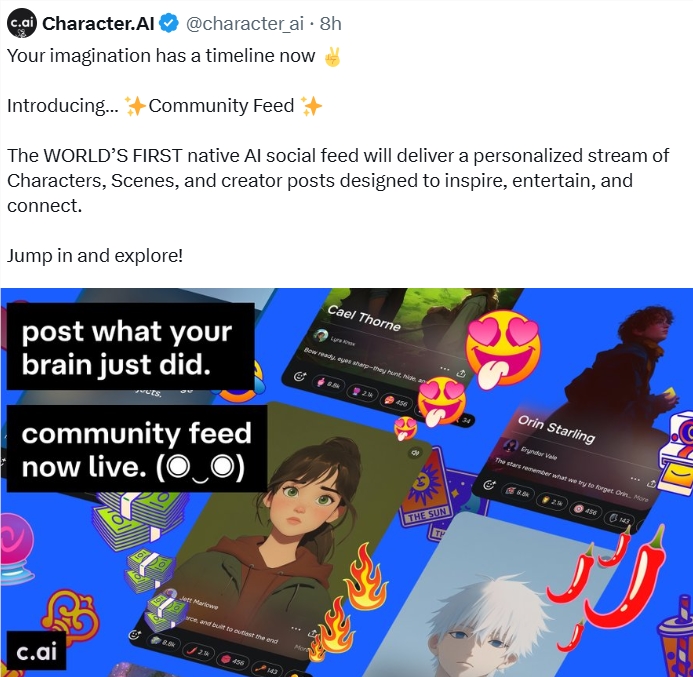
Character.AI has launched its Community Feed feature, marking a significant shift in social media interaction. This innovation positions the platform as the world's first AI-native social network, blending artificial intelligence with user creativity through multimodal tools.

From Passive Scrolling to Active Co-Creation

The Community Feed fundamentally changes how users engage with content. Rather than passively consuming posts, participants can:

  • Interact directly with AI characters
  • Modify existing storylines
  • Initiate new narrative branches

Image

"We're erasing the distinction between creators and audiences," explained CEO Karandeep Anand. "Every user can either enjoy content or actively shape it into personalized adventures."

Multimodal Toolkit Powers Creativity

The platform provides specialized tools to facilitate diverse content creation:

Feature Functionality

These tools enable professional-quality output without requiring technical expertise from users.

Safety and Moderation Systems

While encouraging creative freedom, Character.AI implements robust safeguards:

  • Automated content classifiers for text and video
  • 24/7 monitoring by Trust & Safety teams
  • User-controlled content filters and reporting options The company acknowledges past controversies and emphasizes ongoing improvements to balance innovation with community protection.

Competitive Landscape in AI Social Space

The feature debuted on web platforms in June 2025 before expanding to mobile. Character.AI faces growing competition from:

  • Pika's experimental video features
  • Meta's AI integration projects
  • OpenAI's social content initiatives

The company maintains an edge through its native AI architecture, designed specifically for intelligent interaction rather than retrofitting AI onto existing platforms.

Industry Implications

This development signals a potential paradigm shift in social media:

  1. Transition from algorithmic feeds to collaborative creation
  2. New metrics for measuring user engagement
  3. Emerging standards for AI-human content partnerships
  4. Evolution of digital identity through persistent AI characters
  5. Technical challenges in maintaining real-time multimodal generation

The advancement reflects growing maturity in natural language processing, video synthesis, and interactive narrative systems.

Key Points:

  • First true AI-native social platform launches interactive feed
  • Multimodal tools enable co-creation with AI characters
  • Advanced safety measures accompany creative features
  • Early market lead against tech giants' competing projects
  • Potential to redefine social media engagement metrics
Enjoyed this article?

Subscribe to our newsletter for the latest AI news, product reviews, and project recommendations delivered to your inbox weekly.

Weekly digestFree foreverUnsubscribe anytime

Related Articles

Google Opens Floodgates for AI Video Tool Flow
News

Google Opens Floodgates for AI Video Tool Flow

Google's AI-powered video creation tool Flow is now accessible to more users, expanding beyond its initial premium tiers. The platform leverages Veo3.1 technology to generate crisp 8-second clips from simple prompts, complete with professional editing tools and newly added vertical video support. Perfect for short-form content creators, Flow integrates seamlessly with Google's Nano Banana Pro image generator for end-to-end creative workflows.

January 19, 2026
AI-videoGoogle-Workspacecontent-creation
Moonlight AI's Kiwi-do Model Stuns With Visual Physics Prowess
News

Moonlight AI's Kiwi-do Model Stuns With Visual Physics Prowess

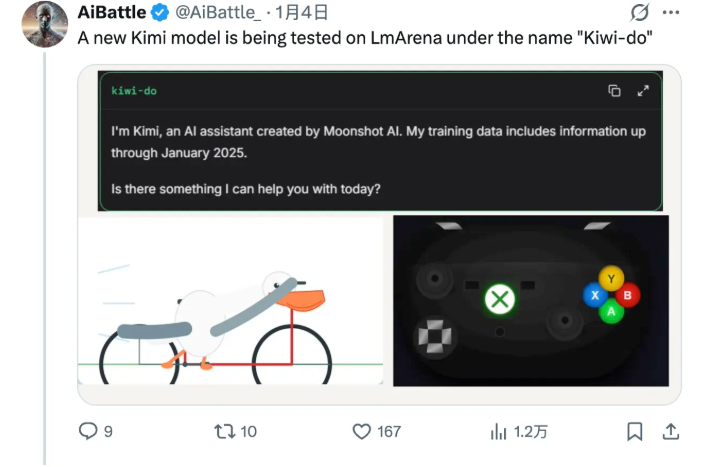
Moonshot AI's mysterious new 'Kiwi-do' model has emerged as a potential game-changer in multimodal AI. Showing remarkable capabilities in visual physics comprehension, this freshly spotted model appears ahead of Moonshot's planned K2 series release. Early tests suggest Kiwi-do could revolutionize how AI interprets complex visual data.

January 5, 2026
multimodal-AIcomputer-visionMoonshot-AI
vLLM-Omni Bridges AI Modalities in One Powerful Framework
News

vLLM-Omni Bridges AI Modalities in One Powerful Framework

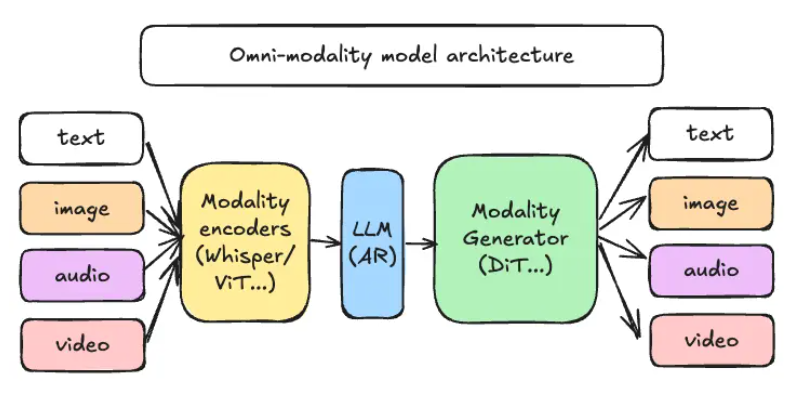
The vLLM team has unveiled vLLM-Omni, a groundbreaking framework that seamlessly combines text, image, audio, and video generation capabilities. This innovative solution treats different AI modalities as independent microservices, allowing flexible scaling across GPUs. Early benchmarks show significant performance gains over traditional approaches, potentially revolutionizing how developers build multimodal applications.

December 2, 2025
multimodal-AIvLLMdiffusion-models
Yuanbao's New Feature Turns Words Into Videos Instantly
News

Yuanbao's New Feature Turns Words Into Videos Instantly

Yuanbao has unveiled an exciting new tool that transforms simple sentences or photos into complete videos. Powered by Tencent's HunyuanVideo1.5 model, this feature eliminates technical barriers, letting anyone create polished video content effortlessly. Whether capturing life's moments or crafting brand messages, users can now produce engaging videos with minimal effort – no editing skills required.

November 21, 2025
video-generationAI-toolscontent-creation
Meituan LongCat Unveils UNO-Bench for Multimodal AI Evaluation
News

Meituan LongCat Unveils UNO-Bench for Multimodal AI Evaluation

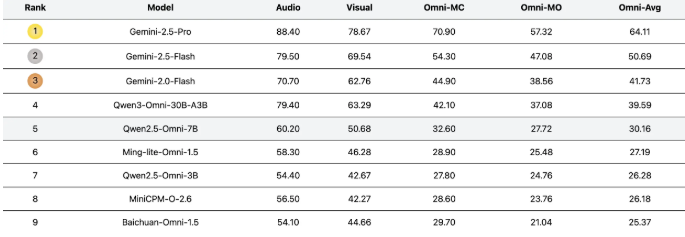
Meituan's LongCat team has launched UNO-Bench, a comprehensive benchmark for evaluating multimodal large language models. The tool features 44 task types across five modality combinations, with a dataset of 1,250 full-modal samples showing 98% cross-modal solvability. The benchmark introduces innovative evaluation methods and focuses initially on Chinese-language applications.

November 6, 2025
AI-evaluationmultimodal-AIMeituan-LongCat
LongCat-Flash-Omni Launches with Multimodal Breakthroughs
News

LongCat-Flash-Omni Launches with Multimodal Breakthroughs

Meituan's LongCat team has released LongCat-Flash-Omni, a cutting-edge multimodal AI model featuring 560B parameters and real-time audio-video interaction capabilities. The model achieves state-of-the-art performance across text, image, and speech tasks while maintaining low latency through innovative ScMoE architecture.

November 3, 2025
multimodal-AIreal-time-interactionScMoE