Apple's STARFlow-V shakes up video AI with groundbreaking approach

Apple Takes New Path in Video Generation Race

In a bold move that could reshape the video AI landscape, Apple has introduced STARFlow-V - a video generation model that breaks from today's dominant diffusion model approach. The tech giant claims its normalizing flow technology delivers comparable quality while solving some persistent industry pain points.

Image

How STARFlow-V Works Differently

While most competitors like OpenAI's Sora or Google's Veo use diffusion models that gradually refine videos through multiple iterations, Apple's system completes generation in one training step. "We're essentially teaching the model direct mathematical transformations between random noise and complex video data," explains an Apple spokesperson. This approach reportedly reduces errors that creep in during traditional step-by-step generation.

The current version outputs videos at 640×480 resolution and 16 frames per second - specs that might seem modest compared to some flashier demos we've seen. But where STARFlow-V shines is stability during longer generations, thanks to its novel sliding window technique that maintains context across segments.

Practical Applications Show Promise

The system handles standard text-to-video prompts alongside more specialized tasks:

  • Image-to-video conversion (using input images as starting frames)
  • Video editing functions
  • Extended sequence generation

During demonstrations, the model showed particular strength maintaining consistency in spatial relationships and human movements - areas where many AI video tools still struggle noticeably.

Technical Innovations Under the Hood

Apple engineers tackled the common problem of error accumulation in long sequences with a dual architecture:

  1. One component manages temporal sequencing across frames
  2. Another optimizes individual frame details

The team also introduced controlled noise during training to stabilize optimization, then deployed a parallel "causal denoising network" to clean up artifacts without disrupting motion consistency.

The training regimen was equally ambitious - feeding the model 70 million text-video pairs supplemented by 4 million text-image pairs. Language models expanded each video description into nine variations to improve learning efficiency.

Room for Growth

Benchmark tests show STARFlow-V scoring 79.7 on VBench - slightly behind top diffusion models but impressive for this new approach. Apple acknowledges current limitations in output diversity and plans to focus future development on:

  • Boosting computational speed
  • Refining physical accuracy
  • Expanding training datasets

The company appears committed to this alternative technical path despite industry trends, betting that their method's advantages for professional workflows will win converts over time.

Key Points:

  • 🎥 Novel Approach: Uses normalizing flow instead of diffusion models for single-step generation
  • Efficiency Gains: Reduces error accumulation common in iterative processes
  • 🛠️ Versatile Toolset: Handles creation and editing tasks with surprising consistency
  • 📈 Future Focus: Physical accuracy and speed optimizations coming next
Enjoyed this article?

Subscribe to our newsletter for the latest AI news, product reviews, and project recommendations delivered to your inbox weekly.

Weekly digestFree foreverUnsubscribe anytime

Related Articles

Sakana AI's Tiny Plugin Could Revolutionize How AI Handles Massive Documents
News

Sakana AI's Tiny Plugin Could Revolutionize How AI Handles Massive Documents

Tokyo-based Sakana AI has unveiled groundbreaking technologies that could solve large language models' notorious 'memory anxiety.' Their Text-to-LoRA and Doc-to-LoRA systems enable AI to digest lengthy documents in under a second, shrinking memory requirements from gigabytes to mere megabytes. This breakthrough promises to make customizing AI models dramatically cheaper and more accessible.

February 28, 2026
AI InnovationMachine LearningNatural Language Processing
Google Phases Out Gemini 3 Pro - Developers Face Tight Migration Deadline
News

Google Phases Out Gemini 3 Pro - Developers Face Tight Migration Deadline

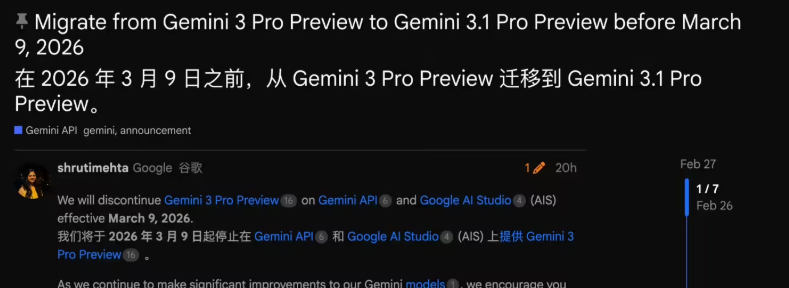
Google has announced the sunset of its Gemini 3 Pro Preview model, setting a March 9 cutoff date. While the tech giant touts improvements in the new 3.1 version, some developers lament losing the predecessor's creative flair. The transition comes with risks - those who miss the deadline may face service disruptions. Many are now scrambling to adapt their prompts to maintain quality output with the updated model.

February 28, 2026
Google AIDeveloper ToolsMachine Learning
Chinese AI Models Outpace US Competitors in Global Adoption
News

Chinese AI Models Outpace US Competitors in Global Adoption

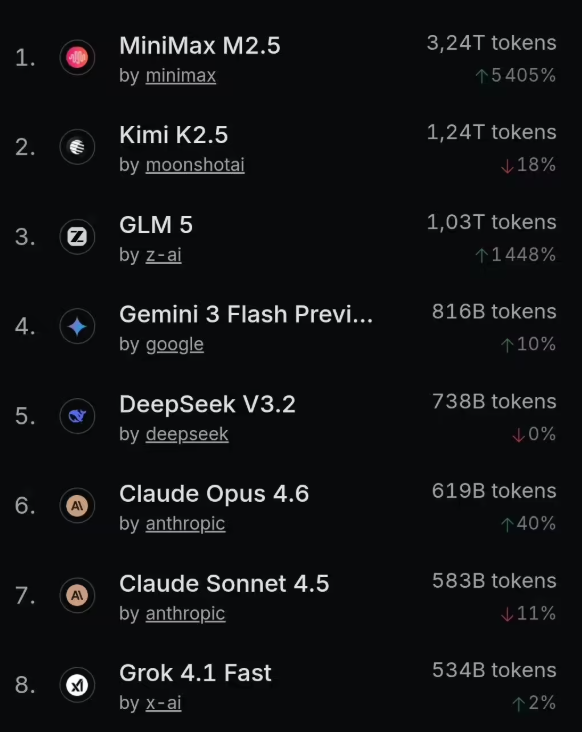
In a surprising shift, Chinese AI models have overtaken their US counterparts in global usage for the first time. Platforms like MiniMax and Moonshot AI are leading the charge, with Chinese models accounting for over 5 trillion weekly tokens - nearly double American offerings. This milestone reflects China's growing influence in artificial intelligence development.

February 27, 2026
AI CompetitionChinese TechMachine Learning
Moonshot AI's Kimi K2.5 Achieves Remarkable Profitability Milestone
News

Moonshot AI's Kimi K2.5 Achieves Remarkable Profitability Milestone

Moonshot AI's latest model, Kimi K2.5, has stunned the tech world by generating more revenue in its first 20 days than all of 2025 combined. The breakthrough comes primarily from overseas users and developers embracing its API services, propelling the company's valuation past $10 billion. Founder Yang Zhilin confirms the company is well-funded with no immediate IPO plans.

February 24, 2026
Artificial IntelligenceTech StartupsMachine Learning
News

Chinese AI Models Capture Global Spotlight During Lunar New Year

Chinese artificial intelligence models made waves internationally during the 2026 Spring Festival, capturing over 60% market share on OpenRouter's developer platform. Three domestic models - MiniMax M2.5, Kimi K2.5, and Zhipu GLM-5 - dominated the rankings by offering superior coding and automation capabilities at remarkably low costs. Their success highlights China's growing influence in AI productivity tools.

February 24, 2026
Artificial IntelligenceChinese TechDeveloper Tools
Google's Gemini 3.1 Pro Outshines Competitors With Breakthrough Reasoning Skills
News

Google's Gemini 3.1 Pro Outshines Competitors With Breakthrough Reasoning Skills

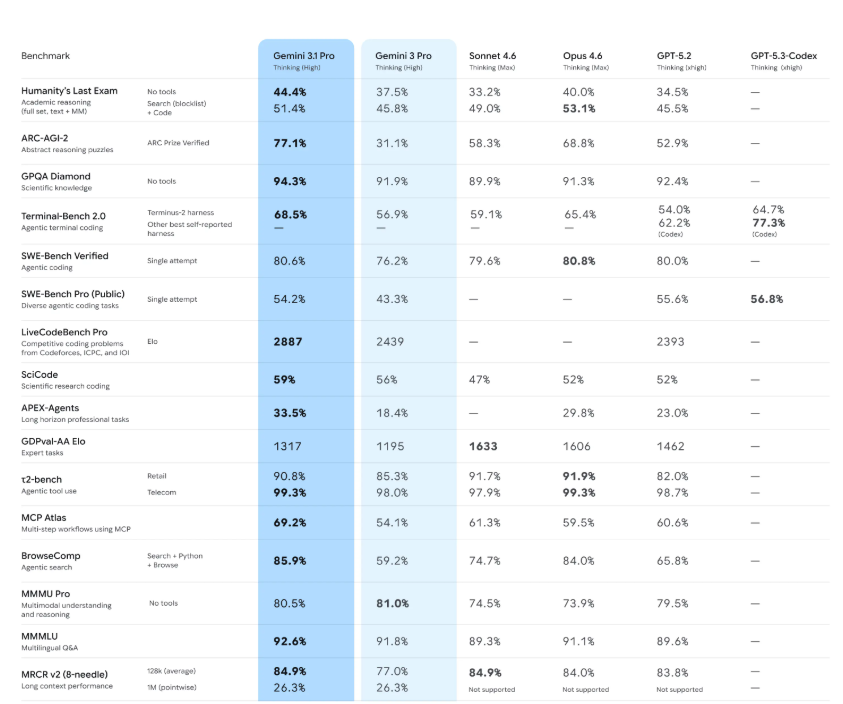
Google has unveiled Gemini 3.1 Pro, its most advanced AI model yet, showcasing remarkable improvements in logical reasoning and problem-solving. The new architecture delivers more than double the performance of its predecessor in critical tests, even surpassing GPT-5.2 in some benchmarks. Beyond raw power, Gemini 3.1 Pro introduces innovative multimodal capabilities, handling ultra-long contexts and generating visual representations of complex concepts.

February 24, 2026
AI InnovationGoogle TechMachine Learning