Google's Gemini 3.1 Pro Outshines Competitors With Breakthrough Reasoning Skills
Google Raises the Bar With Gemini 3.1 Pro AI Model
In what could be a game-changer for artificial intelligence, Google has introduced Gemini 3.1 Pro, showcasing dramatic improvements that leave competitors scrambling to catch up. This isn't just another incremental update - it represents a fundamental shift in how AI approaches complex reasoning tasks.
The tech giant broke from tradition with its version numbering system, signaling something special with the ".1" designation rather than sticking to its usual half-step increments. This change reflects substantial architectural improvements under the hood.
Benchmark-Busting Performance
When put through rigorous testing, Gemini 3.1 Pro delivered jaw-dropping results:
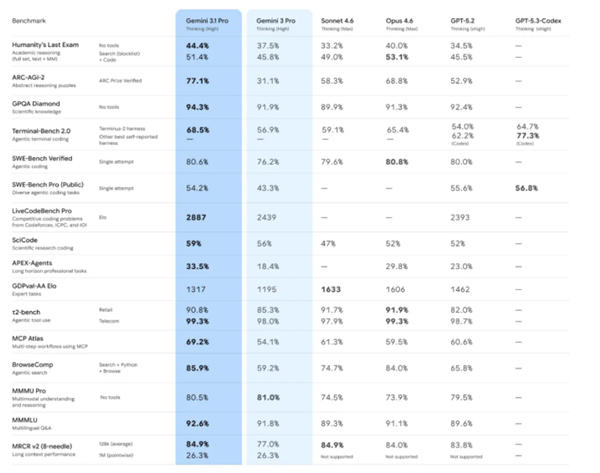
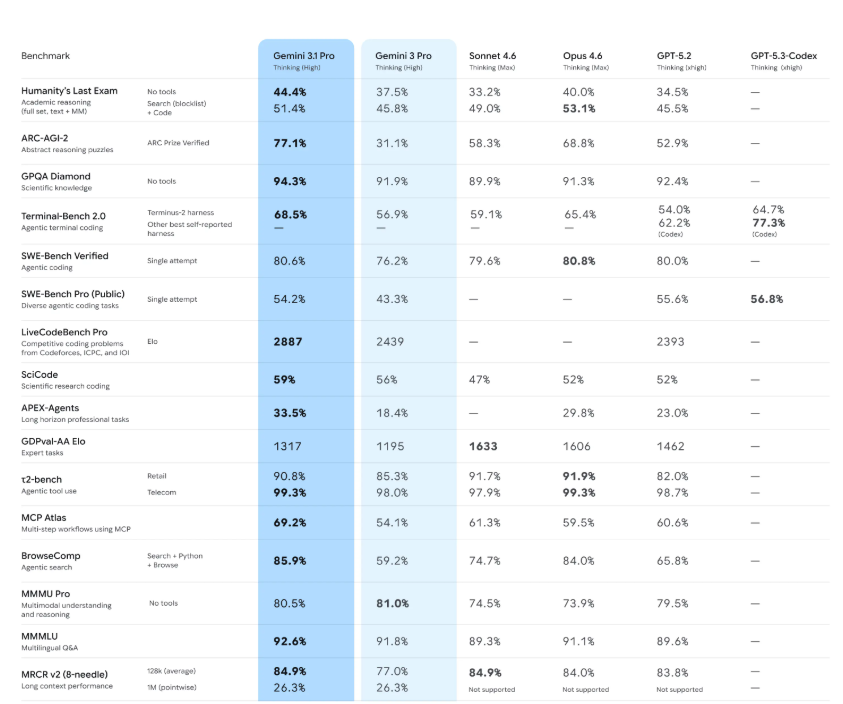
- 77.1% score on the challenging ARC-AGI-2 test - more than double its predecessor's performance
- 44.4% accuracy on the notoriously difficult HLE assessment (often called "humanity's final exam")
- Clear superiority over rival models GPT-5.2 and Claude Opus 4.6 in multiple categories
What makes these numbers particularly impressive? They demonstrate genuine progress toward artificial general intelligence (AGI), moving beyond simple pattern recognition to actual reasoning ability.
More Than Just Brainpower
The model's capabilities extend far beyond test scores:
- Processes up to 1 million Tokens of context - enough for entire books or lengthy technical documents
- Converts abstract concepts into interactive charts and SVG animations automatically
- Seamlessly integrates with Google's ecosystem including Gemini app and NotebookLM Developers itching to experiment can access it through Google AI Studio today.
The breakthrough comes from what Google calls its "Core Intelligence" architecture, specifically designed to enhance logical thinking and problem-solving abilities rather than just expanding knowledge bases.
What This Means For Users
The implications ripple across industries:
- Researchers gain powerful tools for analyzing complex data sets visually
- Content creators can transform dense information into digestible formats effortlessly
- Businesses obtain smarter assistants capable of nuanced understanding Perhaps most exciting? We're seeing real progress toward AI that doesn't just recall information but actually thinks through problems.
Key Points:
- 🚀 Reasoning leap: More than doubles previous model's performance in critical tests
- 🧠 New architecture: Core Intelligence design focuses on genuine problem-solving
- 📊 Multimodal mastery: Handles massive contexts while generating visual outputs