Ant Group Dominates AI Detection Challenge with Dual Wins

Ant Group Breaks New Ground in AI-Generated Content Detection

In a striking demonstration of technological prowess, Ant Group claimed top honors at this year's CVPR NTIRE Image Detection Challenge, winning both the "Robustness Sample Testing" and "Face Enhancement Anomaly Detection" tracks. The achievement signals a major advancement in detecting AI-generated content - a growing concern as synthetic media becomes increasingly sophisticated.

The Deepfake Detection Arms Race

As AI-generated images and videos reach near-perfect realism, the challenge of distinguishing authentic content from fabrications has become critical. "Current detection methods often fail when faced with real-world conditions or the rapid evolution of multimodal models," explains a team spokesperson. The CVPR challenge specifically tested models against these pain points, requiring high accuracy even with unknown generation methods and degraded image quality.

Ant Group's solution builds on their twenty years of payment security experience, now applied to AI threats. Their DINOv3-based detection framework represents a quantum leap from laboratory conditions to practical applications. Imagine giving detection models "two eyes" - one for fine details and another for broader patterns - creating a more comprehensive analysis.

Inside the Winning Approach

For the robustness competition, the team compiled an enormous training dataset spanning millions of samples from leading open-source collections. They went beyond clean laboratory conditions, simulating real-world distortions like social media compression and camera rephotography. This rigorous preparation paid off when their dual-stream architecture outperformed competitors in challenging conditions.

Perhaps more impressive is their "Locate-Then-Examine" method, which doesn't just flag fake content but pinpoints exactly where manipulations occur. "It's like having a forensic analyst inside the algorithm," one judge remarked. The team has generously open-sourced their detection tools, inviting broader collaboration against deepfake threats.

Real-World Protections

The face detection victory holds particular significance for financial security. Ant International's technology can spot subtle anomalies in identification documents, crucial for preventing fraud in cross-border transactions and account openings. As synthetic identity fraud grows more sophisticated, these detection capabilities form a vital defense layer.

CVPR, alongside ICCV and ECCV, stands as one of computer vision's most prestigious conferences. This year's challenge drew over 500 global teams, making Ant Group's dual victory especially noteworthy. Their success demonstrates how security expertise from one domain can powerfully address emerging challenges in another.

Key Points:

  • Dual Challenge Wins: Ant Group dominated both "Robustness Testing" and "Face Anomaly Detection" tracks
  • Real-World Ready: Technology tested against practical scenarios like social media distortions
  • Explainable AI: New "Locate-Then-Examine" method shows where fakes contain flaws
  • Open Collaboration: Comprehensive detection tools shared via GitHub
  • Financial Applications: Critical for securing digital payments and identity verification
Enjoyed this article?

Subscribe to our newsletter for the latest AI news, product reviews, and project recommendations delivered to your inbox weekly.

Weekly digestFree foreverUnsubscribe anytime

Related Articles

Whistleblower Reveals How AI Routers Can Secretly Hijack Your Chatbots
News

Whistleblower Reveals How AI Routers Can Secretly Hijack Your Chatbots

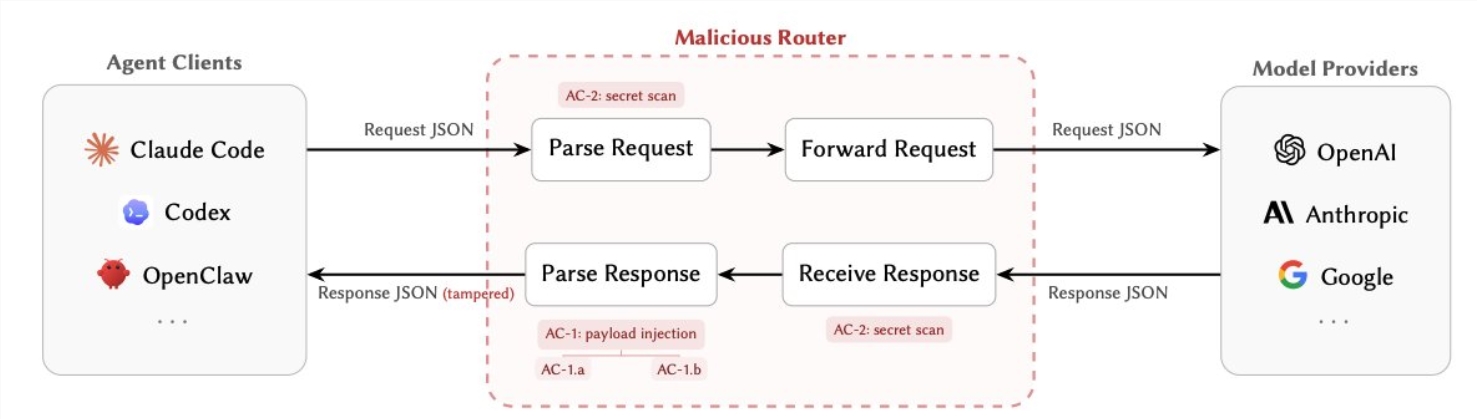
Cybersecurity researcher Chaofan has uncovered a disturbing vulnerability in third-party AI routing services that could allow attackers to secretly control AI agents. The study found that popular relay stations can be manipulated to inject malicious code or steal sensitive data like API keys and cryptocurrency wallets. Shockingly, tests revealed some routers were already actively compromising systems, with one incident draining $5 million in Ethereum. This discovery forces developers to rethink their reliance on these convenient but potentially dangerous routing services.

April 10, 2026
AI SecurityCybersecurityArtificial Intelligence
Anthropic's Mythos AI Uncovers Hidden Cyber Threats in Exclusive Preview
News

Anthropic's Mythos AI Uncovers Hidden Cyber Threats in Exclusive Preview

Anthropic has unveiled Mythos, its most advanced AI model yet, currently available only to select security partners. This powerful tool has already identified thousands of previously unknown vulnerabilities in software code, some dating back decades. While demonstrating remarkable potential for cybersecurity defense, concerns linger about its potential misuse. The company is navigating complex discussions with US officials while maintaining strict controls over access to this groundbreaking technology.

April 8, 2026
AI SecurityCybersecurityAnthropic
News

Security Flaws Found in OpenClaw AI Agent Raise Concerns

A Chinese cybersecurity team has uncovered critical vulnerabilities in the OpenClaw AI agent, including one high-risk flaw that could allow attackers to take control of user devices. The findings highlight growing security challenges as AI agents become more integrated into daily workflows. Unlike traditional scanning tools, the detection system used mimics human security experts' intuition, marking a shift toward more intelligent vulnerability discovery methods.

April 8, 2026
AI SecurityCybersecurityVulnerability Research
News

Anthropic's Mythos AI: A Cybersecurity Game-Changer with a Troubling Edge

Anthropic has unveiled Mythos, its most powerful AI model yet, specializing in uncovering hidden software vulnerabilities. This digital detective can spot flaws even in decades-old code, outperforming human experts. But its capabilities come with risks - the same tech that could protect systems might also be weaponized. Currently limited to select tech giants and government partners, Mythos is sparking debates about AI ethics and security in an increasingly vulnerable digital world.

April 8, 2026
AI SecurityCybersecurityAnthropic
Ant Group and Tsinghua Unveil Open-Source Security Shield for AI Agents
News

Ant Group and Tsinghua Unveil Open-Source Security Shield for AI Agents

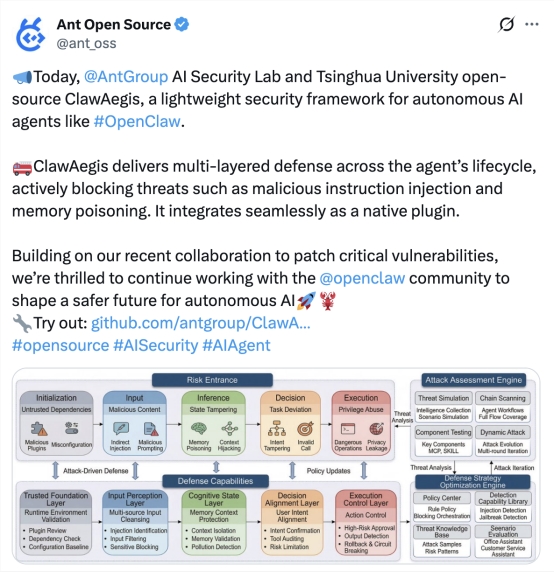
Ant Group's AI Security Lab and Tsinghua University have released ClawAegis, a groundbreaking security plugin for OpenClaw-type AI agents. This lightweight solution tackles risks like skill poisoning and data contamination across an agent's entire lifecycle. The tool offers real-time threat detection while maintaining transparency for end users - a significant step toward safer autonomous systems.

April 2, 2026
AI SecurityOpen SourceAutonomous Agents
Claude Code's Security Flaw: When Too Many Commands Overwhelm AI Defenses
News

Claude Code's Security Flaw: When Too Many Commands Overwhelm AI Defenses

A newly discovered vulnerability in Anthropic's Claude Code tool reveals how hackers can bypass its security measures simply by flooding it with commands. When the system receives more than 50 sub-commands at once, its automatic rejection mechanism fails, potentially exposing users to dangerous operations. Security experts warn this flaw could be particularly risky in automated development environments where permission checks might be skipped.

April 2, 2026
AI SecurityAnthropicSoftware Vulnerabilities